
3 Reasons Abridged Children’s Books Are a Waste of Time
/
Should your children read abridged versions of adult books?
“No!”
My dislike of abridged books began and ended with Don Quixote. As I was leaving California for Spain one year, my father gave me a copy of Cervante’s story as parting gift.
Not far into the book, I fell in love with the Don and couldn’t put the book down. It quickly became one of my all-time favorite stories.
“For neither good nor evil can last for ever; and so it follows that as evil has lasted a long time, good must now be close at hand.”
So years later when I saw Everyman's had published an abridged version for children, I was thrilled. I snatched up a copy and began reading it to my children.
About half way through the book I had to face reality. Compared to the writing of Cervantes, the abridged version was dull and uninteresting. We had been waiting and waiting for the story to pick up, but it just got worse and worse.
At some point, we all agreed that it was not worth reading.

Here’s 3 reasons for why—when it comes to abridged books—Do Not Buy Them!
1) Abridged Books Are Dumbed-Down
When we dumb down books for children by abridging them, we take away the nuances and meanings that made the story great, and this defeats the purpose of drawing a child into the world of great literature.
Children are not reading anymore and one of the reasons given is that modern children’s literature does not engage the child’s intellect or imagination. If our experience with Don Quixote is any indication, it’s not difficult to understand why.
“He who loses wealth loses much; he who loses a friend loses more; but he that loses his courage loses all.”
Besides, there are so many excellent children's stories that your children probably haven't read yet. Let them read those first and by the time they are finished, they'll have reached an age where they'll be able to tackle the truly great and difficult books in a meaningful way.
2. A Reader’s Rite of Passage
What harm will it do if your child has to wait until he is a more skilled reader to tackle Don Quixote or any great book for that matter?
None!
On the contrary, there is enormous benefit in waiting until a child is capable of reading a more challenging book. It’s what I call the reader’s rite of passage.
Let me explain…
War and Peace was a book I had heard about as a young teenager, but I was told that it was too difficult for a younger person to read. The idea that it was a “difficult” book created a mystery about War and Peace.
When would I be able to read it?
“To dream the impossible dream, that is my quest.”
I have a vague recollection of having asked my father, during my 20th year of life, if he thought I could handle reading War and Peace, and he roared, “Of course!”
After discovering that I could not only read War and Peace with relative ease, but that I enjoyed reading it, I experienced excitement and a sense of accomplishment.

Reading War and Peace was a literary rite of passage. I knew then that the door to the world of great books was wide open for me. I could read anything!
It’s that joy of tackling a difficult book for the first time, and many times after, that you want to reserve for the real thing. The age when this happens is irrelevant. For me it was about age 20, for a homeschooled child it might be age 13.
It’s akin to the first flower that blooms in spring. After a long barren winter, we feel joy and excitement when we discover a flower that has just blossomed. And while we may still enjoy many flowers after that, no flower can replace that first taste of spring.
If a child reads the dumbed-down version of a great book in childhood, he’ll be less likely to experience the first bloom of a great book later.
3. Too Young to Appreciate the Story in all Its Glory
Your children will grow up soon enough and when they do they'll enjoy Don Quixote in a way they never could when they’re young.
For example, a child who has never lost a permanent tooth is unable to relate to Cervantes’ unforgettable line:
“A tooth is more precious than diamonds”
Children have a different perspective on losing teeth; one needs a little life experience to truly appreciate the Don’s words!

Don Quixote is full of humor and wisdom. If a child can't relate to a simple line about losing a tooth forever; the complexities, humor, and wisdom between the pages will be lost on him.
4. Dumbed-Down Books Are an Insult to the Writer
It’s unjust to allow an editor to butcher an author’s well-crafted sentence, let alone an entire book written with the author’s blood, sweat, and tears. The well-intended editors always take away a part of the author with them.
If you have ever written anything meaningful, then you know that some of your being is contained in the words you put to paper. Out of respect for our great authors, who labored night and day to bring us their masterpieces, I stand opposed to dumbing-down great books for children.
“A proverb is a short sentence based on long experience.”
Regardless of what position we choose to take on abridged books, we can agree on one point: an abridged version of a great book is not the great book.
It's may be a book like Don Quixote, but Don Quixote it is not.
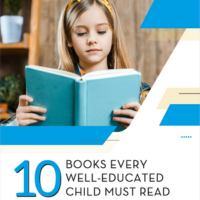
Don’t miss our free download, Ten Books Every Well-Educated Child Should Read.
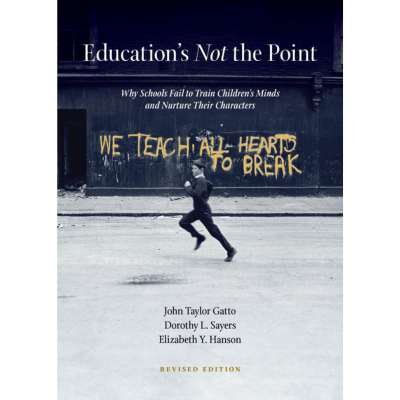
Grab a copy of the essential homeschooler’s book: Education’s Not the Point: How Schools Fail to Train Children’s Minds and Nurture Their Characters with gripping essays by John Taylor Gatto and Dorothy Sayers.

Elizabeth Y. Hanson is a homeschooling thought-leader and the founder of Smart Homeschooler.
Developing a comprehensive understanding of how to raise and educate a “whole” child, based on tradition and modern research, Liz devotes her time to helping parents to get it right.
As an Educator, Veteran Homeschooler, Writer, and Love and Leadership Certified Parenting Coach, Liz has 23 years of experience in the field of education.
Liz is available for one-on-one consultations as needed.
*****
“Elizabeth has given us counseling and guidance to help us succeed with our home school planning. When I feel overwhelmed, scared, or lose my confidence, she offers words of wisdom and support.”
— Sherry B., Pittsburg, PA