

Children Can Increase Intelligence by Increasing Focus
/
The ability to focus leads to faster comprehension, better memory retention, and more efficient study habits which equates to higher intelligence.
The Problem
Children, however, are losing the ability to focus for sustained periods of time because we’re failing to raise them in ways that develop this skill. Then, when they are too easily distracted, we are very quick to cry "ADHD!"
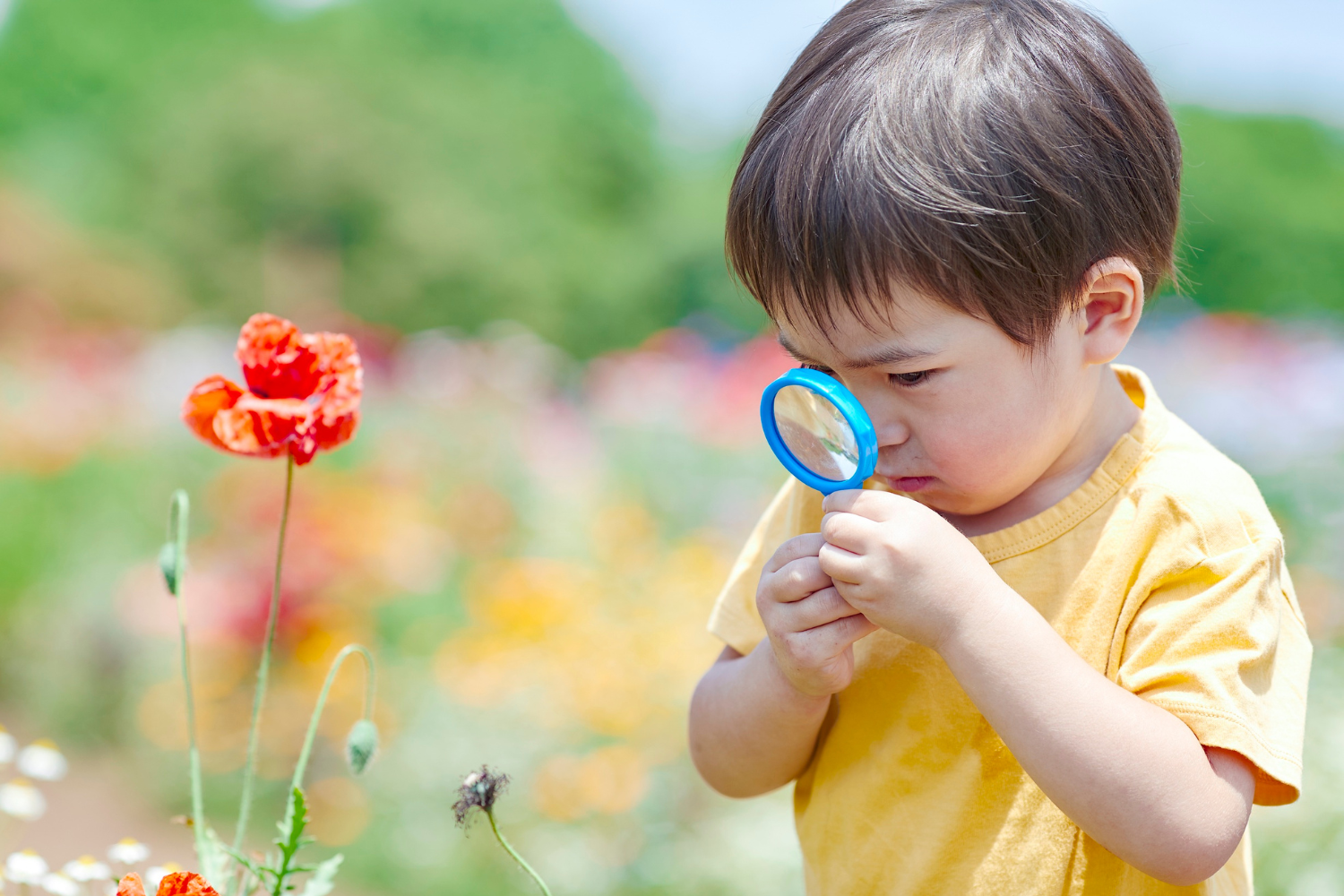
When you observe infants, you will note how absolutely focused they become when something catches their interest.
What happens between that time and a ten-year-old’s inability to concentrate long enough to complete a task or follow directions?
Prior to the 1970s, only 1-3% of children were diagnosed with any problems of the ADHD sort. If only 1 - 3% of children had any learning or behavioral problems, should we not ask what’s going on?
Speaking from experience, I went through 12 years of schooling and never once encountered a classmate who couldn’t sit still and focus.
But childhood today looks very different from how kids experienced it 50 years ago, and with the different came a whole host of problems.

One of which is a country of over-medicated children. Regardless of whether or not your child has received an ADHD label—even though there is zero scientific proof that such a malady exists—there are many things you can do to help your child learn how to focus better.
Focus Tip #1
Help your child develop the extremely important skill of listening. We overlook this skill today, but it is a skill that's vital to communication, comprehension, intelligence, and good manners.
“Being relevant simply consists in paying close attention to the point that is being talked about and saying nothing that is not significantly related to it.”
There are 3 things you start doing today, that will help your child tremendously:
1. Teach him not to interrupt you or anyone else when he is being spoken to.
2. Take him into nature and let him sit quietly while paying attention to every single sound he can hear.
Ask him to write down the sounds or, if he is too young to write, you can write them down for him. If you have multiple children, you can let them play a game of who can hear the most sounds. Children love little games like this.

We are losing the ability to hear more subtle sounds because of all the noise pollution in the world. Taking your children into nature and helping them to develop more acute hearing will serve them well.
Good hearing is critical to our safety, but also to the simple joys in life, such as playing a musical instrument, singing in tune, or listening to the songs of the birds.
3. Read out loud to your children every day.
Read to your children in the afternoons and before they sleep at night. This gives them plenty of time for developing good listening skills, as well as all the benefits that come from reading to your child.
Mortimer Adler said that the ability to listen is not a natural gift, but it's a skill that we must work to acquire. He also pointed out that nobody teaches it, though it should be taught.
Focus Tip #2
Encourage your children to engage in activities that help develop their focus.
1. Provide your children with puzzles from an early age.
Puzzles require children to concentrate as they figure out where each piece of the puzzle goes.

2. Give your young children colored pencils and blank paper and let them draw for as long as they like.
For older children, teach them the rudiments of drawing because it not only develops the skill of observation (a critical skill for reading the signs of people’s characters), but it also requires that they focus intently on their subject.
3. Raise your children to play sports that require intense focus; such as ice skating, tennis, or ping pong.
Focus Tip #3
Choose entertainment for your children wisely.
1. Raise your kids to love reading quality books. A good story will keep their focus for a long time.
If they are young and fidgety, give them Legos to play with while you read.
2. Have your children study a musical instrument and take them to classical music concerts.
3. Well, the last one you know. Keep your kids away from screens!
This is a no-brainer. All screen use interferes with a child’s brain development, social skills, and ability to concentrate and focus on the task at hand.
And, while we're helping our kids improve their focus, we can strengthen our own focus muscles too.
Many adults half-joke about having ADHD themselves. We do have an attention deficit problem, but not one that stems from a disease process.

A few things we can do to increase our focus include less screen time and more meditation, reading, and exercising, all of which are necessary for optimal brain function.
Reading alone improves our memories and focus, and it lowers stress levels. Exercise increases our “feel good” hormones, lowers stress levels, and protects our brains.
Meditating daily can increase the grey matter in our brains, which is critical for our memories and emotional well-being
The skill of being able to focus for long periods is so critical to many benefits in our lives, and it is not a difficult skill to develop.
It’s the consistent efforts over time that bring the greatest rewards. Less screen time and daily reading, exercising, and meditating equals greater focus and increased well-being.
Not sure what kind of books to buy your children? Get Liz’s list of 10 Books Every Well-Educated Child Should Read: CLICK HERE.
Get a copy of Liz’s “could not live without” book, Education’s Not the Point: How Schools Fail to Train Children’s Minds and Nurture Their Characters with gripping essays by John Taylor Gatto and Dorothy Sayers.

About Elizabeth Y. Hanson
Liz helps parents raise and educate , creative, resourceful, and respectful children by combining timeless wisdoms with modern research.
As an educator, writer, and Love and Leadership Certified Parenting Coach, she specializes in guiding families through their children’s early years and homeschooling journey.
Liz is a homeschooling thought-leader, as well as the creator of three unique online courses:
Whether you're navigating early childhood, considering homeschooling, or wanting to nurture a genuine love of learning in your child, Liz offers practical guidance rooted in proven principles.
She is available for one-on-one consultations as needed.
"I know Elizabeth Y. Hanson as a remarkably intelligent, highly sensitive woman with a moral nature and deep insight into differences between schooling and education. Elizabeth's mastery of current educational difficulties is a testimony to her comprehensive understanding of the competing worlds of schooling and education. She has a good heart and a good head. What more can I say?”

—John Taylor Gatto Distinguished educator, public speaker, and best-selling author of Dumbing Us Down: The Hidden Curriculum of Compulsory Schooling. For a copy of The Short Angry History of Compulsory Schooling, click here.