
How Do You Teach Your Children to Love Learning?
/
It’s not difficult to knock the curiosity out of a child.
Read MoreIt’s not difficult to knock the curiosity out of a child.
Read More
A friend showed me a clip of her nine-month-old baby.
I looked into the baby's eyes as I watched the video. The intense alertness and the acute observation of each facial move she saw in her mother's face was fascinating.
The baby wanted to know how to make the same expressions her mother was making.
It's the intense desire to know that all healthy children possess, yet why do so many children forsake that infinite sense of curosity as they grow older?
“No thief, however skillful, can rob one of knowledge, and that is why knowledge is the best and safest treasure to acquire.”
The most common cause for a loss of curiosity and a disinterest in learning is school. By the time a child reaches kindergarten or first grade, his innate curiosity and genius begins to dim, according to the research and from what many parents observe.

Think about it: if your child has a small shovel in his hand, but every time he tries to shovel something he has a teacher who tells him to stop, he will eventually stop picking up the shovel.
When a child cannot follow his curiosity and exercise his interest of something, he will eventually shelf it.
The tragedy is that his curiosity is related to his intelligence. The more curious he is, the more he will discover and learn things, and the more intelligent he’ll become. Without a desire to know, how can he ever fully develop his potential in life?
It’s essential that we protect our child’s love of learning, so they grow up to live more fulfilling lives. If you want to encourage your child’s natural curiosity, here are five things you can do:
If you have to put your child into an outside program, look for a daycare or preschool that is play-based and ideally held in the outdoors, such as a Forest School. Make sure the school is operated by people who understand what children need at these tender ages.
Do not entertain your child! It is not that you don't ever play with your child, but only that you do not become his full-time playmate. Allow him to follow the dictates of his curiosity and figure things out for himself, so he develops his mind. Children are little scientists by nature, and they find the world fascinating. Unless we interrupt this process, children are quite content to entertain themselves: this is what’s natural for a child.
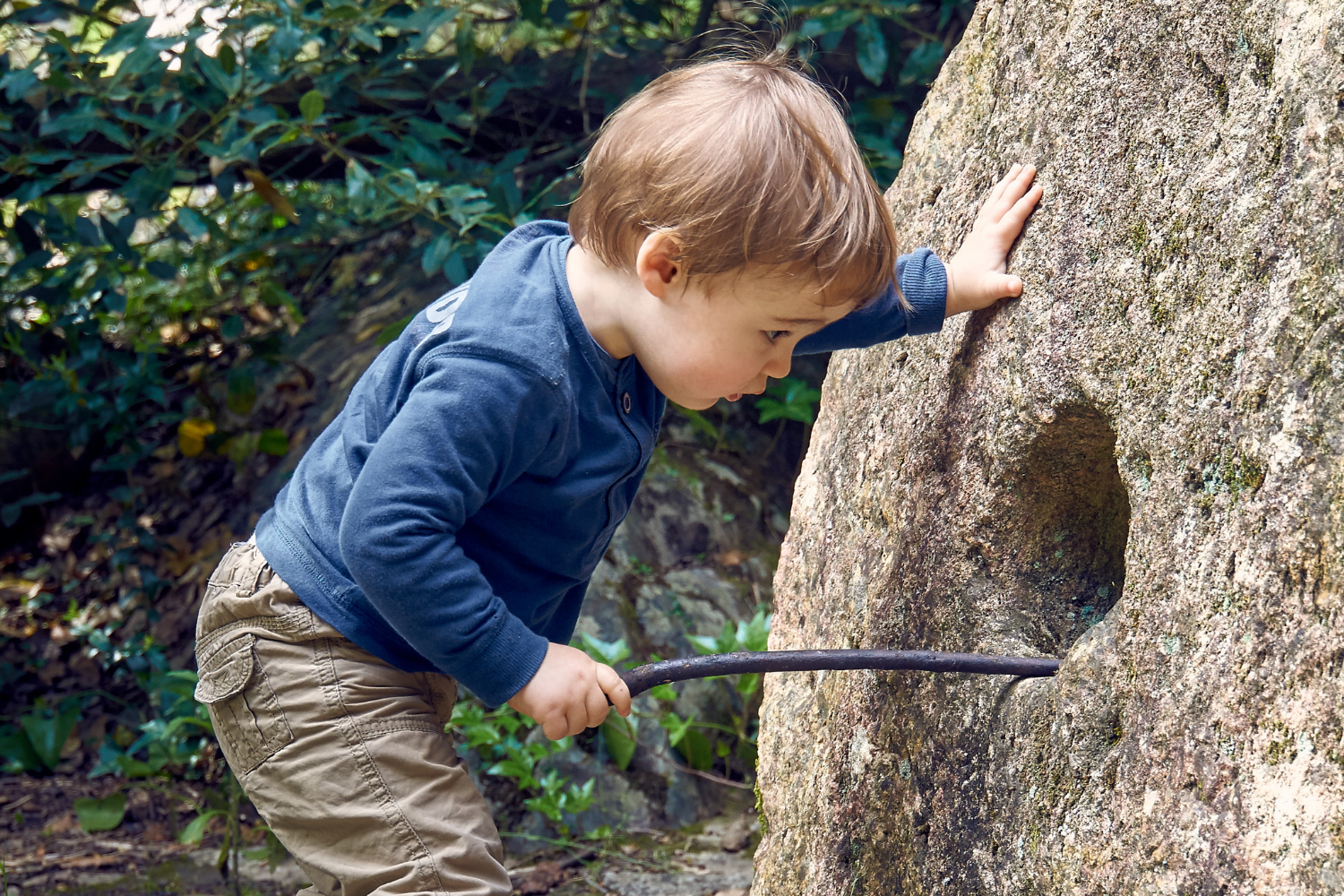
Be curious yourself. Take your child into the outdoors and explore with him. Let him walk barefoot on fallen leaves and dip his feet into spring water to awaken his senses. Bring his attention to the songs of birds and the rustling of the trees as the wind blows through them. Collect a bug or two and read about them when you get home.
Immediately remove all screens from your child's life both inside and outside the home. Under no circumstances should you hand him your cell phone to quiet him because you are busy. Screens are a cause of a dimming curiosity; not only that but they will thwart your child's brain development.
Lastly, if you can, don't put your child into any school programs until he is at least ten years old. Until then, teach him yourself because so many learning problems take root during those early years. The first few grades of elementary school are easy to teach when you have the correct understanding of homeschooling.
Ideally, you will continue to homeschool your children through high school, if circumstances permit.
“An investment in knowledge always pays the best interest.”
Our ability to excel, to become the best version of ourselves, begins with our desire to know. Let’s work to keep our children’s curiosity alive by teaching them ourselves— so they can become all that they can be.
Don’t miss your free download, 6 Reasons Homeschooled Kids Have Better Social Skills.
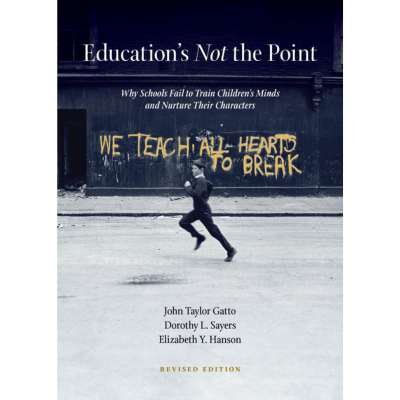
Get a copy of Liz’s “could not live without” book, Education’s Not the Point: How Schools Fail to Train Children’s Minds and Nurture Their Characters with groundbreaking Essays on educating your kids by John Taylor Gatto, Dorothy Sayers, and Liz herself.
Elizabeth Y. Hanson is a homeschooling thought-leader and the founder of Smart Homeschooler.

Developing a comprehensive understanding of how to raise and educate a “whole” child, based on tradition and modern research, Liz devotes her time to helping parents to get it right.
Liz is a homeschooling thought-leader, as well as the creator of two unique online courses, Raise Your Child Well: Preserving Your Child's Natural Genius by Laying a Solid Foundation During the First Seven Years and the Smart Homeschooler Academy: Homeschooling the "Whole" Child for a Well-Trained Mind and Character
As an Educator, Homeschool Emerita, Writer, and Love and Leadership Certified Parenting Coach, Liz has 23 years of experience raising children and working in education.
Elizabeth is available for one-on-one consultations as needed.
*****
“Elizabeth has given us counseling and guidance to help us succeed with our home school planning. When I feel overwhelmed, scared, or lose my confidence, she offers words of wisdom and support.”
— Sherry B., Pittsburg, PA

Steve Jobs had a habit homeschoolers can benefit from.
But first, consider this: on average, we make 35,000 decisions in a single day. As homeschoolers, it’s likely that we make even more of these than the average person.
After making thousands of decisions, we begin to experience what the theorists refer to as “decision fatigue.”
When decision fatigue kicks in, the quality of our decisions starts to plummet. Over time, poor decision making will compound and eventually determine how successfully or unsuccessfully we raise our children, which includes homeschooling them.
The key to making better decisions then is the Steve Jobs’ strategy.

You may know that Steve Jobs wore black T-shirts every day. He wasn’t being lazy or eccentric, he was practicing a technique to preserve his decision-making energy by automating trivial every day decisions
By wearing a black T-shirt, it was one less decision he had to make every day. The more decisions he could automate, the more energy he could conserve for more important Apple related matters.
How does the strategy of automating every day decisions translate into the life of a homeschooler? We make Black T-shirt decisions every day, such as when to pull ourselves out of bed, when to serve breakfast, and when to take a break between lessons.
Our more important decisions might include deciding upon the most appropriate discipline for a misbehaving child or whether or not to join a field trip mid-week when we already have a full week and want to maintain a healthy balance for our family.

These aren’t the same level of decisions Steve Job has to make, but they are not unimportant decisions. Each decision we make contributes to our competency—or lack of—as parents, and it helps to mold who our children become.
Our characters are the sum of our habits, and this is true for our children too. We want them to learn to act in the best way possible; not perfectly, but on the side of right choices more than wrong choices.
Effective parenting skills is one of the ways we help them to develop well, and these parenting skills are tied up in the little decisions we make all day long.
It follows then that the more Black T-shirt decisions we can automate, the more energy we’ll have for making decisions with foresight and wisdom, not from a place of reaction and exhaustion.
If the idea of automating some of your “black T-shirt” decisions makes sense, the first step is to begin paying attention to the decisions you make each morning.
Note which ones repeat themselves every day, such as how you spend your time before your children wake up, what clothes to wear, what time you’ll get your children out of bed, what clothes they’ll wear, who will clear the breakfast dishes, what chores need to be completed before homeschooling begins, and when you begin your homeschooling day.
That's a very short list of the thousands of decisions we make before the clock even strikes noon. Now that you have your list of decisions, you can then automate them by deciding one time how you will handle the decision, so you never have to waste time on it again.

For example, decide what your morning routine will be and stick to it. Maybe you’ll grab a cup of coffee and read a book, or you’ll workout for 30 minutes. Establish routines so you don’t waste energy deciding what to do and when to do it.
“In any moment of decision, the best thing you can do is the right thing. The worst thing you can do is nothing.”
On the night before you sleep, review your plan for the next day. If there are any trivial every-day decisions to make, make them at night when your children have gone to sleep and you can spare the energy.
Know what your morning plan is, know what your children's morning plan is, know what you will prepare for breakfast, and definitely know what you are going to wear the next day (hopefully not a black tee!).
Without a fixed plan, not only will decision fatigue plague us much earlier in the day, but we might also linger in bed another ten minutes, decide to skip chores that day because we mismanaged our time, or start homeschooling three hours later than we intended to. The end of the day will arrive, and we will not feel good about how we managed it.
“You are fettered,” said Scrooge, trembling. “Tell me why?”
”I wear the chain I forged in life,” replied the Ghost. “I made it link by link, and yard by yard; I girded it on of my own free will, and of my own free will I wore it.”
Automating as many decisions as possible will help us to stay on course, which is critical as homeschoolers. We have a window where we can teach our children, and that window passes quickly. If we aren’t careful, we can squander it on poor planning which leads to poor decision making.
Inevitably, we will face making decisions when we are tired. In many cases, we can postpone making the decision until the next day, but only if we are mindful about it. Staying present with our levels of energy will help us to determine when it’s better to postpone making a decision.
We all know that moment when a friend asks us to do something, such as go out to dinner or meet for coffee, but we know we don't have time to accommodate her. However, we're tired when she asks us, and we say yes anyway, only to regret it later.
Sometimes, if we know we want to decline an invitation, and we are maxed out on decisions for the day, we can also be clumsy in our reply and inadvertently offend a friend. The next day, thinking more clearly, we’ll have to patch up our blunder.

Knowing when to postpone making a decision or when to reply to someone is critical to maintaining harmonious relationships. When I look back at some of the poor choices I’ve made, it’s often because I made them at an inconvenient time.
Had I waited until I could think more clearly, I would have made a better decision and caused myself, and possibly a friend, less disappointment.
Learning how to manage our decision-making energy and to postpone making weightier decisions until we are refreshed will lead to better parenting skills, well-adjusted children, and less regret in life.

Don’t miss your free download, 6 Reasons Homeschooled Kids Have Better Social Skills.

Get a copy of Liz’s “could not live without” book, Education’s Not the Point: How Schools Fail to Train Children’s Minds and Nurture Their Characters with groundbreaking Essays on educating your kids by John Taylor Gatto, Dorothy Sayers, and Liz herself.

About Elizabeth Y. Hanson
Developing a comprehensive understanding of how to raise and educate a “whole” child, based on tradition and modern research, Liz devotes her time to helping parents to get it right.
Liz is a homeschooling thought-leader, as well as the creator of two unique online courses, Raise Your Child Well: Preserving Your Child's Natural Genius by Laying a Solid Foundation During the First Seven Years and the Smart Homeschooler Academy: Homeschooling the "Whole" Child for a Well-Trained Mind and Character
As an Educator, Homeschool Emerita, Writer, and Love and Leadership Certified Parenting Coach, Liz has 23 years of experience raising children and working in education.
Liz is available for one-on-one consultations as needed.
"I know Elizabeth Y. Hanson as a remarkably intelligent, highly sensitive woman with a moral nature and deep insight into differences between schooling and education. Elizabeth's mastery of current educational difficulties is a testimony to her comprehensive understanding of the competing worlds of schooling and education. She has a good heart and a good head. What more can I say?”
—John Taylor Gatto Distinguished educator, public speaker, and best-selling author of Dumbing Us Down: The Hidden Curriculum of Compulsory Schooling. For a copy of The Short Angry History of Compulsory Schooling, click here.

As women, we tend to think we are not enough as we are. Add homeschooling into the mix and our list of not enoughs now includes neither smart, nor patient, nor educated enough to homeschool.
The thought of homeschooling conjures up fears that you may fail, disappoint your family, or even worse, hinder your children's chances of success.
You might think that homeschooling moms are smarter, better educated, and have it more together than you do.
The truth is that even if all of these beliefs were true, which is unlikely, you could still succeed at homeschooling if you put your mind to it.
You can overcome the unwelcome thoughts in your head that say you are less than every other mother trying to give her child a better education at home.

To this, I would ask, who is? My father was in the category of truly learned men of the 20th century, and he never considered himself educated. My father's position used to baffle me until one day I understood that the more you know, the more you comprehend how little you know.
We still can’t answer fundamental questions with 100% certainty, such as, Who am I? Where did I come from? Where am I going?
“It’s an irony of life that the most simple questions contain the greatest mysteries.”
While it is true that most of us are far less intelligent than we would have been had we been properly educated during our prime learning years, but we can always choose to correct the problem.
It’s never too late to work at developing our intellects.
We used to think the brain became fixed at a certain age and didn’t change after that, other than to decline as you aged, but neuroscientists have shown that this isn't true. The brain continues to wire itself, which is why learning unto the grave prevents ailments like dementia and Alzheimers.
The good news is that you need not despair. When you homeschool, you will develop your mind alongside your children. Becoming smarter and improving your brain's capacity is a byproduct of homeschooling.
Talk to homeschooling moms to discover how this works. You'll find that homeschooling moms always have a lot of general knowledge. But ask them how much they knew before they began homeschooling, and their answers may surprise you.
I’ll go first: I did not know the eight parts of speech. I didn’t even know that there were eight parts of speech! As painful as it is to share this, it’s more painful to know so many moms are afraid to homeschool because they don’t know the eight parts of speech either.
I learned them and you will too. You don’t have to know everything to homeschool; you just have to want to know everything!
Even with no college education, you will still do a better job homeschooling your children than the public school system. There are millions of homeschooled kids to prove it.
Do not let a feeling of intellectual inferiority stop you. You will rise to the occasion and become a better person by having done so.
You may be impatient, but you can correct this. Impatience stems from three causes: 1) a physical imbalance or 2) an emotional imbalance, 3) bad habits.
When people are irritable and impatient, it can be for many reasons, including not enough sleep, poor dietary habits, health imbalances and not enough exercise.
If you feel run down and exhausted—and you don’t have a child under the age of two—you might consider seeking alternative health care to improve your diet, get on an exercise plan, and take any natural remedies they might recommend.

Exhaustion is not something you want to ignore, because you'll raise your voice more and have less time for your spouse. The latter can lead to a negative feedback loop too.
The less time you have with your spouse, the less support you feel, and the more exacerbated your symptoms become. Instead of being a respite for one another during the years when your young children are more demanding, you begin to grow apart and you obviously don’t want that to happen.
If you find yourself feeling overwhelmed, resentful, or unhappy with your life, it may be because you aren’t doing anything to replenish yourself. Mothers get into these states when they eliminate all the things they enjoyed doing before having children.
Life suddenly becomes all work and no play.
Play is important for children, but it’s also important for us. Play is what rejuvenates us and keeps us going. Figure out what it is that you love doing most and build some of it back into your life.
“When enough people raise play to the status it deserves in our lives, we will find the world a better place.”
Take care of yourself so you can take better care of those who depend on you without feeling overwhelmed.
If I could give my younger self one piece of advice, it would be this!

You may have a bad habit of getting upset too easily. In this case, you want to pay close attention to when this happens so you can start to correct your behavior. Easier said than done, I know, but you can do it.
You may think you don’t have the patience to homeschool. Homeschooling moms were dealt a “saint-like” portion of patience, but somehow you missed out. The assumption here is that homeschooling is going to be too challenging and difficult for you.
In my experience, the moms I work with find they have the patience to homeschool, often to their own surprise. If you get a sound handle on homeschooling, it’s fun to learn alongside your children, and you don’t need patience to do the things you enjoy doing.
The truth is, true homeschoolers would need to intend to fail their children and no one is going to do that.
But you won't know this until you take the leap. It takes courage to homeschool, and courage comes from acting despite your fears. We all experience fear, but mothers who homeschool don't let it get in their way.
The cost is too high, and they know it.
Not sure what kind of books to buy your children? Get Liz’s list of Ten Books Every Well-Educated Child Should Read.
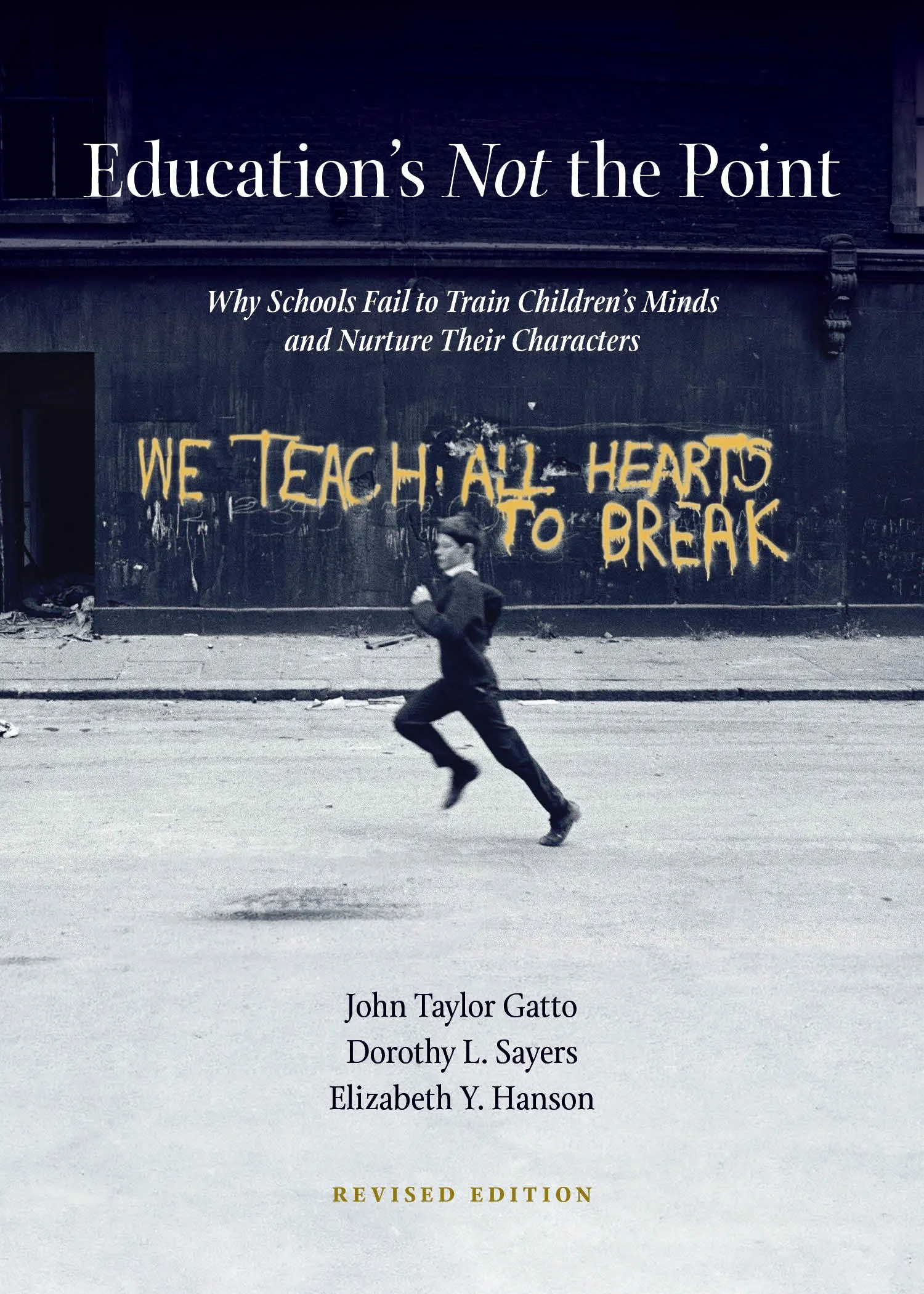
Grab a copy of the essential homeschooler’s book: Education’s Not the Point: How Schools Fail to Train Children’s Minds and Nurture Their Characters with gripping essays by John Taylor Gatto and Dorothy Sayers?
"I know Elizabeth Y. Hanson as a remarkably intelligent, highly sensitive woman with a moral nature and deep insight into differences between schooling and education. Elizabeth's mastery of current educational difficulties is a testimony to her comprehensive understanding of the competing worlds of schooling and education. She has a good heart and a good head. What more can I say?”
—John Taylor Gatto Distinguished educator, public speaker, and best-selling author of Dumbing Us Down: The Hidden Curriculum of Compulsory Schooling
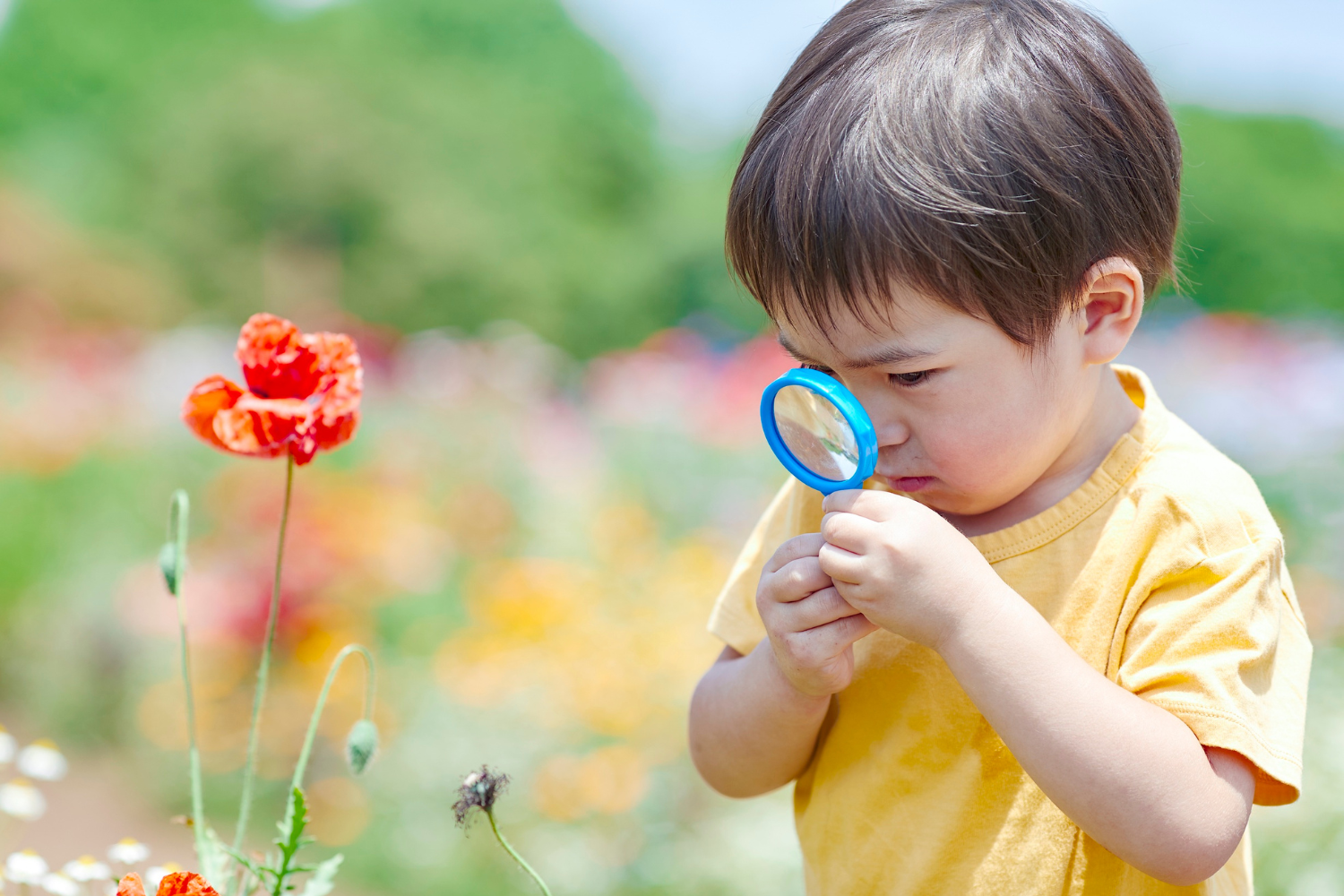
The ability to focus leads to faster comprehension, better memory retention, and more efficient study habits which equates to higher intelligence.
Children, however, are losing the ability to focus for sustained periods of time because we’re failing to raise them in ways that develop this skill. Then, when they are too easily distracted, we are very quick to cry "ADHD!"
When you observe infants, you will note how absolutely focused they become when something catches their interest.
What happens between that time and a ten-year-old’s inability to concentrate long enough to complete a task or follow directions?
Prior to the 1970s, only 1-3% of children were diagnosed with any problems of the ADHD sort. If only 1 - 3% of children had any learning or behavioral problems, should we not ask what’s going on?
Speaking from experience, I went through 12 years of schooling and never once encountered a classmate who couldn’t sit still and focus.
But childhood today looks very different from how kids experienced it 50 years ago, and with the different came a whole host of problems.

One of which is a country of over-medicated children. Regardless of whether or not your child has received an ADHD label—even though there is zero scientific proof that such a malady exists—there are many things you can do to help your child learn how to focus better.
Help your child develop the extremely important skill of listening. We overlook this skill today, but it is a skill that's vital to communication, comprehension, intelligence, and good manners.
“Being relevant simply consists in paying close attention to the point that is being talked about and saying nothing that is not significantly related to it.”
There are 3 things you start doing today, that will help your child tremendously:
1. Teach him not to interrupt you or anyone else when he is being spoken to.
2. Take him into nature and let him sit quietly while paying attention to every single sound he can hear.
Ask him to write down the sounds or, if he is too young to write, you can write them down for him. If you have multiple children, you can let them play a game of who can hear the most sounds. Children love little games like this.

We are losing the ability to hear more subtle sounds because of all the noise pollution in the world. Taking your children into nature and helping them to develop more acute hearing will serve them well.
Good hearing is critical to our safety, but also to the simple joys in life, such as playing a musical instrument, singing in tune, or listening to the songs of the birds.
3. Read out loud to your children every day.
Read to your children in the afternoons and before they sleep at night. This gives them plenty of time for developing good listening skills, as well as all the benefits that come from reading to your child.
Mortimer Adler said that the ability to listen is not a natural gift, but it's a skill that we must work to acquire. He also pointed out that nobody teaches it, though it should be taught.
Encourage your children to engage in activities that help develop their focus.
1. Provide your children with puzzles from an early age.
Puzzles require children to concentrate as they figure out where each piece of the puzzle goes.

2. Give your young children colored pencils and blank paper and let them draw for as long as they like.
For older children, teach them the rudiments of drawing because it not only develops the skill of observation (a critical skill for reading the signs of people’s characters), but it also requires that they focus intently on their subject.
3. Raise your children to play sports that require intense focus; such as ice skating, tennis, or ping pong.
Choose entertainment for your children wisely.
1. Raise your kids to love reading quality books. A good story will keep their focus for a long time.
If they are young and fidgety, give them Legos to play with while you read.
2. Have your children study a musical instrument and take them to classical music concerts.
3. Well, the last one you know. Keep your kids away from screens!
This is a no-brainer. All screen use interferes with a child’s brain development, social skills, and ability to concentrate and focus on the task at hand.
And, while we're helping our kids improve their focus, we can strengthen our own focus muscles too.
Many adults half-joke about having ADHD themselves. We do have an attention deficit problem, but not one that stems from a disease process.

A few things we can do to increase our focus include less screen time and more meditation, reading, and exercising, all of which are necessary for optimal brain function.
Reading alone improves our memories and focus, and it lowers stress levels. Exercise increases our “feel good” hormones, lowers stress levels, and protects our brains.
Meditating daily can increase the grey matter in our brains, which is critical for our memories and emotional well-being
The skill of being able to focus for long periods is so critical to many benefits in our lives, and it is not a difficult skill to develop.
It’s the consistent efforts over time that bring the greatest rewards. Less screen time and daily reading, exercising, and meditating equals greater focus and increased well-being.
Not sure what kind of books to buy your children? Get Liz’s list of 10 Books Every Well-Educated Child Should Read: CLICK HERE.
Get a copy of Liz’s “could not live without” book, Education’s Not the Point: How Schools Fail to Train Children’s Minds and Nurture Their Characters with gripping essays by John Taylor Gatto and Dorothy Sayers.

About Elizabeth Y. Hanson
Liz helps parents raise and educate , creative, resourceful, and respectful children by combining timeless wisdoms with modern research.
As an educator, writer, and Love and Leadership Certified Parenting Coach, she specializes in guiding families through their children’s early years and homeschooling journey.
Liz is a homeschooling thought-leader, as well as the creator of three unique online courses:
Whether you're navigating early childhood, considering homeschooling, or wanting to nurture a genuine love of learning in your child, Liz offers practical guidance rooted in proven principles.
She is available for one-on-one consultations as needed.
"I know Elizabeth Y. Hanson as a remarkably intelligent, highly sensitive woman with a moral nature and deep insight into differences between schooling and education. Elizabeth's mastery of current educational difficulties is a testimony to her comprehensive understanding of the competing worlds of schooling and education. She has a good heart and a good head. What more can I say?”

—John Taylor Gatto Distinguished educator, public speaker, and best-selling author of Dumbing Us Down: The Hidden Curriculum of Compulsory Schooling. For a copy of The Short Angry History of Compulsory Schooling, click here.

In 2026, so many parents have caught on to the dangers of screen use for their children, thanks to the work of people like Jonathan Haidt and his book, The Anxious Generation.
Consequently, many parents have made it a New Year's resolution to severely limit screen time and not just for their children.
For themselves too!
Each wise parent knows that her children will imitate her behavior.
If you are polite, your children will be polite. If you eat in moderation, your children will eat in moderation. If you read books, your children will read books.
Of course, this isn't a guarantee because there are other factors at play, but it's a good general principle to live by. As the saying goes: Monkey see, Monkey do—and this includes screen use too.
If you were not amongst the parents who resolved to reduce screen time for their children in 2026, do not despair. It is never too late to put good habits into place.
Good people are the sum total of good habits, as Aristotle taught us.
Instilling good habits in your children from an early age will make all of the difference. But again, there is never a guarantee. We do our best as parents, and we leave the outcomes up to a higher power, God, if I may.
Our job is to understand what we have to do. One of the things to consider today is the irresponsibility of the social media companies regarding your children’s well-being, and how it will affect your children's lives.
“Boys are at a greater risk than girls of “failure to launch.” They are more likely to become young adults who are “Not in Education, Employment, or Training.” ”
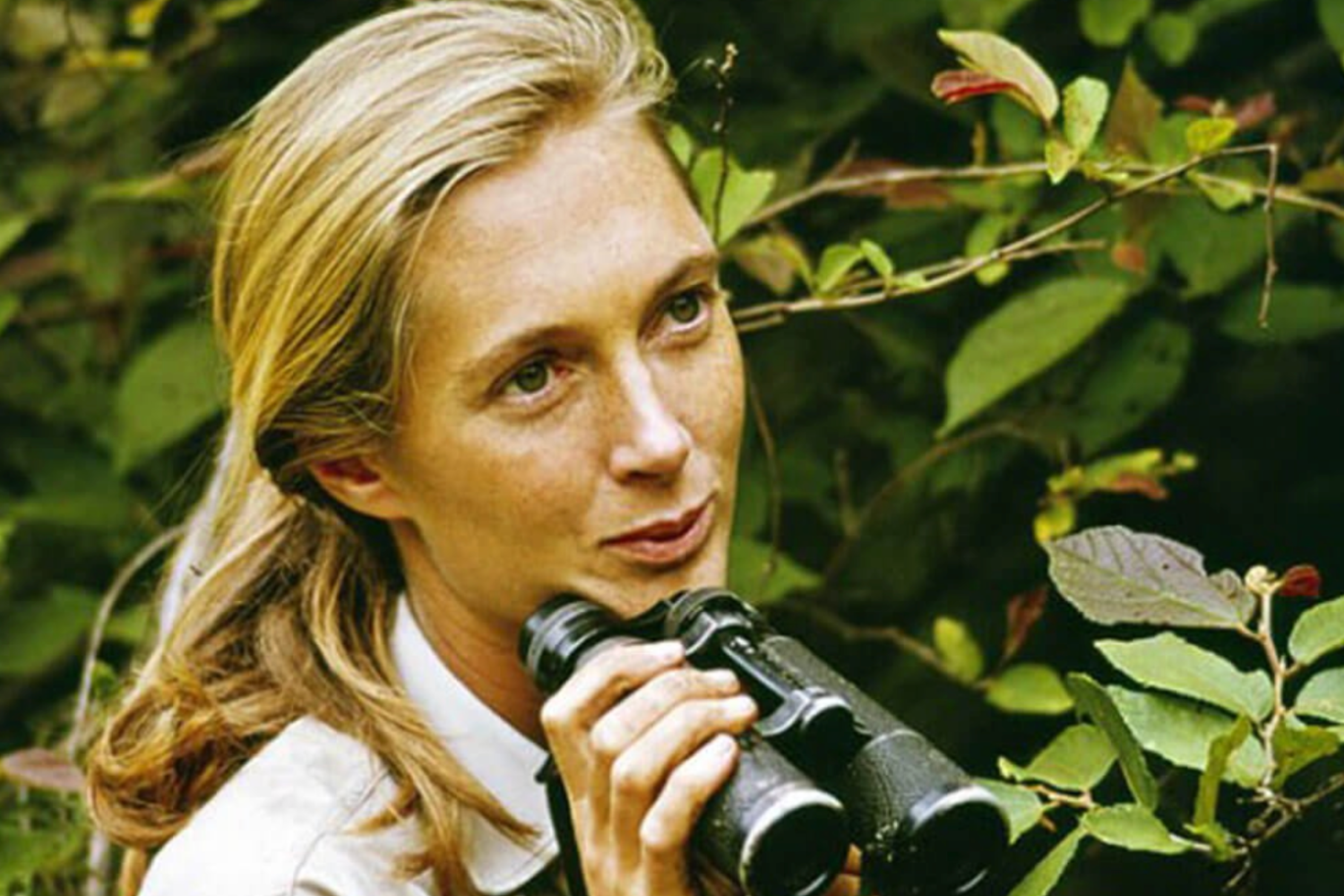
Now, I am politically neutral, as I think most politicians have their heads screwed on backwards these days, so what I am about to tell you is about the person, not the politics.
I watched the last interview with the beloved Jane Goodall, which aired after she passed, may she rest in peace. She tells her host that she would like to put Musk, Trump, Netanyahu, and a few others in a rocket and send them to the planet Musk is trying to inhabit.
I was surprised to hear her say these things, but then she knew she would be dead when her interview was aired.
As I listened, I have to admit that I was disappointed she hadn’t mentioned men, such as Mark Zuckerberg or Bill Gates, because they have definitely earned a place in that rocket.
John Taylor Gatto said that schools were dangerous places for children, but I would take it a step further and say that the Zuckerberg’s and Gates of this world are dangerous men for the children of this earth.
They are messing with the healthy development of a child’s heart and mind.
With more than very limited screen use, we have to recognize that our children’s ability to think clearly, rationally, creatively, and logically is at stake, as well as their emotional and mental health.
I have watched the dumbing down and over-medicating of America’s youth during my lifetime—this stuff is real.
And don't be shocked.
The idea of controlling people is as old as mankind. How much easier is it to control a non-thinking, medicated people than a people who can't be fooled?
Jane Goodall said these were the darkest times she has seen, but she also said never lose hope.
Fight to the end because we must always keep up our fight for our children's sake and for our children's children.
Our precious ones do not need to be corrupted by this stuff. They do not need to be brain-damaged by this stuff. They do not need to be made soulless by this stuff.
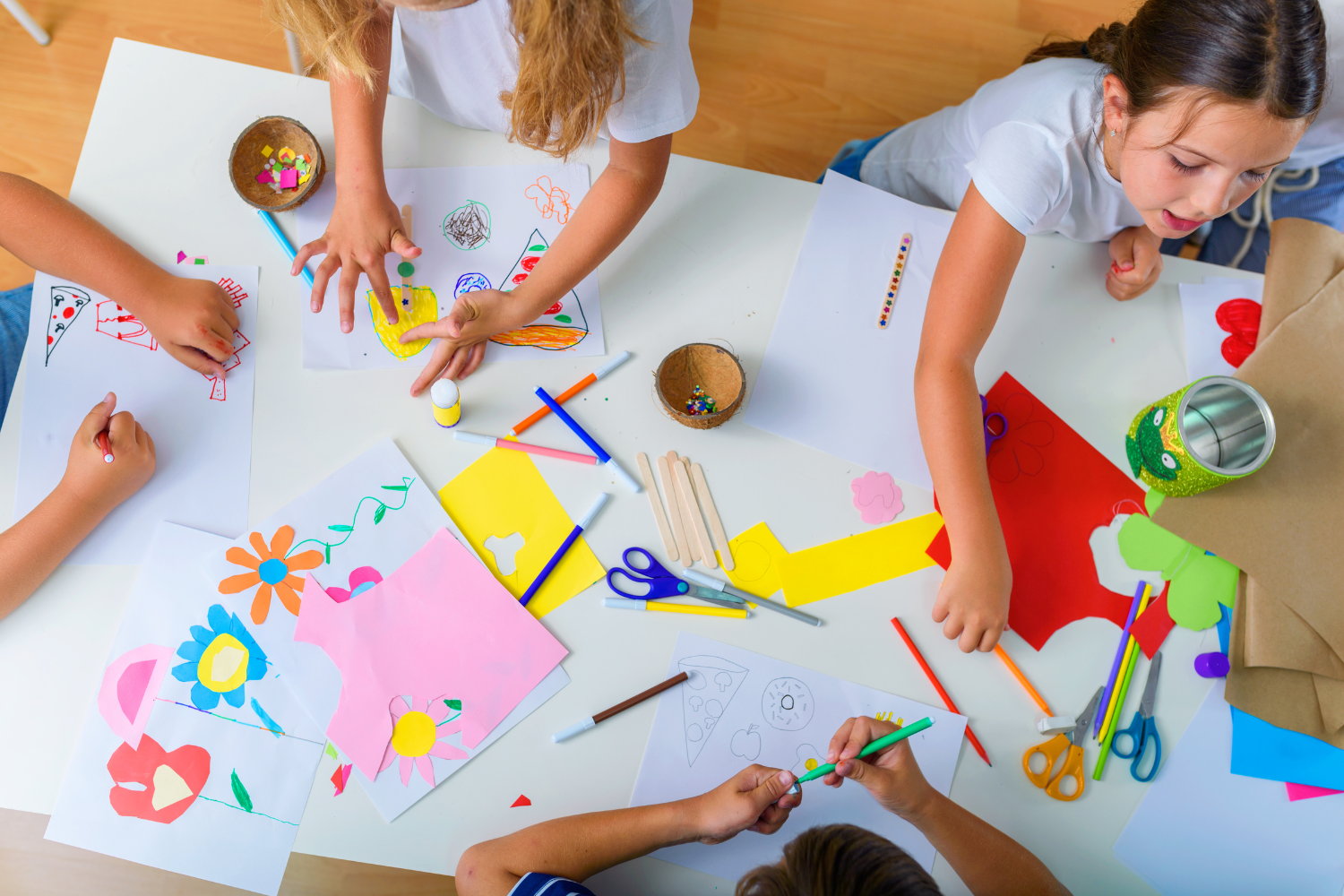
People who can think creatively and logically will be the people who are in demand for the future we are facing. Life as we know it is changing, and it is changing fast.
It's up to you and how you raise your children.
Be brave. Go against the grain. Find like-minded people. And say no to screens.
If you haven't made zero screen-use for your children a New Year's resolution yet, right now is the perfect time. Raise them without it. It's so much easier.
I did it. My parents, for the most part, did it. Parents throughout history have done it. Many, many young parents are saying no to screens for their children, even today when screen avoidance has become virtually impossible for adults.
Because they know it is harming their children, and as mama bears, it's unacceptable.
“There is a “God-shaped hole” in every human heart. Or at least, many people feel a yearning for meaning, connection, and spiritual elevation. A phone-based life often fills that hole with trivial and degrading content. The ancients advised us to be more deliberate in choosing what we expose ourselves to. ”
Don’t miss your free download: 10 Books Every Well-Educated Child Should Read.
Get a copy of Liz’s “could not homeschool without” book, Education’s Not the Point: How Schools Fail to Train Children’s Minds and Nurture Their Characters with Essays by John Taylor Gatto and Dorothy Sayers.
About Elizabeth Y. Hanson
Liz Hanson helps parents raise and educate whole children by bridging timeless wisdom with modern research.
As an educator, writer, and Love and Leadership Certified Parenting Coach with 23 years of experience, Liz specializes in guiding families through the transformative early years and the homeschooling journey. After successfully homeschooling her own children, she now devotes her expertise to helping other parents get it right from the start.
Liz is a homeschooling thought-leader, as well as the creator of three unique online courses:
Whether you're navigating early childhood, considering homeschooling, or wanting to nurture a genuine love of learning in your child, Liz offers practical guidance rooted in proven principles.
One-on-one consultations available, too.
"I know Elizabeth Hanson as a remarkably intelligent, highly sensitive woman with a moral nature and deep insight into differences between schooling and education. Elizabeth's mastery of current educational difficulties is a testimony to her comprehensive understanding of the competing worlds of schooling and education. She has a good heart and a good head. What more can I say?”
—John Taylor Gatto Distinguished educator, public speaker, and best-selling author of Dumbing Us Down: The Hidden Curriculum of Compulsory Schooling. For a copy of The Short Angry History of Compulsory Schooling, click here.
10 holiday gifts for children that are both educational and fun!
Read More
My son and I were on a train through the south of Germany when I looked to my left and saw a child reading. And then I saw another child reading. And then another child.
I said to my son, "Look, there's actually children reading on this train; how exciting!"
"What a sorry day it is when you get excited about a child reading," he replied.
"I know, tell me about it."
But non-reading kids are the reality today. Kids are staring at screens instead of absorbing what's going on around them, learning from great books, engaging in life, or socializing with real people.
“They are living virtual lives,” as my son put it.
My eyes kept glancing over at these children, and then I noticed their parents were speaking English. At some point, I couldn't hold back any longer, so I went up to the parents and told them it was a joy to see that they were raising kids who actually liked to read.
And they pointed down the train to another family of kids who were reading. I can't tell you what a delight it was to see kids with books in their hands and no screens.

We talked about the loss of reading in our culture, and they expressed their contentment in having kids who enjoyed a good book. I could see they were really pleased with their success in raising kids who read.
The youngest child, a boy, was playing hangman with his dad. His father said to me, "He is supposed to be reading too!"
These kids were all screen-free. No whining. No complaining. The children were happily occupied on a long train ride through Germany with their noses in books (minus one).
Took me back to my own kids and how they used to do the same. Or they’d gaze out the window and take in the sights or we’d chat about something they found interesting—as I’m sure the children on the train did too.
Amongst many other non-tech activities, screen-free kids will read books, and that's why "reading" kids are so uncommon now. Because kids have their noses stuck in screens, kids everywhere are staring at screens, kids are living in a virtual world.
They are growing up in an alternative reality.
However, luckily for us, it's not difficult to raise children who prefer a book to a screen, either. You just have to do two things.
Keep screens out of sight, and chances are that your kids will never ask for one.
Keep an endless supply of good books in your home.
In my experience, it's much easier to raise kids without screens than with "one hour after dinner" or "two hours on the weekend."
When you raise kids without screens, they learn how to occupy themselves, otherwise known as being resourceful. They won't whine and complain that they are bored, and they won't argue with you over screen time.
Honestly, keeping your kids screen-free will alleviate a lot of the tension in the home too.

And, if you have books in the house, they'll grow up reading too. My son told me, while on this train through southern Germany, that he read so much as a child because books were all there were in the house.
Exactly. He still reads.
Jonathon Haidt’s book, The Anxious Generation, spurred a movement to get smartphones out of schools, and it is proving to be quite successful.

But it always baffles me why so many parents wait until they are given permission to do what they know is best for their kids?
When it comes to our children, we have to protect them from the harmful elements of society, and smartphones are a very toxic and damaging element.
We have countless studies to prove it. We also have our common sense.
“In almost every house we’ve been,
We’ve watched them gaping at the screen.
They sit and stare and stare and sit...
Until they’re hpynotized by it,
But did you ever stop to think,
(What) This does to your beloved tot?
IT ROTS THE SENSES IN THE HEAD!
IT KILLS IMAGINATION DEAD!
...
IT MAKES A CHILD SO DULL AND BLIND
HE CANNOT THINK HE ONLY SEES!”
Today we have a generation of children who grew up with technology, and who are active in this movement to remove smartphones from schools.
They know the harm it causes their generation, and they want it to stop. We are hearing this from the children!
They want it to stop.
One parent told me that her older kids told her not to let the younger children near technology. They recognized the damage it had done in their lives, and they wanted their mother to understand this and to protect their younger siblings.

There is one caveat with the "no screen" policy, and that is that when you are raising children, you need to find like-minded families to raise your kids with. Your kids can't be the only "screen-free" kids if you are raising them amongst technophiles.
It becomes the "forbidden apple" syndrome. They'll want what their friends have but they can't have. Eventually, they'll grow up and head straight for the technology.
In this case, two hours on the weekend is a good compromise. But if you have like-minded friends who keep their kids off of tech, that's ideal.
The general rule of thumb is that if your kids want a phone, wait until they are at least 16 and let them get a job to pay for it. Also, no smartphones. Flip phones only for as long as they live with you. I got this bit of advice from my mentor and parenting guru John Rosemond, and it is sound advice.
Read a book about the dangers of technology on a child's developing brain, socio-emotional skills, and physical health. For this, I would recommend Glow Kids by Dr. Nicholas Kardaras.

Invite some friends to read the book with you and discuss ways you can agree to keep your kids away from screen use.
Become a support group for one another in raising tech-free children.
Given the studies about the harm technology causes to a child's grown brain, it seems a no-brainer that kids growing up without technology would be more intelligent, more socially adept, more emotionally balanced, and have better physical health.
Say no to your kids now, and later they will be grateful to you for protecting them against the ills of screen use in childhood. As more and more studies come out, more and more people are becoming aware of how utterly damaging screen use is to children.
By the time your kids are grown, even more research will have been published. If you let them use screens now, they may grow up to ask you, "Why?"
Many children are asking this question today. Don't let yours be the next.
Get a copy of Liz’s “could not live without” book, Education’s Not the Point: How Schools Fail to Train Children’s Minds and Nurture Their Characters with Essays by John Taylor Gatto and Dorothy Sayers.

About Elizabeth Y. Hanson
Liz Hanson helps parents raise and educate whole children by bridging timeless wisdom with modern research.
As an educator, writer, and Love and Leadership Certified Parenting Coach with 23 years of experience, Liz specializes in guiding families through the transformative early years and the homeschooling journey. After successfully homeschooling her own children, she now devotes her expertise to helping other parents get it right from the start.
Liz is a homeschooling thought-leader, as well as the creator of three unique online courses:
Whether you're navigating early childhood, considering homeschooling, or wanting to nurture a genuine love of learning in your child, Liz offers practical guidance rooted in proven principles.
One-on-one consultations available.
"I know Elizabeth Y. Hanson as a remarkably intelligent, highly sensitive woman with a moral nature and deep insight into differences between schooling and education. Elizabeth's mastery of current educational difficulties is a testimony to her comprehensive understanding of the competing worlds of schooling and education. She has a good heart and a good head. What more can I say?”
—John Taylor Gatto Distinguished educator, public speaker, and best-selling author of Dumbing Us Down: The Hidden Curriculum of Compulsory Schooling. For a copy of The Short Angry History of Compulsory Schooling, click here.

Modern sciences tells us that to a significant degree, we wire our own brains. So how does the brain get wired for creativity? Why are some people more creative than others? Can we teach creativity?
To the latter two questions, some people will always be "more" than others—let's not put our attention there—and, contrary to what many experts believe, creativity cannot be taught.
Creativity is not a skill that someone can teach us, such as we might learn critical thinking skills from a logic teacher or how to play the piano from a piano teacher, because creativity is more like curiosity.
We can't teach a child to be curious because children are born curious, but we can teach a child not to be curious. We do this very successfully in school where children learn to curb their questions or stop asking them at all.

And what a tragedy because curiosity is at the root of creativity and creativity is at the root of genius.
Do you ever wonder what great contributions to the world and to humanity have we missed because of our factory school model?
“I don’t want a nation of thinkers. I want a nation of workers. ”
According to the late scientist, George Land, we can also teach children not to be creative, yet, without creativity, there is no genius.
Creative people are curious about the external world, the internal world, and the world of possibility. Creative people connect unrelated ideas to form an original idea. They find solutions to problems that others can't see. They imagine what could be and bring it to life.
They are the creators.
But curiosity can’t be all a child needs because all healthy children are born curious. Enter George Land, who did a creativity study for NASA, and what came out of that study was the realization that 98% of children have imaginations that operate in the zone of genius, until they go to school.
“I’ve concluded that genius is as common as dirt. We suppress genius because we haven’t yet figured out how to manage a population of educated men and women. The solution, I think, is simple and glorious. Let them manage themselves.”
But that study was conducted in the 1968. A lot has changed since then, and, besides the problem of school, there are a lot of other factors contributing to dull minds.
So how do we get it right today? Consider that your child is like a garden you want to grow, so you have fresh vegetables, fruits, and flowers.
You have cleared the ground, prepared the soil, created rows, and planted seeds according to kind.

But that's not all that’s required of you to produce a vibrant, healthy garden. You have to water the plants, make sure they get the right amount of sunshine, and sometimes shade, and make sure the soil has the right combination of minerals to nurture the plant.
Children, like plants, also need the right kind of environment in order for their creativity to bloom and blossom. Let's look at a few of the many ways in which you can adjust your child's environment to help nurture his creativity.
Science tells us that stress kills creativity. I know this is true, and I'm sure you do too. It's difficult to be creative when we have a lot of stress because our energy goes towards dealing with overwhelming challenges in order to meet our basic needs and responsibilities. What time is there left for being creative?
Children also experience stress. It's critical to their neurological and emotional development that they feel safe, loved, and cared for. Children need a home environment that meets these needs, which means that they also need us.
The worst environment for a young child is daycare, preschool, kindergarten, first grade, and even second grade, according to an analysis of approximately 8000 early childhood studies conducted by Dr. Raymond Moore in the 1970s.
One of the many things he discovered is that if children are kept out of school until they are about age ten, they will experience better mental and emotional health. Let me take the liberty of adding that common sense dictates they will be more creative too.
Unstructured play is critical for raising a child who is creative. Play-based programs are not bad but they are not beneficial either, unless you need a break. And, let's be honest, it isn't easy raising children without extended family help. Some of us need more breaks than others, and that's okay.
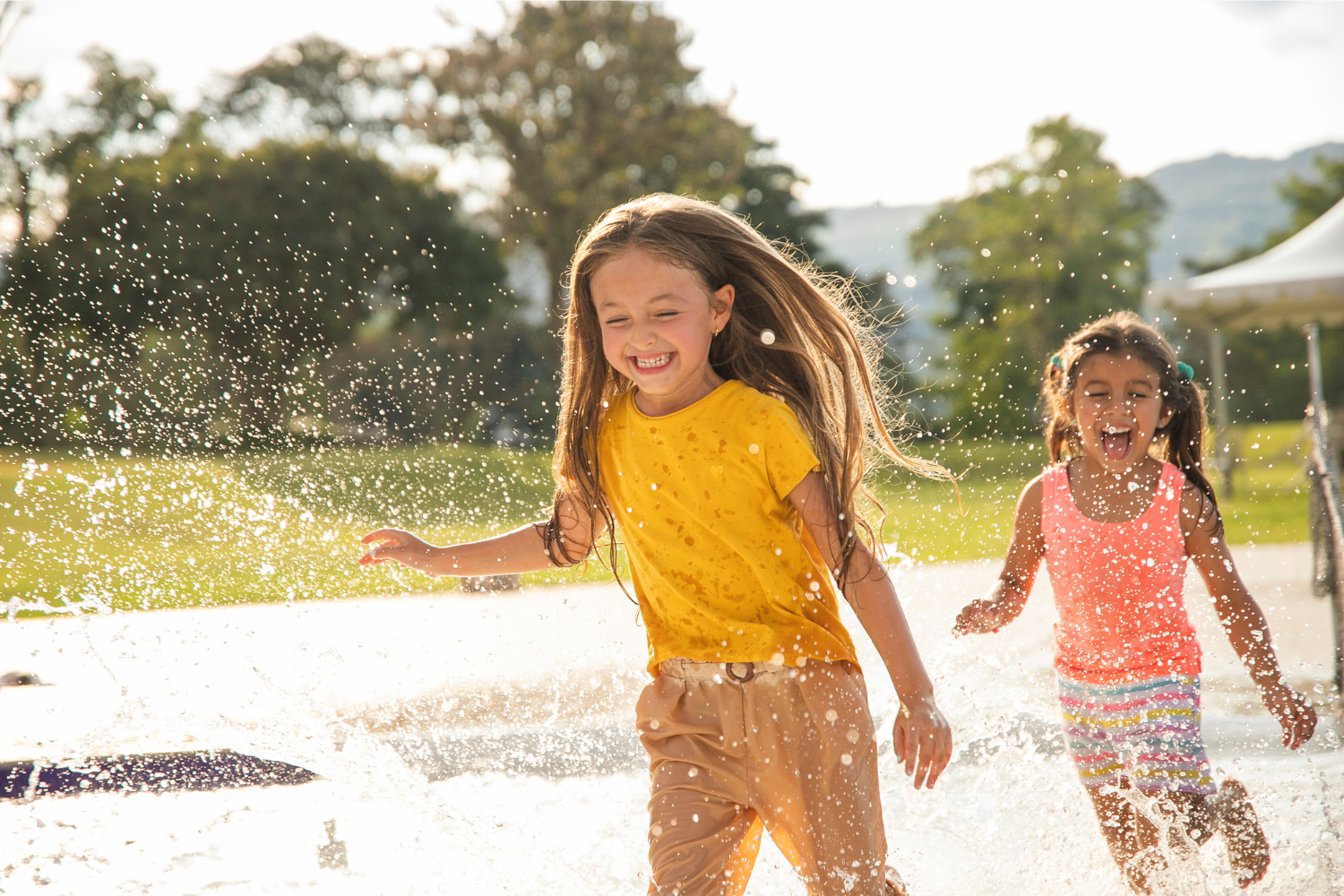
Structured play found in programs deprives children of the kind of play that comes from within, which is the best kind for developing creativity. As long as you aren't about to pull your hair out, I'd opt for unstructured play over play programs.
Play serves many purposes, all of which are fundamental to the healthy development of a child, and one of them is developing the imagination which make-believe play nurtures.
For example, a child can turn a box into a castle and he will see a castle, he won't see a box. The last thing we want to do is to tell him to "put the box away!" Children encounter problems in their free play which they need to solve. All problems require creative solutions to solve them.
A child who can help himself should always be encouraged to help himself. Say your child decides that he wants to draw a bird, but every time he draws the bird he messes up the bird's beak. Now he whines from frustration. You don't want to step in and help him.
Let him learn to work through his frustration now rather than getting into the habit of falling apart when things don't go the way he wants them too.
“Parents should not agonize over anything a child does or fails to do if the child is perfectly capable of agonizing over it himself.”
Habits like "easy-to-get-frustrated" are not easy to break as adults, and they will get in the way of your child's ability to function in a healthy, productive way as an adult.
Tough love means being willing to let our children experience uncomfortable emotions, so they learn to accept them as part of life's journey without losing hope and giving up too soon. How else will they be able to accomplish anything?
Read rhymes to your children and play rhyming games with them to build their creativity muscle. You say a word or sentence and they have to find a word or sentence that it rhymes with.
Fairy tales will also stimulate a child's imagination, especially if the book contains few to no illustrations.
Children love picture books, and these kind of books have their place, but without the pictures, children use their imaginations to conjure up the scene in their mind. This also makes reading more enjoyable for them.
Have you ever read a book and then watched the film it was based on? There is nothing worse than having a perfectly imagined character in your mind, only to have Hollywood ruin it for you. After that, you will always see the Hollywood actor, never your original creation.
If you've been reading my weekly blog posts, you know what I am going to say next don't you?
Absolutely no screens for your budding genius! Nothing will kill a child's memory, imagination, or curiosity faster than screen use.

The bad news is that if all of their friends are using screens, you may not want to become the "problem" parent. I don't recommend it because the screen becomes the forbidden apple, and your kids will flock to them as soon as they get the chance.
When I was young, my mother threw out all of the white sugar in the house. I used to go to my best friend's horse and eat sugar from the sugar bowl. You don't want your children doing this with screens.
The good news is that if you are able to recruit other parents or find parents whose children are screen-free, then your children will think a screen-free childhood is what's normal. Sadly, it isn't, but they don't need to know this right now.
Did you know that there are many young adults now who are disappointed with their parents for letting them have screens and phones when they were younger?
Please, please, please don't let your child be one of them!
If you follow the guidelines here, your children will be developmentally ahead of most of their peers who are in school and using screens, and they'll be well on their way to living a more productive and enriching life.

Get a copy of Liz’s “could not live without” book, Education’s Not the Point: How Schools Fail to Train Children’s Minds and Nurture Their Characters with groundbreaking Essays on educating your kids by John Taylor Gatto, Dorothy Sayers, and Liz herself.
About Elizabeth Y. Hanson
Developing a comprehensive understanding of how to raise and educate a “whole” child, based on tradition and modern research, Liz devotes her time to helping parents to get it right.
Liz is a homeschooling thought-leader, as well as the creator of three unique online courses, Raise Your Child Well: Preserving Your Child's Natural Genius by Laying a Solid Foundation During the First Seven Years; the Smart Homeschooler Academy, educating children who are brilliant, happy, and well-socialized; and How to Teach Your Child to Read and Raise a Child Who Loves to Read.
As an Educator, Homeschool Emerita, Writer, and Love and Leadership Certified Parenting Coach, Liz has 23 years of experience guiding parents through the amazing journey of raising and educating their children.
Liz is available for one-on-one consultations as needed.
"I know Elizabeth Y. Hanson as a remarkably intelligent, highly sensitive woman with a moral nature and deep insight into differences between schooling and education. Elizabeth's mastery of current educational difficulties is a testimony to her comprehensive understanding of the competing worlds of schooling and education. She has a good heart and a good head. What more can I say?”
—John Taylor Gatto Distinguished educator, public speaker, and best-selling author of Dumbing Us Down: The Hidden Curriculum of Compulsory Schooling. For a copy of The Short Angry History of Compulsory Schooling, click here.
It turns out that raising a child with the “special-child” syndrome is exactly what kills empathy.
Read More
Our children, as you know, are impressionable. The things impressed upon them when young are difficult, if not impossible, to erase later.
One of the advantages when homeschooling is that we get to raise our children in a bubble, something I'm pretty sure Socrates would approve of.
“A teacher affects eternity; he can never tell where his influence stops.”
We can choose to expose our children to the kind of literature, people, and experiences that will model the behavior we want them to embody as adults. When we do this, they get the kind of impressions when young that lead to happy lives when grown.
Reading quality literature is critical too. When we read stories about virtuous people and unethical people, and the righteous people win in life and the wretched people don't, your children are learning that happiness comes with goodness.

The ancient Greeks taught us this many centuries ago, and fortunately, modern psychology has caught up with the past.
We can all agree now, I hope, that goodness leads to happier lives!
Another thing the ancient Greeks taught us is that when we normalize unsavory behavior in our children’s lives, such as letting them read the wrong kind of literature or watch the wrong kind of films, our children are more inclined to excuse it in themselves.
When choosing the families you decide to surround your family with while raising your children, choose families who share your values and beliefs, whatever they are. We influence one another just by being in each other's company, and our children are influenced too.
“I hold that a strongly marked personality can influence descendants for generations.”
If you have friends who have qualities that you admire, raise your children to be close to them. As adults, my children will visit my friends, even when I'm out of town! Of course, now they are "our" friends, but I love that my children have close relationships with so many good people.
Friends who have special talents, such as musicians, poets, and artists, or friends who are skilled professionals, such as lawyers, doctors, and writers, may not only influence your children, but they may inspire one of them to follow the same path.

Sometimes we overlook the little things, but it's those little things, such as what books we read to our children, what friends we keep, and what environments we create, that make the biggest differences for who our children grow up to become.
That's why often you'll see that parents who are intellectuals will raise children who are intellectuals, athletes will raise children who are athletes, and artists will raise children who are artists.
Environment matters more than we may realize. If our children are surrounded by books, they'll read; if they are surrounded by sports equipment, they'll play sports; if they are surrounded by live music in the home, they'll play an instrument.
I didn't understand these things when my children were young like I understand them now, but I was fortunate in that I come from a big family. My children grew up in the company of intellectuals, artists, musicians, writers, lawyers, entrepreneurs, teachers, gourmet cooks, and sportsmen of all kinds.

My children had a lot of great influences in their childhoods, and that's exactly what you want for your children. If you don't have the luxury of coming from a big family with a lot of varied interests and skills, then seek those people out and welcome them into your family’s life.
When I was homeschooling, I remember a neighbor complaining to me that I was raising my children in a bubble, and when my children grew up, they would not know how to function in the world.
“I am a thousand times better: I am an honest woman, and as such I will be treated.”
Well, they grew up and proved that person wrong. So will yours. Protect your children’s innocence for as long as you can, raise them on quality literature and surround them with excellent people.
Keep an engaging but pristine environment for them and then sit back and watch them blossom into grown people with whom you feel grateful to have in your life.
Don’t miss your free download, 6 Reasons Homeschooled Kids Have Better Social Skills.
Get a copy of Liz’s “could not live without” book, Education’s Not the Point: How Schools Fail to Train Children’s Minds and Nurture Their Characters with groundbreaking Essays on educating your kids by John Taylor Gatto, Dorothy Sayers, and Liz herself.
About Elizabeth Y. Hanson
Developing a comprehensive understanding of how to raise and educate a “whole” child, based on tradition and modern research, Liz devotes her time to helping parents to get it right.
Liz is a homeschooling thought-leader, as well as the creator of two unique online courses, Raise Your Child Well: Preserving Your Child's Natural Genius by Laying a Solid Foundation During the First Seven Years and the Smart Homeschooler Academy: Homeschooling the "Whole" Child for a Well-Trained Mind and Character
As an Educator, Homeschool Emerita, Writer, and Love and Leadership Certified Parenting Coach, Liz has 23 years of experience raising children and working in education.
Liz is available for one-on-one consultations as needed.
"I know Elizabeth Y. Hanson as a remarkably intelligent, highly sensitive woman with a moral nature and deep insight into differences between schooling and education. Elizabeth's mastery of current educational difficulties is a testimony to her comprehensive understanding of the competing worlds of schooling and education. She has a good heart and a good head. What more can I say?”
—John Taylor Gatto Distinguished educator, public speaker, and best-selling author of Dumbing Us Down: The Hidden Curriculum of Compulsory Schooling. For a copy of The Short Angry History of Compulsory Schooling, click here.

Maybe, like me, you’ll also be surprised to learn that "Why homeschooling is a bad idea" is a commonly searched question on the internet.
Which got me thinking about the reasons for why some people believe this and when homeschooling might truly be a bad idea for some families.
As it may be of interest to you, I've put together 8 reasons for why homeschooling might be considered a bad idea.
With 23 years of experience behind me, I'll share with you what I've seen work and not work when it comes to homeschooling, and I'll share some common misunderstandings that mislead parents about homeschooling.

Our job as parents is to raise our children to be civilized, independent, and the best of who they can be. To do this, children need to be with people who model civlized behavior, they need the freedom to decide how to use their own time, and they need to develop well physically, emotionally, and neurologically.
Once the children have a solid foundation in place, with the proper guidance, they will be able to grow into civilized, independent adults who operate from a place of integrity. However, when we put children into school too early, we interrupt this process.
“Childish people, for all the noise they make, are nearly helpless. They always fall back into line because they have no other choice, they lack the inner resources to be self-sustaining. ”
Contrary to tons of research, many parents still believe that putting their children into early education programs is what's best for their children, and, by default, homeschooling becomes a bad idea.
Few of us stop to consider what a quality education should look like, and how providing one for our kids will have a positive effect on their entire lives.

If parents have been deceived into misunderstanding what their children are capable of, and they don't know how far below their children's capability levels the public schools hover, then they won't see the point of homeschooling their kids, and again, homeschooling becomes a bad idea. After all, why would you bother?
Children need people in their lives to model good social skills for them. This is one of the ways they learn social skills. What they don't need is school. No child is going to learn good social skills from other children, and especially not from a school system where their teachers are not allowed to discipline and correct their behavior.
“Being considerate of others will take your children further in life than any college degree.”
Social skills amongst homeschooled children have been studied, and the homeschooled come out ahead for obvious reasons. There's no rocket science here. So, even for improving one’s social skills, homeschooling is not a bad idea.
This last one is a growing problem because the kids these parents know aren't really being homeschooled; they're in virtual schools. If all a parent knows are kids who are being "educated" through virtual schools, then they don't know anything about homeschooled kids.

These virtual schoolers sit in front of computers for too many hours a day; they don't socialize, and they don't learn much. They are even registered through the state as a public school student.
Since Covid there has been a mass movement towards online education, and the most recent national study shows that schoolkids are still way behind academically.
Go figure.
We need to keep our kids out of these fraudulent, dumbed-down programs! Our children are smart, and they deserve an education.
All relatively sane parents want what is best for their children. Yet, when it comes to education, some parents believe that what is best is public school, and some parents believe that what is best is homeschooling.

When two parents disagree on which kind of education is best for their children, homeschooling may not be the best option, however, it depends upon the level of respect between the parents.
What I have seen over the years is that the parent against homeschooling, which is usually the father, may agree to the children being homeschooled for a year, but it is on a "trial" basis.
If the father is respectful and truly supportive of his wife's efforts, and if the wife knows what she's doing, then homeschooling will usually prove itself, and he then becomes convinced that homeschooling trumps school.
But if the father is disrespectful towards the mother, especially in front of the children, and he undermines her efforts to give her children a better education, then the children tend to eventually side with the father, and the mother will have little choice but to give up her dreams of homeschooling her precious ones.
“A father’s contribution to his children is primarily a measure of how much he adores their mother.”
Sometimes you see the situation reversed, but it is less common because the mother typically does the teaching. If she doesn't want to homeschool, she is not going to "try it out."
Overall, homeschooling is the better option if you want to raise children to be brighter, happier, and better socialized. How we raise and educate our children will largely determine the quality of the life they live.
It's a few years of work for us but a lifetime for them.
Register for Liz’s FREE masterlclass, Homeschooling for Success: 3 Critical Questions Each New Homeschooler Must Ask.
Don’t miss your free download, 6 Reasons Homeschooled Kids Have Better Social Skills.
Get a copy of Liz’s “could not live without” book, Education’s Not the Point: How Schools Fail to Train Children’s Minds and Nurture Their Characters with groundbreaking Essays on educating your kids by John Taylor Gatto, Dorothy Sayers, and Liz herself.
Elizabeth Y. Hanson is a homeschooling thought-leader and the founder of Smart Homeschooler.
As an Educator, Homeschool Emerita, Writer, and Love and Leadership Certified Parenting Coach, she has 23 years of experience working in education.
Developing a comprehensive understanding of how to raise and educate a child, based on tradition and modern research, Liz devotes her time to helping parents to get it right.
Liz is available for one-on-one consultations as needed.
"I know Elizabeth Y. Hanson as a remarkably intelligent, highly sensitive woman with a moral nature and deep insight into differences between schooling and education. Elizabeth's mastery of current educational difficulties is a testimony to her comprehensive understanding of the competing worlds of schooling and education. She has a good heart and a good head. What more can I say?”
—John Taylor Gatto Distinguished educator, public speaker, and best-selling author of Dumbing Us Down: The Hidden Curriculum of Compulsory Schooling. For a copy of The Short Angry History of Compulsory Schooling, click here.

The ability to focus leads to faster comprehension, better memory retention, and more efficient study habits. When you add this up, it means that your children will learn more, and therefore, do better academically.
Children are losing the ability to focus well because we are not raising them in environments that demand they focus, and then when they get easily distracted, we are too quick to cry "ADHD!"
When you observe infants, you will note how extremely focused they become when something catches their interest. If you've given your children a wholesome childhood, they too should be able to focus well, and they certainly should not suffer from ADHD.
Prior to the 1970s, only 1-3% of children were diagnosed with any problems of this sort. If only 1 - 3% of children had any learning or behavioral problems, should we not ask what’s going on?
Speaking from experience, I went through 12 years of schooling and never once encountered a classmate who couldn’t sit still and focus. I know what is possible!
But childhood today lookw very different from how kids experienced it 50 years ago, and with the different came a whole host of problems.
One of which is a country of overmedicated children. Regardless of whether nor not your child has received an ADHD label, there are many things you can do to help your child learn how to focus better.
Help your child develop the extremely important skill of listening. We overlook this skill today, but it is a skill that's vital to communication, comprehension, intelligence, and good manners.
“Being relevant simply consists in paying close attention to the point that is being talked about and saying nothing that is not significantly related to it.”
There are 3 things you start doing today, that will help your child tremendously:
1. Teach him not to interrupt you or anyone else when he is being spoken to.
2. Take him into nature and let him sit quietly while paying attention to every single sound he can hear. Ask him to write down the sounds or, if he is too young to write, you can write them down for him. If you have multiple children, you can let them play a game of who can hear the most sounds. Children love little games like this.
We are losing the ability to hear more subtle sounds because of all the noise pollution, so taking your children into nature and helping them to develop more acute hearing will serve them well, especially if they learn how to play a musical instrument.
3. Read out loud to your children every day.
If you can read to them in the afternoon and before bed, that would be ideal. This gives them plenty of time for developing good listening skills, as well as all the benefits that come from reading to your child.
Mortimer Adler said that the ability to listen is not a natural gift, but it's a skill that we must work to acquire. He also pointed out that nobody teaches it, though it should be taught.
Encourage your children to engage in activities that help develop their focus muscle.
1. Provide your children with puzzles from an early age.
As they get older, get them more difficult puzzles. Puzzles requires children to focus acutely as they think about where each piece goes.
2. Give your young children colored pencils and blank paper and let them draw for as long as they like.
For older children, teach them the rudiments of drawing because it not only develops the skill of observation (critical to reading people), but it also requires that they focus intently on their subject.
3. Raise your children to play sports that require intense focus; such as ice skating, tennis, or ping pong.
Choose entertainment for your children wisely.
1. Raise your kids to love reading quality books. A good story will keep their focus for a long time.
2. Have your children study a musical instrument and take them to classical music concerts.
3. Well, the last one you know. Keep your kids away from screens!
This is a no-brainer as any screen use interferes with a child’s brain development, social skills, and ability to focus well.
And, while we're helping our kids improve their focus, we can strengthen our own focus muscles too. We live in a highly distractable time, and everyone I know seems to complain about the need to improve their focus.
For that, it's a simple formula: a little less Netflix, a little less internet scrolling, and a little more meditation and exercise every day works wonders.
Register for Liz’s FREE masterlclass, Top 3 Secrets to Homeschooling for success!
Don’t miss your free download, 31 Screen-Free Activities to Support Your Child's Developing brain.
Get a copy of Liz’s “could not live without” book, Education’s Not the Point: How Schools Fail to Train Children’s Minds and Nurture Their Characters with Essays by John Taylor Gatto and Dorothy Sayers.
Elizabeth Y. Hanson is a homeschooling thought-leader and the founder of Smart Homeschooler.
As an Educator, Homeschool Emerita, Writer, and Love and Leadership Certified Parenting Coach, she has 23 years of experience working in education.
Developing a comprehensive understanding of how to raise and educate a child, based on tradition and modern research, Liz devotes her time to helping parents to get it right.
Liz is available for one-on-one consultations as needed.
"I know Elizabeth Y. Hanson as a remarkably intelligent, highly sensitive woman with a moral nature and deep insight into differences between schooling and education. Elizabeth's mastery of current educational difficulties is a testimony to her comprehensive understanding of the competing worlds of schooling and education. She has a good heart and a good head. What more can I say?”
—John Taylor Gatto Distinguished educator, public speaker, and best-selling author of Dumbing Us Down: The Hidden Curriculum of Compulsory Schooling. For a copy of The Short Angry History of Compulsory Schooling, click here.
My son and I were on a train through the south of Germany when I looked to my left and saw a child reading. And then I saw another child reading. And then another child.
I said to my son, "Look, there's actually children reading on this train; how exciting!"
"What a sorry day it is when you get excited about a child reading," he replied.
"I know, tell me about it."
But non-reading kids are the reality today. Kids are staring at screens instead of absorbing what's going on around them, learning from great books, engaging in life, or socializing with real people.
No, they are living “virtual lives,” as my son put it.
My eyes kept glancing over at these children, and then I noticed their parents were speaking English. At some point, I couldn't hold back any longer, so I went up to the parents and told them it was a joy to see that they were raising kids who actually liked to read.
And they pointed down the train to another family of kids who were reading. I can't tell you what a delight it was to see kids with books in their hands and no screens.
We talked about the loss of reading in our culture, and they expressed their contentment in having kids who enjoyed a good book. I could see they were really pleased with their success in raising kids who read.
The youngest child, a boy, was playing hangman with his dad. His father said to me, "He is supposed to be reading too!"
Okay, the "supposed to" jarred me a tad. I didn't say anything, but hangman over a screen is still a huge success in today's climate of raising kids. And a 7-year-old boy can't be forced to read, only encouraged from an environment of readers, in his case, his older sisters and parents.
These kids were all screen-free. No whining. No complaining. The children were happily occupied on a long train ride through Germany with their noses in books (minus one).
Took me back to my own kids and how they used to do the same. Or they’d gaze out the window and take in the sights or we’d chat about something they found interesting—as I’m sure the children on the train did too.
Amongst many other non-tech activities, screen-free kids will read books, and that's why "reading" kids are so uncommon now. Because kids have their noses stuck in screens, kids everywhere are staring at screens, kids are living in a virtual world.
They are growing up in an alternative reality.
However, luckily for us, it's not difficult to raise children who prefer a book to a screen, either. You just have to do two things.
Keep screens out of sight, and chances are that your kids will never ask for one.
Keep an endless supply of good books in your home.
In my experience, it's much easier to raise kids without screens than with "one hour after dinner" or "two hours on the weekend."
When you raise kids without screens, they learn how to occupy themselves, otherwise known as being resourceful. They won't whine and complain that they are bored, and they won't argue with you over screen time.
Honestly, keeping your kids screen-free will alleviate a lot of the tension in the home too.
And, if you have books in the house, they'll grow up reading too. My son told me, while on this train through southern Germany, that he read so much as a child because books were all there were in the house.
Exactly. He still reads.
What triggers me a bit is this movement to end the use of smartphones in schools. Don't get me wrong; it's a long overdue movement, and I'm truly grateful it's begun, thanks to Jonathon Haidt and his new book, The Anxious Generation, which I recommend you read.
But why do so many parents wait until they are given permission to do what they know is best for their kids?
When it comes to our kids, we can't give up our mama bear roles; we have to defend our kids from the harmful elements of society, and smartphones are a very toxic and damaging element.
We have countless studies to prove it. We also have our common sense.
“In almost every house we’ve been,
We’ve watched them gaping at the screen.
They sit and stare and stare and sit...
Until they’re hpynotized by it,
But did you ever stop to think,
(What) This does to your beloved tot?
IT ROTS THE SENSES IN THE HEAD!
IT KILLS IMAGINATION DEAD!
...
IT MAKES A CHILD SO DULL AND BLIND
HE CANNOT THINK HE ONLY SEES!”
Today we have a generation of children who grew up with technology, and who are active in this movement to remove smartphones from schools.
They know the harm it causes their generation, and they want it to stop. We are hearing this from the children!
They want it to stop.
One parent told me that her older kids told her not to let the younger children near technology. They recognized the damage it had done in their lives, and they wanted their mother to understand this and to protect their younger siblings.
There is one caveat with the "no screen" policy, and that is that when you are raising children, you need to find like-minded families to raise your kids with. Your kids can't be the only "screen-free" kids if you are raising them amongst technophiles.
It becomes the "forbidden apple" syndrome. They'll want what their friends have but they can't have. Eventually, they'll grow up and head straight for the technology.
In this case, two hours on the weekend is a good compromise. But if you have like-minded friends who keep their kids off of tech, that's ideal.
The general rule of thumb is that if your kids want a phone, wait until they are at least 16 and let them get a job to pay for it. Also, no smartphones. Flip phones only for as long as they live with you. I got this bit of advice from my mentor and parenting guru John Rosemond, and it is sound advice.
Read a book about the dangers of technology on a child's developing brain, socio-emotional skills, and physical health. For this, I would recommend Glow Kids by Dr. Nicholas Kardaras.
Invite some friends to read the book with you and discuss ways you can agree to keep your kids away from screen use.
Become a support group for one another in raising tech-free children.
Given the studies about the harm technology causes to a child's grown brain, it seems a no-brainer that kids growing up without technology would be more intelligent, more socially adept, more emotionally balanced, and have better physical health.
Say no to your kids now, and later they will be grateful to you for protecting them against the ills of screen use in childhood. As more and more studies come out, more and more people are becoming aware of how utterly damaging screen use is to children.
By the time your kids are grown, even more research will have been published. If you let them use screens now, they may grow up to ask you, "Why?"
Many children are asking this question today. Don't let yours be the next.
Register for Liz’s FREE masterlclass, Top 3 Secrets to Homeschooling for success!
Don’t miss your free download, 31 Screen-Free Activities to Support Your Child's Developing brain.
Get a copy of Liz’s “could not live without” book, Education’s Not the Point: How Schools Fail to Train Children’s Minds and Nurture Their Characters with Essays by John Taylor Gatto and Dorothy Sayers.
Elizabeth Y. Hanson is a homeschooling thought-leader and the founder of Smart Homeschooler.
As an Educator, Homeschool Emerita, Writer, and Love and Leadership Certified Parenting Coach, she has 23 years of experience working in education.
Developing a comprehensive understanding of how to raise and educate a child, based on tradition and modern research, Liz devotes her time to helping parents to get it right.
Liz is available for one-on-one consultations as needed.
"I know Elizabeth Y. Hanson as a remarkably intelligent, highly sensitive woman with a moral nature and deep insight into differences between schooling and education. Elizabeth's mastery of current educational difficulties is a testimony to her comprehensive understanding of the competing worlds of schooling and education. She has a good heart and a good head. What more can I say?”
—John Taylor Gatto Distinguished educator, public speaker, and best-selling author of Dumbing Us Down: The Hidden Curriculum of Compulsory Schooling. For a copy of The Short Angry History of Compulsory Schooling, click here.

Around the world, when the New Year chimes in, there is hope. Hope for a year of prosperity, abundance, and goodwill.
It's universal.
There’s one tradition that I love, and I wanted to share it with you because your children can join in too.
In many parts of the world, there is a New Year's tradition of reflecting on the things that didn't go well during the past year and making the intention to leave them behind.
The tradition some people practice is to write down all of the things they want to leave behind on pieces of paper and before the clock strikes midnight, they throw the paper into the fire.
Now they are ready to move into the New Year without taking the unwanted baggage with them. What's appealing about this tradition is that it's not only based on hope, but there is a clear intention behind it.
It's a reminder that we have the power to make significant changes to our lives, whether it’s to work out regularly, eat better, or spend more time with loved ones; we have the possibility for improving ourselves.

We make the intention, create the space for it, and get to work.
Easier said than done, I know.
However, it's never too early to teach our children the importance of clear intentions and the power of vision and change.
If your children are old enough to write, they can join you by writing down anything they want to leave behind, and they can make the intention to do something differently for the New Year.
If they are too young to write, then you may have to do the writing for them. It would be fun to keep copies of what they want to leave behind to look back on years later.
Another thing that’s valuable about traditions, is that the tradition you can bring into your children's lives, the more things they have to look forward to during the year.

Traditions around holidays are landmarks that define certain times of the year. They are also times for shared memories and building family bonds.
On a larger scale, traditions are the means by which we pass on our culture and customs to the next generation.
“Tradition: how the vitality of the past enriches the life of the present. ”
My grandfather was from a family of Greek immigrants, so we grew up with a very big Greek family. For the New Year's, there was a special cake that we baked with a 25-cent piece hidden somewhere inside the cake.

As children, there was always a lot of suspense to see who would get the quarter, because whoever got it was guaranteed good luck for the next year.
And my grandmother was from Georgia. The southern tradition is to bake black-eyed peas for dinner as good luck. Eating black-eyed peas on New Year’s Day is considered good luck because after the Civil War, that's all there was to eat.
It was actually the food for horses that kept the Southerners alive after the war. Growing up, we celebrated this tradition, too, with the typical southern accompaniments of collard greens, cornbread, and honey butter.
Honestly, the more traditions you have, the merrier.
Happy New Year!
May it be a good year full of hope, prosperity, and abundance.
Register for Liz’s FREE masterlclass, Top 3 Secrets to Homeschooling for success!
Don’t miss our free download, Ten Books Every Well-Educated Child Should Read.
Get a copy of Liz’s homeschooling Bible, Education’s Not the Point: How Schools Fair to Train Children’s Minds and Nurture Their Characters with Essays by John Taylor Gatto and Dorothy Sayers.
Elizabeth Y. Hanson is a homeschooling thought-leader and the founder of Smart Homeschooler.

As an Educator, Homeschool Emerita, Writer, and Love and Leadership Certified Parenting Coach, she has 23 years of experience working in education.
Developing a comprehensive understanding of how to raise and educate a child, based on tradition and modern research, Liz devotes her time to helping parents to get it right.
Liz is available for one-on-one consultations as needed.
"I know Elizabeth Y. Hanson as a remarkably intelligent, highly sensitive woman with a moral nature and deep insight into differences between schooling and education. Elizabeth's mastery of current educational difficulties is a testimony to her comprehensive understanding of the competing worlds of schooling and education. She has a good heart and a good head. What more can I say?”
—John Taylor Gatto Distinguished educator, public speaker, and best-selling author of Dumbing Us Down: The Hidden Curriculum of Compulsory Schooling. For a copy of The Short Angry History of Compulsory Schooling, click here.

When we buy a gift for our child, we want it to light up his face.
At the same time, we don't want to overindulge our children with toys that clutter up their rooms and spoil their characters.
To find a happy medium, I’ve created a list of ten gifts that will make your child happy and benefit his brain.
Most young children enjoy receiving a book as a gift. You can buy a beautiful edition of a particular book with leather binding or a fancy edition of the book that includes a slipcase.
If your child is younger, choose a cleverly illustrated book like Mother Goose by Silvia Long or Aesop’s Fables by Chronicle Books. For a gift, I would stick to the classics.
Classics have stood the test of time, and your children will cherish them for many years to come, even unto adulthood.
No child ever tires of putting together a puzzle, and how wonderful it is for the budding brain cells. Your child will develop his reasoning and problem-solving skills, he exercises his hand-eye coordination, he builds his sensory/motor skills (lots of pinching, picking, and putting tasks involved), and he feels happy when he accomplishes his mammoth feat.

The latter also helps to build his confidence. Who would have thought your child could gain so much from a puzzle!
The wooden puzzle sets by Melissa and Doug are all-time favorites for younger children.

For older children, you can try something like a colorful map of Europe.

Rainy days and long summer nights are perfect times for playing board games. Depending upon your child's age, you can buy him games that he'll enjoy playing with friends and family.
Think of games such as Chutes and Ladders, Checkers, and even chess. Board games are perfect for building social skills, especially the art of losing well.

Children love playing cards. If you'd like to contribute to your child's education, buying a card game that teaches the countries of the world or the fifty states and capitals is perfect.

Sadly, most children don't learn much geography anymore. But with a good game of cards, your child won’t be one of them.
A “make-your-own-jewelry” set is better suited for girls because girls love their jewelry! Making jewelry is a lot of fun, it's creative, and the jewelry can be given away as gifts. Children, therefore, will also learn the much-appreciated virtue of generosity. This kit is complete, and the price is reasonable too.

And boys love rockets! Actually, all the children will have fun making this rocket from a soda bottle and baking soda. The kit comes with instructions, all the supplies you need, and it's easy to do.
The Water Bottle Model Rocket is suitable for children six through the early teens. The water rocket is another activity that is fun to do with other children and encourages cooperation.

Children love brain games. Rubric cubes are a lot of fun, but the wooden brain puzzles are even better. Your child will spend hours trying to figure out the problem, and a child who stays at it long enough is bound to eventually figure it out.
Patience is the name of the game with this kind of puzzle, and patience is a virtue. A brain puzzle is a perfect way to learn a little patience.

Warning: only buy one puzzle. The kits with multiple puzzles will dilute your child’s attention, and he’ll be less likely to solve the mystery.
A stencil kit is probably not the first gift that pops into your mind when thinking of a gift for your child, but the truth is that children love to stencil. It's another activity that your child can do with friends, alone, or even while traveling; and it'll keep him occupied for hours.
Children will naturally compliment each other’s work, too, which is another opportunity to learn generosity and kindness towards others.

Many children miss the story of Peter and the Wolf, composed by Sergie Prokofiev. Peter and the Wolf is a classical composition that introduces the musical instruments of a symphony through a story about Peter and the Wolf.
Children love to listen to this piece, and they may even show an interest in a particular instrument, which is a great way to get them into the world of classical music.

Musical training will teach your child many virtues, including discipline and perseverance. It also gives him an interest that will elevate his character rather than then let society drag it down.
Peter and the Wolf is the perfect place to start and the ideal gift for your child.
When all else fails, there's always the 20 dollar bill. Children love to receive money, so don't feel bad if for some reason you can’t buy something. The 20 dollar bill could turn out to be his favorite gift!

It's also an excellent way to introduce your child to the value of a dollar and how to spend it wisely on something worth buying.
The best way to deliver this gift is to buy a money card from your local gift shop and then get a crisp twenty-dollar bill from the bank.
If you are buying a gift for someone else’s child, you want to be sure to follow these guidelines:
Do not buy any toys that make noise (the parents will never forgive you).
Do not buy anything electronic (parents are struggling enough with their children and technology).
Do not buy candy (many parents do not appreciate this).
That said, if you follow the suggestions above, you will not only make yours or someone else’s child very happy, but you’ll help them become better people too.
Join the FREE Masterclass: Top 3 Secrets to Homeschooling for Success (Your kids will thank you when they’re grown!) by Liz Hanson
Don’t miss your free download, 31 Screen-Free Activities to Support Your Child's Developing brain.
Get a copy of Liz’s homeschooling Bible, Education’s Not the Point: How Schools Fair to Train Children’s Minds and Nurture Their Characters with Essays by John Taylor Gatto and Dorothy Sayers.
Elizabeth Y. Hanson is a homeschooling thought-leader and the founder of Smart Homeschooler.
As an Educator, Homeschool Emerita, Writer, and Love and Leadership Certified Parenting Coach, she has 23 years of experience working in education.
Developing a comprehensive understanding of how to raise and educate a child, based on tradition and modern research, Liz devotes her time to helping parents to get it right.
Liz is available for one-on-one consultations as needed.
"I know Elizabeth Y. Hanson as a remarkably intelligent, highly sensitive woman with a moral nature and deep insight into differences between schooling and education. Elizabeth's mastery of current educational difficulties is a testimony to her comprehensive understanding of the competing worlds of schooling and education. She has a good heart and a good head. What more can I say?”
—John Taylor Gatto Distinguished educator, public speaker, and best-selling author of Dumbing Us Down: The Hidden Curriculum of Compulsory Schooling. For a copy of The Short Angry History of Compulsory Schooling, click here.

Educational experiences and events in real life are how you turn the world into your classroom. It also makes getting an education fun and engaging for your children. Most importantly, the lessons they learn in the real world, they never forget.
The unfortunate event was that my son did not dry the iron skillet and in the morning I found it completely rusted out.
But as a homeschooling mother, I was delighted. A discovery like this becomes a learning opportunity. The kids pile into the kitchen and a discussion of what’s happened to the pan becomes a day of homeschooling, with all subjects covered.
“Tell me and I forget, teach me and I may remember, involve me and I learn.”
Upon finding the rusty skillet, your conversation might go something like this:
"Hey, kids, come here! I want you to see something interesting."
"What happened to the pan?" they ask.
"Exactly! Does anyone know what this is?" I point to the rust.
"It looks like rust," they reply.
"It is rust, but do you know why the pan is rusty?
"No, how did it get like that?" They are wondering if the pan is now ruined, and one child looks a little guilty.

I then send them off to get their science encyclopedias and they look up how rust is formed. They learn that when impure iron (cast iron) meets water and oxygen, the iron gives some of its electrons to the oxygen and the oxidation process begins.
As rust is formed it eats away at the pan, and, if left for a long period of time, will eventually corrode it, which is exactly why we never leave a wet iron skillet to dry by itself.
And the Learning Continues
We could go on to teach them about the parts of an atom and how molecules are formed and so on.
We could then explain that the study of chemistry is partly about how matter is made up of different atoms and molecular structures and how they react to one another and how they behave in the physical world.
From the rust on the iron skillet, a host of questions will arise and we will go as deep as the children want in helping them to discover the answer to their questions, plus all the additional things they will learn along the way.
“Spoon feeding in the long run teaches us nothing but the shape of the spoon.”
This is the kind of learning that engages children, fosters their interest in the world, and keeps them wanting to know more.

The children can write a few lines or a paragraph, depending upon their age, about their understanding of how rust forms and anything else they learned around this discovery. We could also take them to the library to find books that elaborate more about some of the things they are questioning.
We could then move on to history and teach them about the Iron Age. We could also give them a little history about how iron skillets and griddles were the mainstay in a woman's kitchen prior to the 20th century, later to be replaced by non-stick pans with plastic coating.
“Education is the kindling of a flame, not the filling of a vessel.”
― Socrates
We could venture even further and discuss man’s tendency to NOT leave well enough alone and create problems where there were none before. Instead of a little scrubbing, we now cook with plastic-coated pans that produce off-gassing toxic enough to kill a small bird. Who knows what it will do to our health over the time? And so we ask, was the invention of the plastic-coated pan really such an improvement?

This conversation could lead into a conversation about living more in-tune with God’s creation, rather than polluting it with man-made goods, especially when those man-made goods stem from greed.
But the biggest lesson to be learned is the lesson of doing things right, which brings us back to why there was rust in the skillet in the first place. When you find your children doing a substandard job, here is a poem they can recite to etch the reminder to “do their best” into their conscience.
Work while you work,
Play while you play,
This is the way,
To be happy each day.
All that you do,
Do with your might,
Things done by halves
Are never done right.
Anon.
Now you can see how a little rust in a skillet becomes fodder for science, writing, history, and even a philosophy lesson. You could go on to include more subjects but this is just a sample of how to approach the art of homeschooling.
Don’t miss our free download, 10 True Facts About Homeschooled Kids That Will Surprise You.
When you join the Smart Homeschooler Academy online course for parents, Liz will share her 6-step framework for homeschooling brighter, happier, engaged kids who can get into the top 20 colleges and excel in their personal and professional lives.
Teach your child to read before sending him to school! Learn more about Liz's unique course to raise a serious reader, How to Teach Your Child to Read and Raise a Child Who Loves to Read.
For parents of younger children, who are concerned that their children develop well physically, emotionally, neurologically (brain), and intellectually, start with Liz’s original online course, Raise Your Child to Thrive in Life and Excel in Learning.

Elizabeth Y. Hanson is a homeschooling thought-leader and the founder of Smart Homeschooler.
As an Educator, Homeschool Emerita, Writer, and Love and Leadership Certified Parenting Coach, she has 23 years of experience working in education.
Developing a comprehensive understanding of how to raise and educate a child, based on tradition and modern research, Liz devotes her time to helping parents to get it right.
Liz is available for one-on-one consultations as needed.
"I know Elizabeth Y. Hanson as a remarkably intelligent, highly sensitive woman with a moral nature and deep insight into differences between schooling and education. Elizabeth's mastery of current educational difficulties is a testimony to her comprehensive understanding of the competing worlds of schooling and education. She has a good heart and a good head. What more can I say?”
—John Taylor Gatto Distinguished educator, public speaker, and best-selling author of Dumbing Us Down: The Hidden Curriculum of Compulsory Schooling. For a copy of The Short Angry History of Compulsory Schooling, click here.

When it comes to the holiday of "Thanks" giving, I hear people spouting rhetoric about how we are celebrating a massacre of innocent people; and I can't help but think we have fallen deeper into the rhetoric of divisiveness generated by political motives that are not in our best interest.
I have celebrated the holiday of "Thanks" giving my entire life, but I have never celebrated the killing of innocent people.
It was president Lincoln who declared Thanksgiving a national holiday, not to celebrate a massacre but to celebrate a day of gratitude.
“I do therefore invite my fellow citizens in every part of the United States, …to set apart and observe the last Thursday of November next, as a day of Thanksgiving...
And I recommend to them that while offering up the ascriptions justly due to Him …,
they do also, with humble penitence for our national perverseness and disobedience, commend to his tender care all those who have become widows, orphans, mourners or sufferers in the lamentable civil strife in which we are unavoidably engaged, and fervently implore the interposition of the Almighty Hand to heal the wounds of the nation and to restore it as soon as may be consistent with Divine purposes to the full enjoyment of peace, harmony, tranquility and Union. ”
The divisive rhetoric today pitting this group against the other group is an age-old device going back to Julius Caesar's, "Divide and Conquer."

Division is the tactic. Conquer is the goal.
We have fallen into the trap where we point our fingers at one another, while our civil liberties are being eroded and our tax dollars are funding wars of brutality.
Yet, as the saying goes, there are two sides to every coin. Most of life does not take place in the zones of black and white.
Most of it takes place in the grey zone; the zone that's up for interpretation. And not one of us has absolute knowledge about everything.
“Humankind has not woven the web of life. We are but one thread within it. Whatever we do to the web, we do to ourselves. All things are bound together. All things connect.”
History is rife with people overcoming one another in the most heinous of ways. "White" is only one of the many colors of men who have committed brutalities throughout history and who continue to commit them today.

As I write, I'm sitting at my desk on the soil where the Persians conquered the kingdoms of the Medes and Lydians.
I'm sitting at my desk on the soil where the Turks massacred the Greeks, Armenians, and the Kurds.
And I'm sitting at my desk on the continent where Pol Pot committed genocide against the people of Cambodia.
“We will be known forever by the tracks we leave.”
To the North of me, the Russians and the Ukrainians are fighting; to the south of me, the Arabs and the Israelis wage war against one another.

This is man's nature - no skin color has a monopoly on brutality. Nonsense!
All men share the same human nature; we are all made up of the same parts, including arrogance and greed. We also share qualities of mercy and generosity.
We are complex beings and life is full of complexities.
So instead of attacking the character of the "white" man on this day, spend it as President Lincoln intended it to be spent, by giving thanks to the Divine for all that we have.
No matter what difficulties befall us, as long as we are breathing we have something to be grateful for. And as long as we remember this, we'll raise kids who do the same.
Along with thanks to the Divine, let's celebrate the Native Americans and their beautiful legacy of wisdom on how to live with reverence and respect for all living things. It's a philosophy that we could all reflect on more.
“Honor the sacred. Honor the Earth, our Mother. Honor the Elders. Honor all with whom we share the Earth:-Four-leggeds, two-leggeds, winged ones, Swimmers, crawlers, plant and rock people. Walk in balance and beauty.”
Don’t miss our free download, Ten Thoughts on Gratitude to Brighten Your Day.
When you join the Smart Homeschooler Academy online course for parents, Liz will share her 6-step framework for homeschooling brighter, happier, engaged kids who can get into the top 20 colleges and excel in their personal and professional lives.
Teach your child to read before sending him to school! Learn more about Liz's unique course to raise a serious reader, How to Teach Your Child to Read and Raise a Child Who Loves to Read.
For parents of younger children, who are concerned that their children develop well physically, emotionally, neurologically (brain), and intellectually, start with Liz’s original online course, Raise Your Child to Thrive in Life and Excel in Learning.
Elizabeth Y. Hanson is a homeschooling thought-leader and the founder of Smart Homeschooler.
As an Educator, Homeschool Emerita, Writer, and Love and Leadership Certified Parenting Coach, she has 23 years of experience working in education.
Developing a comprehensive understanding of how to raise and educate a child, based on tradition and modern research, Liz devotes her time to helping parents to get it right.
Liz is available for one-on-one consultations as needed.
"I know Elizabeth Y. Hanson as a remarkably intelligent, highly sensitive woman with a moral nature and deep insight into differences between schooling and education. Elizabeth's mastery of current educational difficulties is a testimony to her comprehensive understanding of the competing worlds of schooling and education. She has a good heart and a good head. What more can I say?”
—John Taylor Gatto Distinguished educator, public speaker, and best-selling author of Dumbing Us Down: The Hidden Curriculum of Compulsory Schooling. For a copy of The Short Angry History of Compulsory Schooling, click here.

Public school is toxic for a child’s heart and mind. When we understand the agenda behind it, we’ll do everything in our power to protect our kids, just like we do when we put medicine out of their reach.
Below is an excerpt from an essay by John Taylor Gatto which explains why public schools are such unhealthy places for our kids. It’s an essay no parent will want to miss.
Theorists from Plato to Rousseau knew well, and explicitly taught, that if children could be kept childish beyond the natural term, if they could be cloistered in a society of children, if they could be stripped of responsibility, if their inner lives could be starved by removing the insights of historians, philosophers, economists, novelists, and religious figures, if the inevitability of suffering and death could be removed from daily consciousness and replaced with the trivializing emotions of greed, envy, jealousy, and fear then young people would grow older but they would never grow up.
In this way a great enduring problem of supervision would be decisively minimized, for who can argue against the truth that childish and childlike people are far easier to manage than accomplished critical thinkers.
With this thought in mind, you're ready to hear the six purposes of modern schooling I found in Dr. Inglis' book. The principles are his, just as he stated them nearly 100 years ago, some of the interpretive material is my own.

The first function of schooling is adjustive. Schools are to establish fixed habits of reaction to authority.
Fixed habits.
Of course this precludes critical judgement completely. If you were to devise a reliable test of whether someone had achieved fixed habits of reaction to authority, notice that requiring obedience to stupid orders would measure this better than requiring obedience to sensible orders ever could.
You can't know whether someone is reflexively obedient until you can make them do foolish things.
Second is the diagnostic function. School is to determine each student's proper social role, logging evidence mathematically and anecdotally on cumulative records.

Third is the sorting function. Schools sort children by training individuals only so far as their likely destination in the social machine and not one step further. So much for making boys and girls their personal best.
The fourth function is conformity. As much as possible, kids are to be made alike. As egalitarian as this sounds, its purpose is to assist market and government research, people who conform are predictable.
The fifth function Inglis calls "the hygienic function”. It has nothing to do with bodily health. It concerns what Darwin, Galton, Inglis, and many important names from the past and present would call, "the health of the race."
Hygiene is a polite way of saying that school is expected to accelerate natural selection by tagging the unfit so clearly they will drop from the reproduction sweepstakes.

That's what all those little humiliations from first grade onward, and all the posted lists of ranked grades are really about. The unfit will either drop out from anger, despair, or because their likely mates will accept the school's judgement of their inferiority.
And last is the propaedeutic function. A fancy Greek term meaning that a small fraction of kids will quietly be taught how to take over management of this continuing project, made guardians of a population deliberately dumbed down and rendered childish in order that government and economic life can be managed with a minimum of hassle.”

And there you have it, in a nutshell, so how will you educate your children?
There was a time when the government schooling agenda was obscure but that time has passed.
From the incompetency in key subjects to our severely low literacy rates, we have to face the truth.
Our tumbling literacy rates reflect the dumbed-down minds of our people.
If we want to raise children who are not dumbed-down, children who are not lacking in common decency, then we need to do something about it.
And that something is not school.
Don’t miss our free download, Ten Books Every Well-Educated Child Should Read.
When you join the Smart Homeschooler Academy online course for parents, Liz will share her 6-step framework for homeschooling brighter, happier, engaged kids who can get into the top 20 colleges and excel in their personal and professional lives.
Teach your child to read before sending him to school! Learn more about Liz's unique course to raise a serious reader, How to Teach Your Child to Read and Raise a Child Who Loves to Read.
For parents of younger children, who are concerned that their children develop well physically, emotionally, neurologically (brain), and intellectually, start with Liz’s original online course, Raise Your Child to Thrive in Life and Excel in Learning.
Elizabeth Y. Hanson is a homeschooling thought-leader and the founder of Smart Homeschooler.
As an Educator, Homeschool Emerita, Writer, and Love and Leadership Certified Parenting Coach, she has 23 years of experience working in education.
Developing a comprehensive understanding of how to raise and educate a child, based on tradition and modern research, Liz devotes her time to helping parents to get it right.
Liz is available for one-on-one consultations as needed.
"I know Elizabeth Y. Hanson as a remarkably intelligent, highly sensitive woman with a moral nature and deep insight into differences between schooling and education. Elizabeth's mastery of current educational difficulties is a testimony to her comprehensive understanding of the competing worlds of schooling and education. She has a good heart and a good head. What more can I say?”
—John Taylor Gatto Distinguished educator, public speaker, and best-selling author of Dumbing Us Down: The Hidden Curriculum of Compulsory Schooling. For a copy of The Short Angry History of Compulsory Schooling, click here.

I took my kids trick-or-treating on a few occasions, but the more I thought about the messages we were communicating to our kids, the more I began to think trick-or-treating might not be such a great idea.
Ironically, while growing up, Halloween was one of my favorite holidays. What kid doesn't like candy? Having a free-for-all candy night with no adult supervision was the equivalent of kid Heaven.
But that was then when Halloween was a lot more innocent. Between the food waste and the front lawn horror shows, I now stand on the side of those who think we should skip trick-or- treating.
Here are 4 good reasons for you to ponder:
Letting our children trick-or-treat contradicts our position that sugar is bad for their teeth and bad for them. We limit the sugar our children eat all year, but one day a year we give them a free rein to eat as much sugar as they want.
Here’s a shocking fact to put things in perspective: the average child consumes three cups of sugar on Halloween!

Eating Halloween candy is not limited to one night, either. For however long it takes them to get through their bag of candy, that's how many days they are filling their bodies with harmful amounts of sugar.
Allowing our children to trick or treat on Halloween and eat so much candy is not practicing what we preach, nor is it responsible parenting. I'm guilty too, but when the facts are on the table— wow.
I read that one dentist pays children $2.00 for every pound of Halloween candy they give him. While I can appreciate his intention, we have to consider the message gestures like these send our children.
We buy the candy, the kids knock on our doors, we give them the candy, and then the kids sell it to the dentist.

How can turning our kids into candy peddlers be a solution?
We teach our kids not to talk to strangers, and we teach them that it isn't polite to ask people for things, yet, one night a year we let our kids knock on the doors of strangers and ask them for candy.
As a mother reflecting on the idea of trick or treating, it strikes me as being a contradiction of everything we’ve taught our children thus far.
My Shameful Story
I had just turned twelve, and my best friend Bridget and I were famished after a long day of sitting in classrooms. At about 3:20 in the afternoon, as we were walking home with pangs of hunger, we had this bright idea.
It was Halloween which meant that we could quell our hunger pangs by trick-or-treating!
We knocked on the door of an apartment near our school, and an elderly woman opened the door. Very surprised to see us, she asked, "Isn't it a little early, girls?"
She gave us some candy anyway.

We teach our children that it's not polite to ask for things, yet, once a year we permit it. We teach our kids not to speak to strangers, yet, once a year we permit it. We teach our kids NEVER to take candy from a stranger, yet, once a year we permit it.
Of course, there are always exceptions to rules, but these are a lot of exceptions and all in one night.
Halloween has become a creepy holiday. The decorations have become gothic and violent since the corporate world has recognized the money to be made on Halloween.
When we were little, we had innocent little costumes: princess and cowboy outfits. Sometimes we threw a sheet over our heads and went out as ghosts. There was nothing more than a pumpkin with a candle burning inside on the doorstep of each home.
Forty years later, my neighbor would put gravestones on his front lawn and skeletons that moved to look like they were coming out of graves. When we drove up the hill at night, the scene looked so real that my kids used to get scared.

So did I!
And that was a mild scene. My friend's neighbor would spend a fortune decorating his lawn until it looked like the scene out of a horror film. I used to wonder what on earth that man was thinking.
Halloween is supposed to be for kids, not psychopaths.
I like the idea of carving pumpkins, but should we be wasting food like that? With so much starvation and deprivation in the world, it seems insensitive to waste pumpkins for a night of amusement.

For Halloween, about 22.2 million pumpkins go to waste! At your average price of $5.00 per pumpkin, that's 111,000,000 dollars of food that we waste.
The average cost to feed one person per day in the US is supposed to be about $11.00 (seems very low); divided by 111, 000,000, we could feed 10 million people, roughly. (2022 stats)
My god, that's a shameful waste of pumpkins.
Have a costume party
Start a local fund and ask people to donate $5.00—instead of buying a pumpkin—and then use the money to donate food to a local charity.
Study the history of Halloween, the practice of Halloween, and the contradictions of Halloween, and ask your children to take a position for or against it. Then let them have a debate with the opposing party or write an age-appropriate essay arguing their side of the argument.
Don’t take a stance of moral superiority if you decide to skip Halloween.
I had a friend whose children would stay home on Halloween. When the neighborhood kids knocked on their door, they would offer candy and then explain why they didn’t celebrate Halloween.

The unspoken was that the family was morally superior to those who knocked on their door. I’m pretty sure that no one accepted candy from said family without feeling “less than.”
Instead, use it as an opportunity to teach your children that everyone is entitled to their beliefs and to their opinions, just as you and your children are entitled to their own.
While we may not always agree with other people, we need to respect other people’s ways because each person is born with an inherent dignity that is worthy of respect.
What do you think? Let me know in the comment section.
Don’t miss our free download, Ten Books Every Well-Educated Child Should Read.
When you join the Smart Homeschooler Academy online course for parents, Liz will share her 6-step framework for homeschooling brighter, happier, engaged kids who can get into the top 20 colleges and excel in their personal and professional lives.
Teach your child to read before sending him to school! Learn more about Liz's unique course to raise a serious reader, How to Teach Your Child to Read and Raise a Child Who Loves to Read.
For parents of younger children, who are concerned that their children develop well physically, emotionally, neurologically (brain), and intellectually, start with Liz’s original online course, Raise Your Child to Thrive in Life and Excel in Learning.
Elizabeth Y. Hanson is a homeschooling thought-leader and the founder of Smart Homeschooler.
As an Educator, Homeschool Emerita, Writer, and Love and Leadership Certified Parenting Coach, she has 23 years of experience working in education.
Developing a comprehensive understanding of how to raise and educate a child, based on tradition and modern research, Liz devotes her time to helping parents to get it right.
Liz is available for one-on-one consultations as needed.
"I know Elizabeth Y. Hanson as a remarkably intelligent, highly sensitive woman with a moral nature and deep insight into differences between schooling and education. Elizabeth's mastery of current educational difficulties is a testimony to her comprehensive understanding of the competing worlds of schooling and education. She has a good heart and a good head. What more can I say?”
—John Taylor Gatto Distinguished educator, public speaker, and best-selling author of Dumbing Us Down: The Hidden Curriculum of Compulsory Schooling
Smart Homeschool Planning with Elizabeth Y. Hanson, Homeschooling Expert and Certified Parenting Coach
Now that the homeschool year is winding down, are you worried your children didn't finish everything you had mapped out for them?
Illustration images by Anne Yvonne Gilbert
© 2018 - 2026 Smart Homeschooler®
Lost Tools Enterprises, LLC dba Smart Homeschooler®




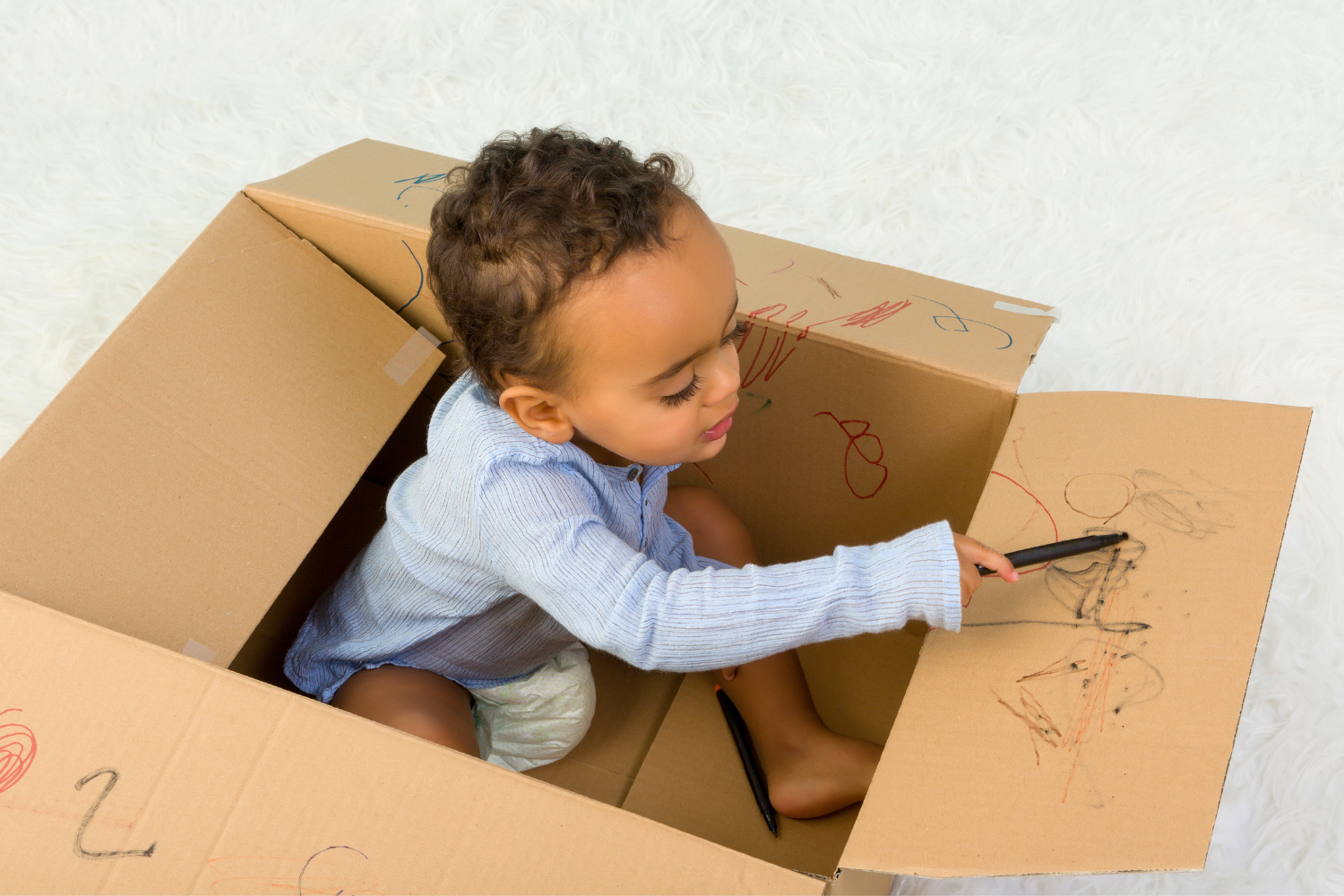




It’s not difficult to knock the curiosity out of a child.