
How Do You Teach Your Children to Love Learning?
/
It’s not difficult to knock the curiosity out of a child.
Read MoreIt’s not difficult to knock the curiosity out of a child.
Read More
According to the research on homeschooling, homeschooled children are ahead of their schooled peers intellectually and socially.
They learn more and they socialize more, the latter putting them ahead emotionally too.
If you are homeschooling using sound methods, you know this is true because the proof is in the pudding; you can see it for yourself.
But if you aren't homeschooling, here's 7 reasons to consider the fastest growing educational option today.
“Education is the most powerful weapon which you can use to change the world.”
People at the top of financial earnings have one thing in common: they read books. They usually write and sell their books too.
Yet, only 14 out of 100 children read for fun.

By homeschooling, you can raise children who read books like the people who make it to the top. Reading is the key to knowledge, so regardless of what professional field your child enters, reading will only increase his intelligence and help him rise above the others.
Homeschooling children have more time to develop skills and hobbies. A child who grows up to become a skilled ice skater, musician, or writer can turn these hobbies into a profession either by performing or teaching.
We never know what life might bring us, so raising our children to have a skill they can earn an income from is always prudent.
Children, who are homeschooled independently, surpass their schooled counterparts on exams.

They also have a better chance of getting into more impressive colleges, if they should choose that route. However, some parents fear their children won't get into good colleges if they homeschool them.
This may be true if you put your kids into virtual schools or public school “homeschooling” programs (a bit of an oxymoron, no?), but it isn't true if you homeschool independently using methods that are time-tested.
“You can never be overdressed or overeducated.”
If you are homeschooling independently, rest assured that your children's chances of getting into a good college should be higher, not lower.
It isn't just SAT scores we should focus on, especially since some colleges are beginning to drop the SAT requirement. What top colleges look for are potential students who are above average in their accomplishments and have leadership skills.
Fortunately, homeschooled children tend to fall into these categories. When a child is being taught one-on-one, he learns to stand on his own, as well as excel academically.
Homeschooled children score above schoolchildren in social competency, which makes sense. Children who don't spend 8 hours in school will have a lot more time for socializing.

Practice makes perfect.
Eventually, with more practice, homeschoolers will exceed their schooled peers who spend their school days in classrooms. What little social interaction schoolchildren do have is usually with their peers which tends to foster immaturity.
Personally and professionally, good social skills will always be critical to one’s ability to get a long with others.
With more time on their hands, homeschooled children are able to develop a stronger sense of self and engage in all sorts of learning adventures from family travel to starting home businesses.

People who have more interests and who have had more experiences in life, especially of the unusual sort, tend to be more interesting people.
Like attracts like.
“The world is a book and those who do not travel read only one page.”
The more interesting people your children engage with, the more unusual opportunities will come their way, and the more richer their lives will be.
Homeschooled children, taught at home (not in co-ops or on computers) tend to have more independent minds. An independent mind is a quality of leadership, whether of self or others, and people who can think for themselves will always be of more value than those who can't.
Independent minds are difficult to foster when children are taught in groups and expected to conform to group thinking. Obviously, this isn't the case in a homeschool, where children are taught independently and able to think more independently and more deeply.
And independent thinkers are not a dime a dozen. Think supply and demand.
Children, who are given wholesome childhoods and allowed to begin academic training when they are developmentally ready, will have the time in childhood to develop more creative minds.

Creativity is the seed of genius. All new ideas and inventions are born out of a mind who can think out of the box and imagine new possibilities.
We suffer from a dearth of creativity today because children are not getting the kind of childhood’s they need to foster their creativity.
“Education is the ability to listen to almost anything without losing your temper or your self-confidence.”
We want to raise creative children, so their minds are free to roam the heavens for new ideas and inventions. Why limit our children's intellectual capabilities when we can raise them to be and do so much more?
Therefore, if you want your children to live more fulfilling and interesting lives and with more opportunities awaiting them, the solution is to homeschool your children.
It's the fastest growing form of education today because it works.
Don’t miss our free download, Ten Books Every Well-Educated Child Should Read.
Enrollment now open!
Join the Smart Homeschooler Academy online course for parents, Liz will share her 6-step framework to raise children of higher intelligence, critical thinking, and of better character.
As a homeschooler, you will never have to worry about failing your children, because working with Liz, you will feel confident, calm, and motivated. She also provides you with the tools and support you need to homeschool successfully.
Teach your child to read before sending him to school! Learn more about Elizabeth's unique course, How to Teach Your Child to Read and Raise a Child Who Loves to Read.
For parents of children under age seven who would like to prepare their child for social and academic success, please begin with Elizabeth’s singular online course, Raise Your Child to Thrive in Life and Excel in Learning.

Elizabeth Y. Hanson is a homeschooling thought-leader and the founder of Smart Homeschooler.
As an Educator, Homeschool Emerita, Writer, and Love and Leadership Certified Parenting Coach, she has 21+ years of experience working in education.
Developing a comprehensive understanding of how to raise and educate a child, based on tradition and modern research, and she devotes her time to helping parents to get it right.
Elizabeth is available for one-on-one consultations as needed.
"I know Elizabeth Y. Hanson as a remarkably intelligent, highly sensitive woman with a moral nature and deep insight into differences between schooling and education. Elizabeth's mastery of current educational difficulties is a testimony to her comprehensive understanding of the competing worlds of schooling and education. She has a good heart and a good head. What more can I say?”
—John Taylor Gatto Distinguished educator, public speaker, and best-selling author of Dumbing Us Down: The Hidden Curriculum of Compulsory Schooling

Thanksgiving is a holiday of gratitude, and it's a day that serves as a reminder to count our blessings.
What is astounding about blessings is that once we start naming them, where do we stop? Blessings are infinite, and we all have plenty of them.
That doesn't mean that life is always easy, but no matter how difficult our lives can seem at times, there is always plenty to be grateful for.
“It’s rigged — everything, in your favor.
So there is nothing to worry about.”
Coming from America, a country that's considered wealthy on an international scale, one thing I learned from the people in poor countries is that gratitude has nothing to do with what we "have," but it has everything to do with who we are.
I learned this in Casablanca from a woman who was a student in a French class I was taking. One day, after we'd been studying together for a few months, she invited me to her home for lunch.
Was I in for a shock.

I found myself walking to her house through tiny passageways that led into a part of town I didn't even know existed. It was the ‘poorer-than-poor’ section.
As the streets grew narrower and narrower, my level of surprise by the extreme poverty climbed higher and higher. And that was when I found #52, my friend's house. The entire home consisted of two tiny rooms about the total size of my bedroom. I was told that 10 family members lived there.
We had a plate of rice for lunch.
“Be grateful for your life, every detail of it, and your face will come to shine like a sun, and everyone who sees it will be made glad and peaceful.”
At first, I found it slightly odd that someone would invite me to lunch when they didn't have any food other than rice to eat.
In the very next instant, I saw how incredibly generous it was that someone had invited me to lunch when all they had to eat was rice!
Their generosity overwhelmed me.

It's a memory that has always stayed with me because it was the event in my life where I learned the meaning of real gratitude.
It’s not just about counting our blessings, though it’s helpful to reflect on them, and we definitely want to help our children learn to ponder the wonderment of their blessings.
But true gratitude comes from the joy of being alive, even if you only have a plate of rice to eat.
Because life, in and of itself, is the crown of all blessings.
“I know there is a gold mine in you, when you find it
the wonderment of the earth’s gifts
you will lay aside
as naturally as does
a child a
doll.”
There will come a moment when we will still have all of the stuff, but we will have lost our lives.
So when Rumi tells us to be grateful for every detail, he really means every detail.
Don’t miss your free download:

Get a copy of Liz’s “could not homeschool without” book, Education’s Not the Point: How Schools Fail to Train Children’s Minds and Nurture Their Characters with Essays by John Taylor Gatto and Dorothy Sayers.

About Elizabeth Y. Hanson
Liz Hanson helps parents raise and educate whole children by bridging timeless wisdom with modern research.
As an educator, writer, and Love and Leadership Certified Parenting Coach with 23 years of experience, Liz specializes in guiding families through the transformative early years and the homeschooling journey. After successfully homeschooling her own children, she now devotes her expertise to helping other parents get it right from the start.
Liz is a homeschooling thought-leader, as well as the creator of three unique online courses:
Whether you're navigating early childhood, considering homeschooling, or wanting to nurture a genuine love of learning in your child, Liz offers practical guidance rooted in proven principles.
One-on-one consultations available.

"I know Elizabeth Hanson as a remarkably intelligent, highly sensitive woman with a moral nature and deep insight into differences between schooling and education. Elizabeth's mastery of current educational difficulties is a testimony to her comprehensive understanding of the competing worlds of schooling and education. She has a good heart and a good head. What more can I say?”
—John Taylor Gatto Distinguished educator, public speaker, and best-selling author of Dumbing Us Down: The Hidden Curriculum of Compulsory Schooling. For a copy of The Short Angry History of Compulsory Schooling, click here.

Today, I came upon a reference book on Amazon that I wanted to buy. But I didn't buy it because it was a paperback book selling for $35.00, even for a used copy.
Why?
It was overpriced because it had sold out only a few years after being published. "How strange," thought I, that a book on the subject of creativity would be in such demand—or was it strange?
Raising children in the 21st century of massive technology and a dumbed-down education is a perfect recipe for raising dull children.
Twenty-first-century parents make decisions around technology and education for their children, and then they buy books, such as the one mentioned above, to correct the problems their decisions produce.
Why not prevent the problems in the first place?
If you want to train a racehorse, you don't raise him to be out of shape and then try to fix the problem later—by then, it's too late. No, you train him from the beginning to become the best racehorse he can possibly be.
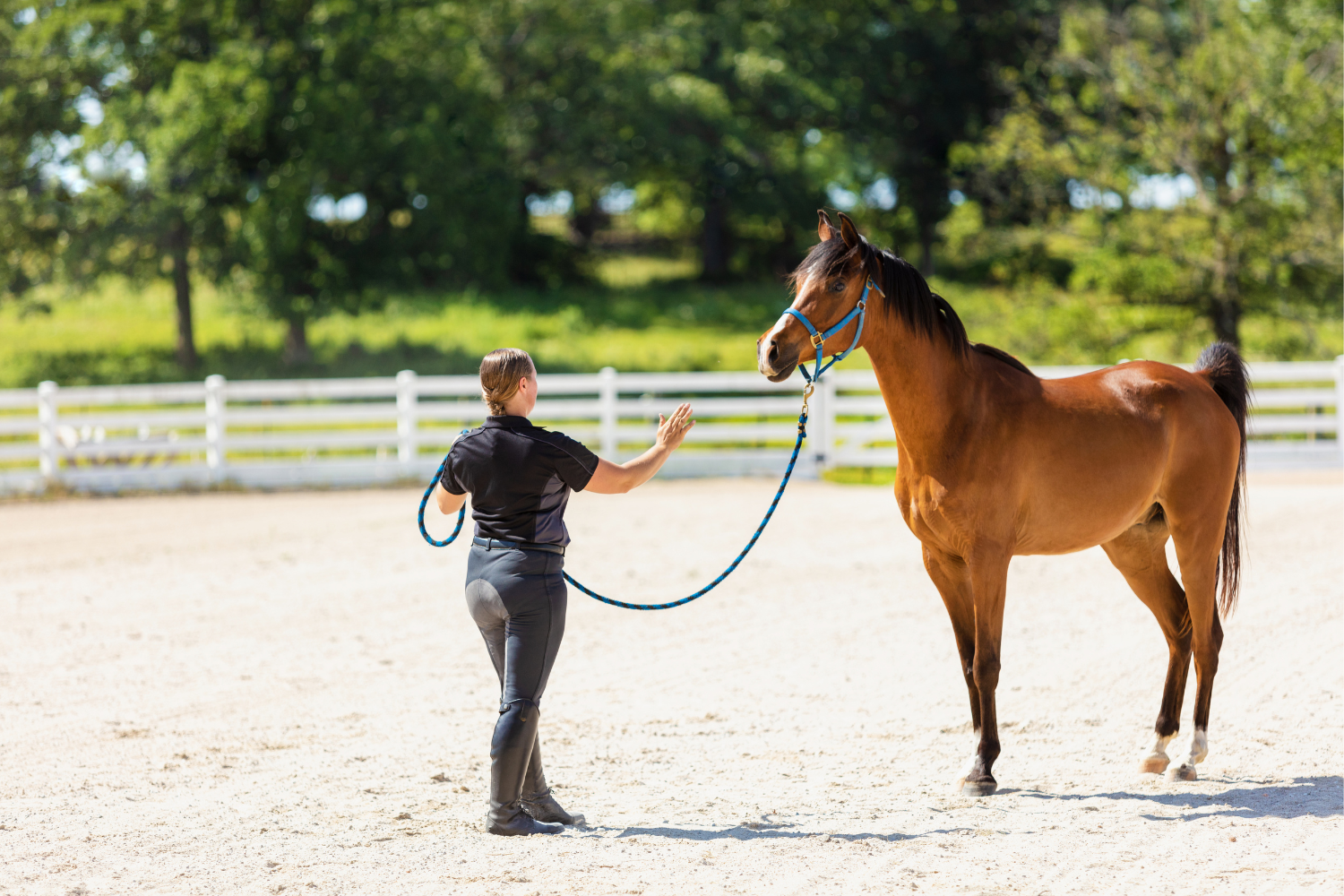
It's the same thing with our children. Creativity is innate to each of us, and it is a large part of what makes our lives rewarding and interesting. Creativity is one of the key qualities that will aid our children in becoming their very best.
And children who are raised to function at their optimal levels—to become their very best—will be the children who are in demand later.
The formula is pretty simple: if you want to raise a creative, independent-thinking innovative child, do the opposite of what everyone else is doing.
Don't coddle your children, but raise them instead to be independent of you. After all, your job is to teach them how to function as an adult so they can live a rewarding life.
For example, as early as two years, lay snacks out on their kid-size table and teach them that when they want a snack, they can get it themselves. Teach them how to get a cup of water when they are thirsty, which you also set up on the kid-size table, spill-proof, of course.
You can teach them how to put their toys away. If you give them more than one or two toys to play with at a time, they'll struggle to put them all away. Instead, give them one or two toys to play with, and when they are finished, exchange them for two more.
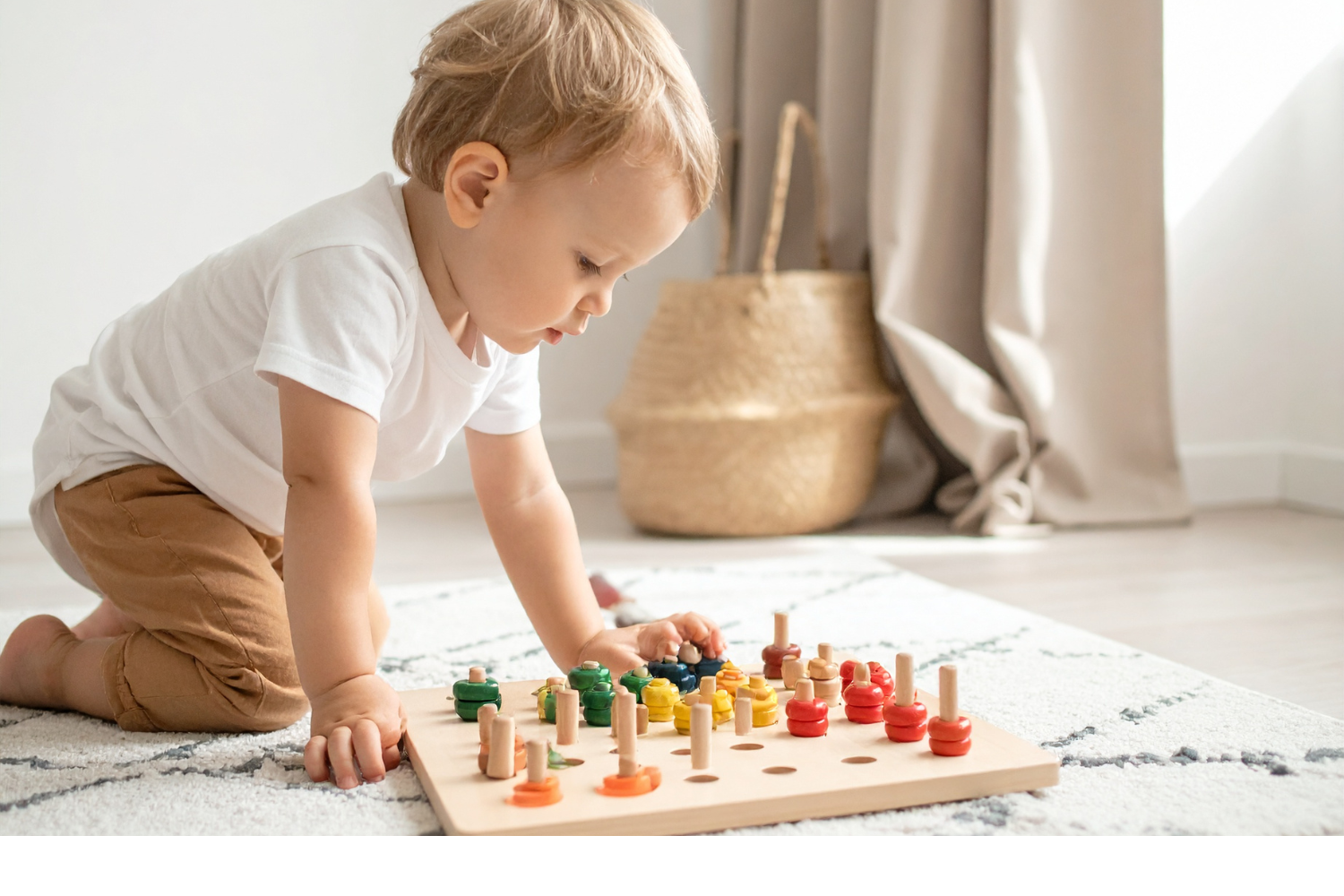
Start them in the habit of picking up after themselves when they are tiny, so they don't think about not picking up after themselves when they are not tiny.
Give them plenty of childproof space to roam in. A child raised competently can occupy himself for up to an hour at a time by the time they are 3 - 3 ½. This should be your aim. You do not need to be your child's 24/7 playmate—that's exhausting!
Play with your child when you feel like it or when you sense they need you, but let them learn how to play by themselves too. For most of their lives they'll have to figure out how to spend their time, and the sooner they learn how to do this, the easier and more rewarding their lives will be.
“The habits we form from childhood make no small difference, but rather they make all the difference.”
Keep your children off of screens. You would not let your child jump out a window because he would hurt his body, and sometimes irreparably. In the same vein, you do not want to allow your child to do things that will damage his developing brain, sometimes irreparably.
Maybe an hour of screen use a day won't hurt him, but at the end of one year, that's 365 hours that could have been spent learning a skill, such as a foreign language, a musical instrument, or a sport.
It's also an hour a day he could have spent reading hundreds of books over the years that would develop his language skills and expand his mind.
At the end of 10 years, that 3,650 hours, which would put him at an intermediate or advanced level in any skill he attempted to improve upon.

And that's only one hour a day!
The reason I am a proponent for no screen time is because an hour a day, or even 10 minutes a day, of screen time will probably not be fatal, but it does open the door for constant discussions and arguments that will develop around screen use.
And it’s the stress of it all that I'm opposed to because it undermines your parent/child relationship. So why bother, especially when screens are so harmful to your children?
By harmful, consider the retardation of neural connectivity in the brain, less knowledge, poor social skills, poor emotional regulation, obesity, eye damage, and other health-related issues, decreased mental health with an increase in depression and anxiety.
It’s also a bad habit they develop, when they could develop a good habit instead.
“It is impossible, or not easy, to alter by argument what has long been absorbed by habit”
In addition to no screen time, other than the odd well-selected film now and then—and only after they have developed a reading habit—if you can delay school, or even homeschool until your child is about seven, then you will be well on your way to raising a creative child.
And children who are creative and can think independently will be the adults who are in demand tomorrow. Because until we bring about a significant change in how we raise children, there will continue to be a dearth of creative, independent-thinking innovators.
And, as long as the world keeps turning, we will always need creative, independent-thinking innovators.
Don’t miss your free download:
Get a copy of Liz’s “could not homeschool without” book, Education’s Not the Point: How Schools Fail to Train Children’s Minds and Nurture Their Characters with Essays by John Taylor Gatto and Dorothy Sayers.
About Elizabeth Y. Hanson
Liz Hanson helps parents raise and educate whole children by bridging timeless wisdom with modern research.
As an educator, writer, and Love and Leadership Certified Parenting Coach with 23 years of experience, Liz specializes in guiding families through the transformative early years and the homeschooling journey. After successfully homeschooling her own children, she now devotes her expertise to helping other parents get it right from the start.
Liz is a homeschooling thought-leader, as well as the creator of three unique online courses:
Whether you're navigating early childhood, considering homeschooling, or wanting to nurture a genuine love of learning in your child, Liz offers practical guidance rooted in proven principles.
One-on-one consultations available.
"I know Elizabeth Hanson as a remarkably intelligent, highly sensitive woman with a moral nature and deep insight into differences between schooling and education. Elizabeth's mastery of current educational difficulties is a testimony to her comprehensive understanding of the competing worlds of schooling and education. She has a good heart and a good head. What more can I say?”
—John Taylor Gatto Distinguished educator, public speaker, and best-selling author of Dumbing Us Down: The Hidden Curriculum of Compulsory Schooling. For a copy of The Short Angry History of Compulsory Schooling, click here.

During the last few years of his life, John Taylor Gatto and I exchanged a good number of emails, and in one of those emails, for the first time, I believe, he wrote emphatically that it was time to get our children out of government schools.
Until then, he painted the picture of why we should get our children out of government schools, but he never told the parents what to do.
“School is a twelve-year jail sentence where bad habits are the only curriculum truly learned. I teach school and win awards doing it. I should know.”
That email exchange happened eight years ago. Things are far worse today than even John could have imagined.
Here are a few facts about schools to illustrate just how urgent the situation has become:
Sixty-nine percent of male adolescents and 39% of females watch pornography.
My friend enrolled her son in high school, and he was considered odd because he was the only boy who had never watched pornography. He discovered that it was the latest “in” thing to do.
I’m assuming you’re aware of the increase in pornography use amongst youth and the negative impact pornography can have on your child, but if not, you can check out this FACT SHEET.
About half (54%) of adolescents age 15-19 have had some type of sexual experience.
Your child might be exposed to early sexual experiences you may not approve of. Check out this article to read the stats about what teens are up to regarding cardinal pleasures.

Youth aged 13 to 17 comprise 25.3% of those who identify as transgender (aged 13 and older) compared to 7.7% of the U.S. population.
Why are so many of our youth now claiming to be transgender?
And please spare us the line that our youth "feel safer to speak out now."
Rubbish.
When I was growing up, no one had trouble understanding their gender. If it was simply a matter of being free to speak out, they would have spoken out by now.
Here's an interesting article that sheds light on how government schools are a breeding ground for the transgender craze.
By the time a child reaches his teens, his chance of reading for enjoyment drops to 12%, yet reading is the key to a good education.
The US literacy rates are no longer an accurate indicator because the standards no longer reflect true literacy. When half the population cannot read at or above a sixth grade level, we have a problem.
“Government schooling made people dumber, not brighter; made families weaker; ruined formal religion with its hard-sell exclusion of God; set the class structure in stone by dividing children into classes and setting them against one another; and has been midwife to an alarming concentration of wealth and power in the hands of a fraction of the national community.”
Putting children into public school is a gamble you take, and you better be prepared to lose, because 75% of parents do lose.
I base that number on a study done in the Christian community where 75% of public school children no longer share the beliefs of their parents by the time they graduate from high school.
When children are being educated in a system that does not share the family’s values and beliefs, and then they are influenced by peer-pressure, it is no wonder that 75% of them will adopt the values and beliefs encouraged in the system.
“To be nobody but yourself in a world which is doing its best, night and day, to make you everybody else means to fight the hardest battle which any human being can fight; and never stop fighting.”
Homeschooling is the obvious answer, but what if you can't homeschool? Personally, I would sit my kids down in a room full of excellent books and tell them to read anything they want for as long as they want.
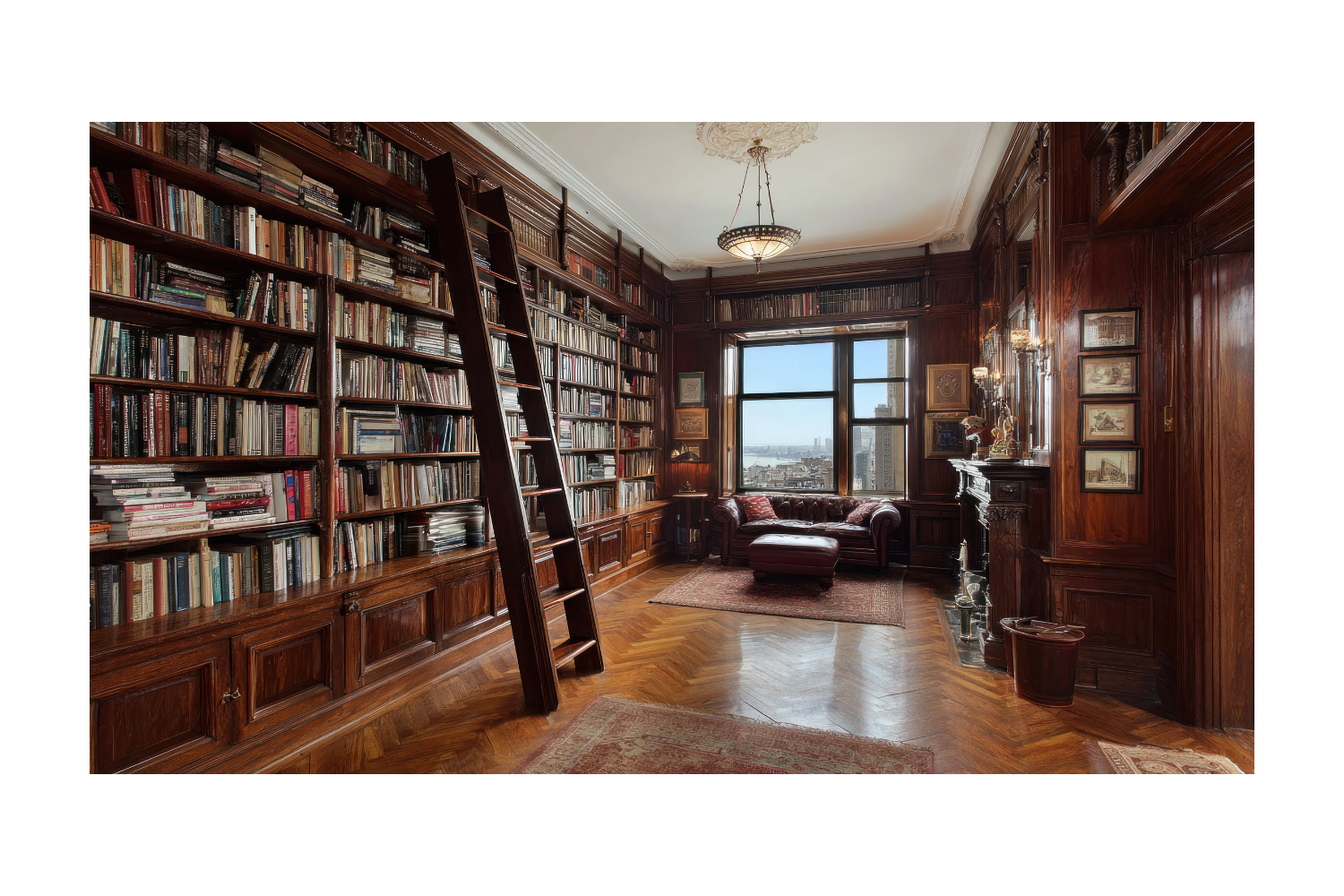
In addition to that, I would give them household chores, put them into volunteer programs, and have them develop a minimum of at least one skill to an advanced level, such as a sport, musical instrument, or foreign language.
Then, I would sit back and watch them bloom.
Oh, I would teach them a few manners too. "Yes, please," and "no, thank you" will work wonders for their social and emotional development.
In 10 years, they'll emerge, kinder, wiser, more skilled, and better read than most adults you'll meet, not to mention their schooled peers.
“Children allowed to take responsibility and given a serious part in the larger world are always superior to those merely permitted to play and be passive.”
To raise excellent children, keeping them in a bubble for as long as possible is a good place to start. By the time they witness any of the aforementioned behaviors, their heads will have been screwed on so tightly that they'll see things for what they are.
The last thing they'll ever be confused about is their gender, because they’ll be too wise and self-assured to fall for such craziness.
Don’t miss your free download:
Get a copy of Liz’s “could not homeschool without” book, Education’s Not the Point: How Schools Fail to Train Children’s Minds and Nurture Their Characters with Essays by John Taylor Gatto and Dorothy Sayers.
About Elizabeth Y. Hanson
Liz Hanson helps parents raise and educate whole children by bridging timeless wisdom with modern research.
As an educator, writer, and Love and Leadership Certified Parenting Coach with 23 years of experience, Liz specializes in guiding families through the transformative early years and the homeschooling journey. After successfully homeschooling her own children, she now devotes her expertise to helping other parents get it right from the start.
Liz is a homeschooling thought-leader, as well as the creator of three unique online courses:
Whether you're navigating early childhood, considering homeschooling, or wanting to nurture a genuine love of learning in your child, Liz offers practical guidance rooted in proven principles.
One-on-one consultations available.
"I know Elizabeth Hanson as a remarkably intelligent, highly sensitive woman with a moral nature and deep insight into differences between schooling and education. Elizabeth's mastery of current educational difficulties is a testimony to her comprehensive understanding of the competing worlds of schooling and education. She has a good heart and a good head. What more can I say?”
—John Taylor Gatto Distinguished educator, public speaker, and best-selling author of Dumbing Us Down: The Hidden Curriculum of Compulsory Schooling. For a copy of The Short Angry History of Compulsory Schooling, click here.

Perhaps, you have chatted with other family members or friends to learn that their schooled children have already met certain milestones, which yours have not.
Or maybe you have a six-year-old who hasn’t begun to read but all of his friends in school are reading.

Whatever the comparison is you have to remember that your children are on a different trajectory than their schooled peers and even their homeschooled peers.
If you find yourself worried that your children are behind, instead of falling into the trap of comparing your children, focus on the unusual things they have done or the particular interests they’ve developed because they are being homeschooled.
Perhaps your eight-year-old son has learned 20 poems by heart or fallen in love with ancient history or memorized his list of prepositions!
Or it’s possible that your son has taken an interest in woodwork and has been building things like the homeschooled boy I knew who had a collection of knives that he’d carved out of wood.
“To be nobody but yourself in a world which is doing its best, night and day, to make you everybody else means to fight the hardest battle which any human being can fight; and never stop fighting.”

The woodwork may seem irrelevant to you, but it’s not. It’s a pursuit that contained many gems for this child.
This boy had developed an interest in and a passion for woodwork. Being interested in things lets kids discover what they are good at, what they enjoy doing, and it makes them grow into more interesting people. Most children today are only interested in their screens, and they will probably grow up to be pretty dull individuals.
He had also developed his fine motor skills, because it requires precision to carve wood with a knife, and he must have good control over his fingers. Many children lack fine motor skills and struggle in their penmanship because of it.
Not only had he carved one knife from wood, but he had a collection of different kind of knives that he had carved. During this process, he had educated himself about the kind of knives we make.
Before he began making his knives, he had to imagine the end product which required a good use of his imagination and further helped to develop it. A strong imagination is necessary for any sort of genius to emerge.
Compare the boy’s above skills and traits to the many useless things children do in schools, such as reading books that aren’t worth reading or spending time studying for standardized test.
What I discovered while teaching my children is that when a homeschooled child is about nine or ten, your friends will begin to notice a difference between their children and yours. They might comment on what great readers your kids are or how they seem to love learning or how mature and polite they are.
You’ll start to see your children pass their public-schooled peers up in various subjects, and your children will have a love of learning that their schooled peers have lost. If you are homeschooling using sound methods, your children will also be miles ahead in their vocabulary and reading ability. Plus, they’ll have a love of reading too, which is always key to a good education.
But, until then you’ve got to be patient and keep your blinders on.
Be like a race horse. Some race horses wear blinders to stay focused on getting to the finish line.

Not that you’re in a race, but you do have a finish line. Your finish line is the day your children graduate from high school.
You don't want to be distracted into thinking you're doing a poor job when you're not; you're doing your job your way.
Comparison when your homeschooling can cause you unnecessary stress and doubt. Instead, stay focused on what you’re children have accomplished, not what their public-schooled peers are doing. If you can do this, you’ll eliminate half of the stress many homeschooling parents experience.
Because with homeschooling, there’s no race to the top; there’s only the top.
Don’t miss your free download:
Get a copy of Liz’s “could not live without” book, Education’s Not the Point: How Schools Fail to Train Children’s Minds and Nurture Their Characters with Essays by John Taylor Gatto and Dorothy Sayers.
About Elizabeth Y. Hanson
Liz Hanson helps parents raise and educate whole children by bridging timeless wisdom with modern research.
As an educator, writer, and Love and Leadership Certified Parenting Coach with 23 years of experience, Liz specializes in guiding families through the transformative early years and the homeschooling journey. After successfully homeschooling her own children, she now devotes her expertise to helping other parents get it right from the start.
Liz is a homeschooling thought-leader, as well as the creator of three unique online courses:
Whether you're navigating early childhood, considering homeschooling, or wanting to nurture a genuine love of learning in your child, Liz offers practical guidance rooted in proven principles.
One-on-one consultations available.
"I know Elizabeth Y. Hanson as a remarkably intelligent, highly sensitive woman with a moral nature and deep insight into differences between schooling and education. Elizabeth's mastery of current educational difficulties is a testimony to her comprehensive understanding of the competing worlds of schooling and education. She has a good heart and a good head. What more can I say?”
—John Taylor Gatto Distinguished educator, public speaker, and best-selling author of Dumbing Us Down: The Hidden Curriculum of Compulsory Schooling. For a copy of The Short Angry History of Compulsory Schooling, click here.
Online dictionaries, which I use frequently, and real-book dictionaries offer very different experiences. The question is, does using one versus the other make our children smarter?
In order to answer this question, let me tell you the story of what led me to ask it. In that story lies the answer.
You see, in my home, I always had a huge copy of The American Heritage Dictionary, so big that it was not always easy to move around the house.
It was the dictionary my kids grew up using when they needed to look up a word.

(Mine was an earlier edition)
Because I live overseas right now, said dictionary was sadly abandoned to a storage unit, which is why I've grown used to the ease of an online dictionary.
I can take my online dictionary anywhere I go and it weighs under a pound, being housed in my smartphone.
Tired of looking up Turkish words online (I'm slowly learning Turkish), because it forced me to turn on my phone while I was trying to study, so I had an idea: why not buy a pocket hand-held English/Turkish dictionary?
And then the other day something strange happened.
On this particular day, I was looking up how to say "stove top," because my stove top quit working, and I needed to call a repairman.
“If Language is not correct, then what is said is not what is meant. If what is said is not what is meant, then what ought to be done, remains undone.”
But, as I was looking up "stove top," I started to read about the words I met on my way to finding "stove top," and what I realized was that I missed reading dictionaries!
My mind started to go back to my youth and how my siblings and I used to have a lot of fun playing dictionary games.

One of us would pick a word and ask the others what it meant. Whoever knew the meaning and gave the best guess scored a point.
The game was fun, which is why we made it up, but we were also encountering new words and improving our vocabularies.
As children, however, we didn't think about the learning aspect, but that's exactly the point. We were having fun playing with words and, at the same time, developing an appreciation for and a knowledge of them.
“Uttering a word is like striking a note on the keyboard of the imagination.”
We often read the dictionary for fun, too, because when a child develops a love of words, reading a dictionary is fun.
As I was reading these additional words in my new Turkish dictionary, I started to think about the experience of looking a word up online, and it dawned on me that I never encounter additional words online.
I look up one word, and that's all I ever see. It's a very limited experience, and while I may learn the definition of one word, my learning ends there.

Nor is an online dictionary much fun. I suppose it might be for a ten-year-old child, but mind-stunting fun is not what our kids need, especially at such young ages.
What I realized is that children who grow up using online dictionaries will never experience the joy of a hand-held dictionary, and they'll never invent dictionary games with their siblings.
But more importantly, never—during a search for one word's meaning—will they ever learn about the other words they encounter along the way.
Because they won't encounter any.
Which translates into the likelihood of their having smaller vocabularies and, therefore, less ability to think at wider and deeper levels because we need words to think with!
Let me state the obvious: thinking that's limited because of a reduced vocabulary equals a limited mind.
“The limits of my language means the limits of my world.”
Would it be fair to say that kids who grow up using hand-held dictionaries are smarter? We'll have to wait for a future researcher to tell us the answer, but until then, I'm going to err on the side of they just may be!

Get a copy of my “could not live without” book, Education’s Not the Point: How Schools Fail to Train Children’s Minds and Nurture Their Characters with groundbreaking Essays on educating your kids by John Taylor Gatto, Dorothy Sayers, and yours truly.

About Elizabeth Y. Hanson
Developing a comprehensive understanding of how to raise and educate a “whole” child, based on tradition and modern research, Liz devotes her time to helping parents to get it right.
Liz is a homeschooling thought-leader, as well as the creator of three unique online courses, Raise Your Child Well: Preserving Your Child's Natural Genius by Laying a Solid Foundation During the First Seven Years; the Smart Homeschooler Academy, educating children who are brilliant, happy, and well-socialized; and How to Teach Your Child to Read and Raise a Child Who Loves to Read.
As an Educator, Homeschool Emerita, Writer, and Love and Leadership Certified Parenting Coach, Liz has 23 years of experience guiding parents through the amazing journey of raising and educating their children.
Liz is available for one-on-one parenting and homeschooling consultations.
"I know Elizabeth Y. Hanson as a remarkably intelligent, highly sensitive woman with a moral nature and deep insight into differences between schooling and education. Elizabeth's mastery of current educational difficulties is a testimony to her comprehensive understanding of the competing worlds of schooling and education. She has a good heart and a good head. What more can I say?”
—John Taylor Gatto Distinguished educator, public speaker, and best-selling author of Dumbing Us Down: The Hidden Curriculum of Compulsory Schooling. For a copy of The Short Angry History of Compulsory Schooling, click here.

Educational experiences and events in real life are how you turn the world into your classroom. It also makes getting an education fun and engaging for your children. Most importantly, the lessons they learn in the real world, they never forget.
The unfortunate event was that my son did not dry the iron skillet and in the morning I found it completely rusted out.
But as a homeschooling mother, I was delighted. A discovery like this becomes a learning opportunity. The kids pile into the kitchen and a discussion of what’s happened to the pan becomes a day of homeschooling, with all subjects covered.
“Tell me and I forget, teach me and I may remember, involve me and I learn.”
Upon finding the rusty skillet, your conversation might go something like this:
"Hey, kids, come here! I want you to see something interesting."
"What happened to the pan?" they ask.
"Exactly! Does anyone know what this is?" I point to the rust.
"It looks like rust," they reply.
"It is rust, but do you know why the pan is rusty?
"No, how did it get like that?" They are wondering if the pan is now ruined, and one child looks a little guilty.

I then send them off to get their science encyclopedias and they look up how rust is formed. They learn that when impure iron (cast iron) meets water and oxygen, the iron gives some of its electrons to the oxygen and the oxidation process begins.
As rust is formed it eats away at the pan, and, if left for a long period of time, will eventually corrode it, which is exactly why we never leave a wet iron skillet to dry by itself.
And the Learning Continues
We could go on to teach them about the parts of an atom and how molecules are formed and so on.
We could then explain that the study of chemistry is partly about how matter is made up of different atoms and molecular structures and how they react to one another and how they behave in the physical world.
From the rust on the iron skillet, a host of questions will arise and we will go as deep as the children want in helping them to discover the answer to their questions, plus all the additional things they will learn along the way.
“Spoon feeding in the long run teaches us nothing but the shape of the spoon.”
This is the kind of learning that engages children, fosters their interest in the world, and keeps them wanting to know more.

The children can write a few lines or a paragraph, depending upon their age, about their understanding of how rust forms and anything else they learned around this discovery. We could also take them to the library to find books that elaborate more about some of the things they are questioning.
We could then move on to history and teach them about the Iron Age. We could also give them a little history about how iron skillets and griddles were the mainstay in a woman's kitchen prior to the 20th century, later to be replaced by non-stick pans with plastic coating.
“Education is the kindling of a flame, not the filling of a vessel.”
― Socrates
We could venture even further and discuss man’s tendency to NOT leave well enough alone and create problems where there were none before. Instead of a little scrubbing, we now cook with plastic-coated pans that produce off-gassing toxic enough to kill a small bird. Who knows what it will do to our health over the time? And so we ask, was the invention of the plastic-coated pan really such an improvement?

This conversation could lead into a conversation about living more in-tune with God’s creation, rather than polluting it with man-made goods, especially when those man-made goods stem from greed.
But the biggest lesson to be learned is the lesson of doing things right, which brings us back to why there was rust in the skillet in the first place. When you find your children doing a substandard job, here is a poem they can recite to etch the reminder to “do their best” into their conscience.
Work while you work,
Play while you play,
This is the way,
To be happy each day.
All that you do,
Do with your might,
Things done by halves
Are never done right.
Anon.
Now you can see how a little rust in a skillet becomes fodder for science, writing, history, and even a philosophy lesson. You could go on to include more subjects but this is just a sample of how to approach the art of homeschooling.
Don’t miss our free download, 10 True Facts About Homeschooled Kids That Will Surprise You.
When you join the Smart Homeschooler Academy online course for parents, Liz will share her 6-step framework for homeschooling brighter, happier, engaged kids who can get into the top 20 colleges and excel in their personal and professional lives.
Teach your child to read before sending him to school! Learn more about Liz's unique course to raise a serious reader, How to Teach Your Child to Read and Raise a Child Who Loves to Read.
For parents of younger children, who are concerned that their children develop well physically, emotionally, neurologically (brain), and intellectually, start with Liz’s original online course, Raise Your Child to Thrive in Life and Excel in Learning.
Elizabeth Y. Hanson is a homeschooling thought-leader and the founder of Smart Homeschooler.
As an Educator, Homeschool Emerita, Writer, and Love and Leadership Certified Parenting Coach, she has 23 years of experience working in education.
Developing a comprehensive understanding of how to raise and educate a child, based on tradition and modern research, Liz devotes her time to helping parents to get it right.
Liz is available for one-on-one consultations as needed.
"I know Elizabeth Y. Hanson as a remarkably intelligent, highly sensitive woman with a moral nature and deep insight into differences between schooling and education. Elizabeth's mastery of current educational difficulties is a testimony to her comprehensive understanding of the competing worlds of schooling and education. She has a good heart and a good head. What more can I say?”
—John Taylor Gatto Distinguished educator, public speaker, and best-selling author of Dumbing Us Down: The Hidden Curriculum of Compulsory Schooling. For a copy of The Short Angry History of Compulsory Schooling, click here.
Here's another gem from the book: "Immigrants who were educated in Europe often became private schoolmasters, advertising in the newspapers that they would teach algebra, geometry, trigonometry, surveying, navigation, french, Latin, Greek, rhetoric, English, belles lettres, logic, philosophy, and other subjects. Wow! Does anyone even know anyone who knows all of this today? If we do, they are usually not found teaching children!
Read More
Many people have told me they homeschool because of something to do with fear. While fear of what might happen or not happen in school can be the catalyst for deciding to homeschool, we need to leave the fear behind and embrace a new attitude once we get started.
It's not that there aren't things to fear about public education, or even private schools —absolutely there are. Bullying and violent crimes are a concern, with incidences happening more times than we have days in the year.
Early exposure to sex and drugs is another problem in schools, especially the inappropriate classes in sex education, sexual preferences, and gender issues.

Schoolchildren tend to have weaker bonds with their families, and losing our children's loyalty to peers or values we don't espouse can be devastating and wreak havoc on the entire family.
Excessive use of computers in the classroom, with the subsequent problem of addiction to technology, is another grave issue we face. Addiction centers are popping up more frequently and organizations to de-program our kids are becoming more popular.
Because schools no longer uphold standards of behavior based on traditional values, good character development is something we must concern ourselves with.
How can we raise children of good character if they are in poor moral environments for a large number of hours per day?
“When we are no longer able to change a situation, we are challenged to change ourselves.”

And last, but not least, education. Putting a child through 12 years of school to find he doesn't enjoy reading, cannot write a persuasive essay, and is unable to think critically is a reality too many parents face today.
While all of the above reasons may motivate us to keep our children out of school, we want to climb onto higher ground when we are homeschooling.
Fear is an emotion that triggers feelings of isolation, disconnectedness, anxiety, apprehension, . and this is exactly how many homeschoolers say they feel.
Fear, at times, is necessary. In this case, it served its purpose; it motivated us to homeschool. But now it’s time to shift our attitude.
“The cave you fear to enter holds the treasure you seek.”
Instead of fear, why not embrace the joy of homeschooling?
If we can discover a strong "why" for homeschooling, it will be easier to stay the course, put our hearts into our work, and enjoy teaching our own.
We want to turn our backs on the "fear" motivator and embrace the "love" motivator.
To do this, we need to discover a love for why we are homeschooling. Fortunately, there are many “loves” to choose from. They come in the form of your “why,” your primary reason for homeschooling; a reason which keeps you motivated even on days when you feel tired and overwhelmed.

Discovering our "why" simply means reflecting on that which is most valuable to us as parents. What is it that we want most for our children and for our family? What is it that we would love the most if we were to see it happen?
Your "why" does not have to be the same as someone else's "why" either. Nurturing a strong bond with your children, and therefore, building a stronger family might be what you care most about.
For someone else, it might be the training of the mind and raising children who are not fooled by propaganda or misled by faulty thinking, but they can think critically and develop their own ideas and opinions.
Maybe you want to protect your child's heart from the inappropriate things that are being taught in school today, such as sex-education, gender issues, and sexual preferences. There's also the issue of bullying and violence in schools today, and mass shootings which happen more frequently than we like to think.
Or maybe, like me, you are motivated by the simple desire to raise children who have integrity and are true to themselves.
Whatever your "why" is, write it down and let it be your homeschooling mantra. On the days when you feel overwhelmed or out of patience with your children, remember your "why" and never look back.
Homeschooling is the best gift you can give your children; it is the gift of your time and the training of their minds and hearts.
Don’t miss our free download, Ten Books Every Well-Educated Child Should Read.
When you join the Smart Homeschooler Academy online course for parents, Liz will share her 6-step framework, so you can raise children of higher intelligence, critical thinking, and of good character.
As a homeschooler, you will never have to worry about failing your children, because working with Liz, you will feel confident, calm, and motivated; as she guides you to train your children’s minds and nurture their characters.
Teach your child to read before sending him to school! Learn more about Elizabeth's unique course, How to Teach Your Child to Read and Raise a Child Who Loves to Read.
For parents of children under age seven who would like to prepare their child for social and academic success, please begin with Elizabeth’s singular online course, Raise Your Child to Thrive in Life and Excel in Learning.
Elizabeth Y. Hanson is a homeschooling thought-leader and the founder of Smart Homeschooler.
As an Educator, Homeschool Emerita, Writer, and Love and Leadership Certified Parenting Coach, she has 21+ years of experience working in education.
Developing a comprehensive understanding of how to raise and educate a child, based on tradition and modern research, and she devotes her time to helping parents to get it right.
Elizabeth is available for one-on-one consultations as needed.
"I know Elizabeth Y. Hanson as a remarkably intelligent, highly sensitive woman with a moral nature and deep insight into differences between schooling and education. Elizabeth's mastery of current educational difficulties is a testimony to her comprehensive understanding of the competing worlds of schooling and education. She has a good heart and a good head. What more can I say?”
—John Taylor Gatto Distinguished educator, public speaker, and best-selling author of Dumbing Us Down: The Hidden Curriculum of Compulsory Schooling

A friend sent me a telling article from the Guardian (UK newspaper) on home-education in the UK. Whether it's the UK, the USA, or Europe, it doesn't matter. Parents are parents and the concerns are similar.
I will say that while reading this article, I felt a little frustrated by what I was reading. With homeschooling, when it is thrust upon us from a lack of other options, it comes down to how we choose to look at it. Do we embrace the challenge or resist it?
So, here's what I'd say to the parents in this article if they had shared their concerns with me.
(The quotes are excerpted from the Guardian article.)
"My child had been struggling with the school environment from the start,” Julie said. “She’s autistic, has sensory difficulties, finds noise and lights difficult, but is academically clever. She found it so hard to navigate relationships with peers and her anxiety was so intense she was mostly mute at school.” —Julie
“Julie’s daughter, now nine, has been home educated since, an experience Julie describes as “distressing” due to her lack of knowledge about teaching and home learning, and a lack of support.” —Guardian

Julie, why do you think you have no knowledge about teaching? You are your child's first teacher; you have been teaching her since the day she was born. All parents are teachers of their children.
While moving into academic teaching may seem daunting at first, there isn't anything during the elementary years that, with a few tools under our belts, we can't tackle. I agree that you need to know what you are doing, but there are resources available in the homeschooling community to give you the understanding and confidence to homeschool successfully.
An academically clever child is a joy to teach. If you have a child who is eager to learn, as you indicated your daughter is, then you are doing better than many parents whose children are plugged in and disengaged. Consider this a huge plus when homeschooling, because it makes your work so much easier.
As for support, if you join local homeschooling social groups for your children, you will also find companionship and support amongst the parents.
“After the switch to secondary school he started having anxiety attacks that slowly escalated,” Matthew said. “They were mainly related to tests, homework demands, and managing expectations. The chaotic and uncertain environment of frequent supply teachers, constantly shifting timetables and bullying made it very difficult for him to cope.”
“Our son’s panic attacks have mostly disappeared, he’s gained confidence and has been making better progress academically, because we’ve been able to tailor the topics more closely to his interests and ability. But much of this success is down to the fact that we were both working as qualified teachers in the past. I worry about all the people in a similar situation who aren’t teachers, and don’t have understanding employers – mine has allowed me to work flexibly from home.”

You did the right thing by removing your child from a distressing environment during the years when every experience is magnified and contributes to the formation of his character and personality. And I'm so happy to hear he is doing significantly better, though, I'm not surprised!
Mathew, while it's kind of you to be concerned about homeschooling parents who aren't certified as teachers, I would beg to disagree with you. Your success is not because you and your wife were former teachers; it’s because you are homeschooling.
Studies show that parents—whether professional teachers or not—are just as qualified to teach their children and do a very good job of it, and that children learn better at home. While being a professional teacher may give you a sense of confidence, initially, it really will make no difference in the long run.
“Catherine, 50, a teacher from Brighton, who also said that she took her daughter, who has ASC [autism spectrum condition], out of school to avoid fines for poor attendance, is one of many parents who switched to online school.” —Guardian
“She started just on two subjects but now does a full eight and is choosing options for GCSEs. She’s engaged and enjoying her learning, it’s been wonderful.
It is a struggle financially, though. The online school costs £300 a month. I’m a single mum and had to give up working outside the home. I get by on whatever remote work I can find and benefits. I also worry that if my daughter wants to go to university or work in an office environment she will have had no exposure to that kind of thing.” —Catherine

Catherine, your concerns are valid. Your daughter needs to be engaged in the real world with real people, so she can better develop the social and emotional aspects of her character and personality.
While sitting in front of a computer to learn may seem easier, it is not going to give her the tools she needs to function well in the world, especially if she is already struggling with an autism diagnosis.
It's much easier to homeschool using real books, it costs far less, and your daughter will have time for more social engagements, which will help her develop better social skills. As you said yourself, she needs to be engaged so when she is ready to go out on her own, she can manage.
The 300 sterling you save each month by getting her offline, you can put towards extra-curricular studies for your daughter, such as piano lessons, tennis lessons, or learning French.
Oh, one last thing, you mentioned you worked remotely. When you homeschool using real books, your daughter's homeschooling day is much shorter, too, so you will still have time to work.
“While many parents praised the advantages of online schooling, some were less convinced, among them 46-year-old Liza, from Walsall, who said her daughter had struggled with online lessons after she left school at the end of year 10 due to bullying.” —Guardian

“I’ve spent over £2,000 on tutors since September, and £1,000 so she can sit exams. She’s better now, however socially it’s been very hard. She’s very isolated, my husband and I both work full-time.” —Liza
Liza, kudos to you for removing your daughter from the world of screen learning and back into the world of books.
I’m sorry about the tutoring expense, as it is a lot, but one of the things you might consider doing is to hire an undergrad college student instead of paying full price for a professional tutor. Also, can your daughter join any extra-curricular clubs for social interaction?
She does need to socialize, especially at her tender age, as friends are very important for teenagers.
“One parent, who wanted to stay anonymous, said they had taken their child out of year 6 last September because of unmet needs in school, and desperately hoped they would be able to return as soon as possible.” — Guardian
“The experience [of home education] is not great, my child is now struggling to leave the house and is missing out on socializing with peers. She’s too anxious to attend home education meet-ups. We need the correct support so she can attend school. It’s so unfair.” — Anon
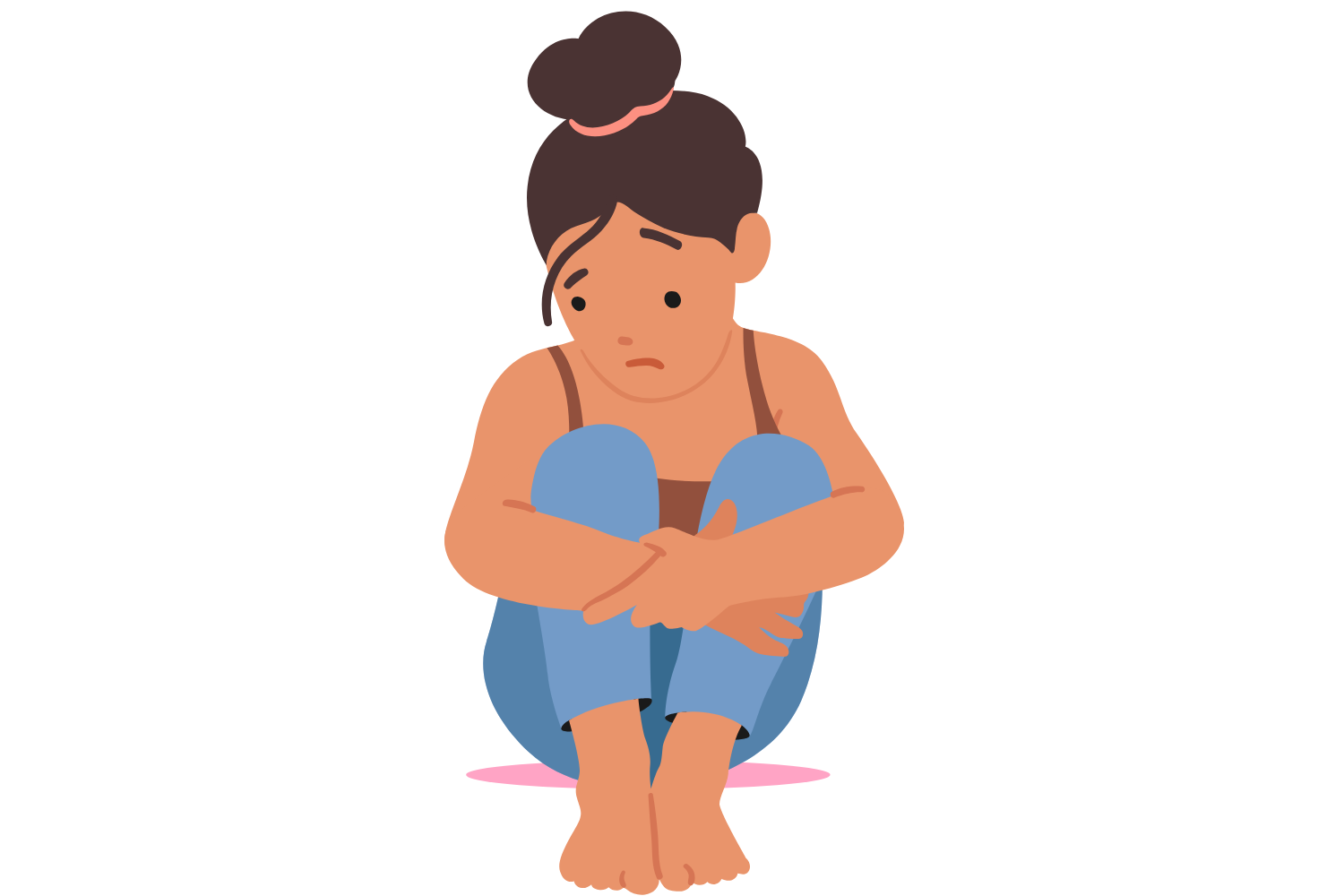
Naturally, she will long for her peers because she has already established a relationship with them. This is a good sign because we know she is capable of establishing good social relationships, but she's probably become socially anxious because of the excessive screen-time use and lack of social contact.
My first plan would be to get her off the screens and get her learning with real books. You might consider starting a book club or some kind of a program in your home with other homeschooled children.
Instead of having to go out and meet people, your daughter could meet them while feeling safe at home. Once she gets used to socializing again and has a few new friends, she'll be better able to venture into new social situations without panicking or refusing to leave the house.

What is concering to me is that as parents, we want what is best for our children, and we will do whatever it takes to provide it; yet, too many parents feel dis-empowered when it comes to their child's education.
After 22 years of working with parents of school-age children, I know that this mindset is not uncommon.
We have to remember that our children’s education can make or break them. Not a single government in the entire world is providing a sound education for children. It's up to us to make sure it happens.
Together, we can do it.
Don’t miss our free download, Ten Books Every Well-Educated Child Should Read.
When you join the Smart Homeschooler Academy online course for parents, Liz will share her 6-step framework to raise children of higher intelligence, critical thinking, and of better character.
As a homeschooler, you will never have to worry about failing your children, because working with Liz, you will feel confident, calm, and motivated. She also provides you with the tools and support you need to homeschool successfully.
Teach your child to read before sending him to school! Learn more about Elizabeth's unique course, How to Teach Your Child to Read and Raise a Child Who Loves to Read.
For parents of children under age seven who would like to prepare their child for social and academic success, please begin with Elizabeth’s singular online course, Raise Your Child to Thrive in Life and Excel in Learning.
Elizabeth Y. Hanson is a homeschooling thought-leader and the founder of Smart Homeschooler.
As an Educator, Homeschool Emerita, Writer, and Love and Leadership Certified Parenting Coach, she has 21+ years of experience working in education.
Developing a comprehensive understanding of how to raise and educate a child, based on tradition and modern research, and she devotes her time to helping parents to get it right.
Elizabeth is available for one-on-one consultations as needed.
"I know Elizabeth Y. Hanson as a remarkably intelligent, highly sensitive woman with a moral nature and deep insight into differences between schooling and education. Elizabeth's mastery of current educational difficulties is a testimony to her comprehensive understanding of the competing worlds of schooling and education. She has a good heart and a good head. What more can I say?”
—John Taylor Gatto Distinguished educator, public speaker, and best-selling author of Dumbing Us Down: The Hidden Curriculum of Compulsory Schooling

Children come into this world curious and ready to learn. They have just enough hearing and sight to kickstart the wiring of their brain.
They are born to know. Literally.
It's a profound characteristic because it begs the question, know what? And in that lies the secret to life.
If the desire to know is how we tackle the mysteries of life, including who we are, why we are here, and where we are going, then shouldn't we protect our children's desire to know at whatever cost?
Shouldn't it be our #1 priority? I take the position that it should be which begs another question: Well, how do we do that?

One of the ways we do it is by not putting our children into school because, ironically, schools will kill our children's curiosity and love of learning.
John Taylor Gatto, an award-winning teacher and author of the best seller, Dumbing Us Down, said that schools are dangerous places for kids. That was his conclusion after teaching for 30 years.
And John was right.
Children are taken out of the home and put into schools at far too early ages. Even Harvard studies show that children do not benefit from early education.

Instead of feeling safe and loved while exploring, moving, and exercising their curiosity and desire to know, children are put into organized programs where they are confined to a classroom and told what to do and when to do it.
The cuter the classroom, the more deceptive are the dangers of school.
What we know through research is that children enter preschool with their curiosity intact (as long as they are coming from the home and not from two or three years spent in daycare).
Somewhere around kindergarten and first grade, their curiosity begins to wane. That little light in their mind begins to dim.
The curious child learns that school is a place where you sit still and listen. Too many questions are not encouraged; and he learns to be quiet.
The more he suppresses his desire to know, the more dwarfed his curiosity becomes.
“The children are teach have almost no curiosity, and what little they do have is transitory. ”

It's like a Bonsai plant. When you clip the child's curiosity, his mind is hindered from growing.
As a school teacher has 30 other children to contend with, she can’t handle a lot of questions because she needs to stick to her schedule and get on with the day's lessons.
While it isn’t the teachers’ fault, the child quickly learns that his desire to know is not socially acceptable in the classroom.
Most children are taught to read before they are developmentally ready. While some kids can manage, some can't, and some will even fail.
The children who struggle will begin to think they are not very smart, and their self-esteem will decline and their confidence will grow weak.
If school is where they go to learn things, then they conclude that they’d rather not learn anything. At least then they will not have to suffer through the frustration and embarrassment of not being able to keep up with the rest of the class.

Have you ever read a real science or history book, one that wasn't a textbook? It's a totally different experience because science and history are fascinating subjects, and if the author is a good writer, you won't be able to put the book down.
But we don't teach our children with well-written books in school. We bore them to death by imposing textbook learning on them, replete with the endless list of proscribed questions
I hated science and history in school. Juxtapose that to my homeschooled children who read quality science and history books for fun, and you'll begin to see the problem.
“The children I teach are ahistorical; they have no understanding of how the past has predestinated their own present, limits their choices, shapes their values and lives.”
Put a child into school, hand him a textbook, and threaten him with a test; and you are about to destroy any interest he had in that subject.
And let's not forget the exams. After reading the boring textbook, a child now has to have an exam on something he was completely uninterested in.
Not only that, but he has to guess what questions the teacher might ask, so he can memorize the answers.
And how much information will a child retain? Probably not as much as he would have if he had been interested in the subject. And he will proceed to forget most of it once the exam is over.

And then come the grades. It doesn't matter if a child does well or he does poorly because he has studied for an exam, not for the joy of learning.
Whether he is rewarded with an “A” or punished with a “D”, he still loses.
Schools are dangerous places for kids because they destroy the one quality it takes to get a real education; the desire to know.
We are in a crisis in education, and we have been for a long time. There is nothing to reform, because the system never worked.
As long as education is in the hands of the government, an education will never be had.

Children received a real education when the parents were in charge of the schools, prior to the 1850's and before the government introduced mass schooling.
Before then, America's parents dictated what their children learned, how they learned, and when they learned. They even dictated who they would learn from.
Fortunately, American’s have retained the right to educate their own and educating our own is exactly what we need to do.
“That certified teaching experts like me are deemed necessary to make learning happen is a fraud and a scam.”
Unless you want the government's dumbed down version of an education for your children, you will need to keep them out of school.
At home, you can preserve their love of learning and desire to know about the things that will matter to them in life.
And, following sound principles and methods, you can give them a stellar education.
Don’t miss our free download, Ten Books Every Well-Educated Child Should Read.
When you join the Smart Homeschooler Academy online course for parents, Liz will share her 6-step framework to raise children of higher intelligence, critical thinking, and of better character.
As a homeschooler, you will never have to worry about failing your children, because working with Liz, you will feel confident, calm, and motivated. She also provides you with the tools and support you need to homeschool successfully.
Teach your child to read before sending him to school! Learn more about Elizabeth's unique course, How to Teach Your Child to Read and Raise a Child Who Loves to Read.
For parents of children under age seven who would like to prepare their child for social and academic success, please begin with Elizabeth’s singular online course, Raise Your Child to Thrive in Life and Excel in Learning.
Elizabeth Y. Hanson is a homeschooling thought-leader and the founder of Smart Homeschooler.
As an Educator, Homeschool Emerita, Writer, and Love and Leadership Certified Parenting Coach, she has 21+ years of experience working in education.
Developing a comprehensive understanding of how to raise and educate a child, based on tradition and modern research, and she devotes her time to helping parents to get it right.
Elizabeth is available for one-on-one consultations as needed.
"I know Elizabeth Y. Hanson as a remarkably intelligent, highly sensitive woman with a moral nature and deep insight into differences between schooling and education. Elizabeth's mastery of current educational difficulties is a testimony to her comprehensive understanding of the competing worlds of schooling and education. She has a good heart and a good head. What more can I say?”
—John Taylor Gatto Distinguished educator, public speaker, and best-selling author of Dumbing Us Down: The Hidden Curriculum of Compulsory Schooling

There's a word that should not be used by children. Instead of forbidding it, adults are indulging the “B” word, too, which is not helping matters.
For example. the other day a kindergarten teacher was boasting about having a "boredom" hour for her students. It goes something like this: "Ok children, it's "Boredom" time!”
During "Boredom" time, the children need to figure out what to do with themselves. While this is all fine and dandy, it's also counterproductive.
You see, the point to the use of the word "boredom" is that children should not be allowed to speak, think, or entertain the word under any circumstances.
“It turns out that bliss — a second-by-second joy and gratitude at the gift of being alive, conscious — lies on the other side of crushing, crushing boredom.”
How did the boredom epidemic begin in the first place? First, children are being raised in ways that don't allow them the opportunity to self-direct their engagement in life.
When they are young, instead of playing outdoors, they are put in front of screens. Instead of having a childhood, they start school too early. Instead of exploring their environment, they whine that they are bored and their parents scramble to find things for them to do.
But our job as parents is not to entertain our children or come up with ways to alleviate their perceived boredom.
People who get easily bored tend to be boring people, at least that’s been my experience. They are people who lack hobbies and interests and need to be entertained much of the time.
In other words, they’re a little empty on the inside.

Waiting for the next Netflix series to hit the screen…
Who amongst us wants to raise boring children? There should be absolutely no room for the "B" word in the life of a child.
The world is too fascinating! To raise children who are engaged in the gift of life and the act of living, one cannot allow a word such as boredom into their vocabulary.
It's that simple.
There will be transition times from one activity to another, this is normal. But to label this period as "boredom" and allow your child to complain about being bored should be avoided at all times.
“The two enemies of human happiness are pain and boredom.”
Finding ways for your child to alleviate his “boredom” is limiting your child's ability to become resourceful in life only adds insult to injury.
Our job is to give our children the freedom to independently engage in their own lives from an early age.
Children come into the world fascinated by life. It is we who interfere with this fascination by teaching our children to be dependent upon sources other than themselves for entertainment.

We do far too much for our children and the more we do for them, the less children learn to do for themselves.
“I’ve got a great ambition to die of exhaustion rather than boredom.”
Let them be is all we need to do when our children are young. Keep them off of the all-pervasive screens, and let them figure out what to do with their own time.
My children never once complained about being bored. At some point, the word was introduced by one of their friends, at which time I told them they were never to use it again.
Do not tell your kids it is "Boredom" time now and then tell them to figure out what to do during "Boredom" time. Calling free time "boredom" time puts the thought of boredom in their minds.
Scourge the "B" word from your and your children's vocabularies and instead raise interesting children who are fully engaged in the experience of life.
Don’t miss our free download, Ten Books Every Well-Educated Child Should Read.
When you join the Smart Homeschooler Academy online course for parents, Liz will share her 6-step framework to raise children of higher intelligence, critical thinking, and of better character.
As a homeschooler, you will never have to worry about failing your children, because working with Liz, you will feel confident, calm, and motivated. She also provides you with the tools and support you need to homeschool successfully.
Teach your child to read before sending him to school! Learn more about Elizabeth's unique course, How to Teach Your Child to Read and Raise a Child Who Loves to Read.
For parents of children under age seven who would like to prepare their child for social and academic success, please begin with Elizabeth’s singular online course, Raise Your Child to Thrive in Life and Excel in Learning.
Elizabeth Y. Hanson is a homeschooling thought-leader and the founder of Smart Homeschooler.
As an Educator, Homeschool Emerita, Writer, and Love and Leadership Certified Parenting Coach, she has 21+ years of experience working in education.
Developing a comprehensive understanding of how to raise and educate a child, based on tradition and modern research, and she devotes her time to helping parents to get it right.
Elizabeth is available for one-on-one consultations as needed.
"I know Elizabeth Y. Hanson as a remarkably intelligent, highly sensitive woman with a moral nature and deep insight into differences between schooling and education. Elizabeth's mastery of current educational difficulties is a testimony to her comprehensive understanding of the competing worlds of schooling and education. She has a good heart and a good head. What more can I say?”
—John Taylor Gatto Distinguished educator, public speaker, and best-selling author of Dumbing Us Down: The Hidden Curriculum of Compulsory Schooling
According to the research on homeschooling, homeschooled children are ahead of their schooled peers intellectually and socially. They learn more and they engage in more social activities, which would presumably put them ahead emotionally too.
If you are homeschooling using sound methods, you know this is true because the proof is in the pudding - you can see it for yourself.
But if you aren't homeschooling, here's 7 reasons to consider the fastest growing educational option today.
“Education is the most powerful weapon which you can use to change the world.”
People at the top of financial earnings have one thing in common, they read books. They usually write and sell their books too.
Yet, only 14 out of 100 children read for fun.
Only 14!
By homeschooling, you can raise children who, like the top 1%, also enjoy reading books. Reading is the key to knowledge and regardless of what professional field your child enters, reading will only improve his understanding.
Homeschooling children have more time to develop skills and hobbies. A child who grows up to become a skilled ice skater, musician, or writer can turn these hobbies into a profession either by performing or teaching.
We never know what life might bring us, and raising our children to have a skill they can fall back on monetarily, whether it becomes their main profession or not, is always prudent.
Children, who are homeschooled independently, surpass their schooled counterparts on exams.
They also have a better chance of getting into more impressive colleges, if they should choose that route. However, some parents fear their children won't get into good colleges if they homeschool them.
This may be true if you put your kids into virtual schools or a public school homeschooling programs (a bit of an oxymoron, no?), but it isn't true if you homeschool independently using methods that are time-tested.
“You can never be overdressed or overeducated.”
If you are homeschooling independently, rest assured that your children's chances of getting into a good college should be higher, not lower.
It isn't just SAT scores colleges look for; they want people who are above average in their accomplishments too. It reflects well upon the schools and helps to maintain their prestigious reputations.
Homeschooled children score above schoolchildren in social competency, which makes sense. Children who don't spend 8 hours in school will have a lot more time for socializing.
Practice makes perfect.
Eventually, with more practice, homeschoolers will exceed their schooled peers who spend their school days in classrooms. What little social interaction schoolchildren do have is usually with children their own age.
Spending the majority of time with one’s peers is limiting to their social skill development. and personally and professionally, good social skills will always be critical to one’s ability to get a long with others.
With more time on their hands, homeschooled children are able to develop a stronger sense of self and engage in all sorts of learning adventures from family travel to starting home businesses.
And this is on top of the hobbies and skills they are engaged in as well.
People who have more interests and who have had more experiences in life, especially of the unusual sort, tend to be more interesting people. And like attracts like.
“The world is a book and those who do not travel read only one page.”
The more interesting the people your children engage with, the more unusual the opportunities will be that come their way.
Homeschooled children, taught at home (not in co-ops or on computers) tend to have more independent minds. An independent mind is a quality of leadership, whether of self or others, and people who can think for themselves will always be of more value than those who can't.
Independent minds are difficult to foster when children are taught in groups and expected to conform to the group thinking. Obviously, this isn't the case in a homeschool, where children are taught independently and encouraged to think more deeply.
And independent thinkers are not a dime a dozen. Think supply and demand.
Children who are given wholesome childhoods and allowed to begin academic training when they are developmentally ready, and not a day sooner, will have the time in childhood to develop more creative minds.
Creativity is the seed of genius. All new ideas and inventions are born out of a mind who can think out of the box and imagine new possibilities.
We suffer from a dearth of creativity today because children are not getting the kind of childhood’s they need to foster their creativity.
“Education is the ability to listen to almost anything without losing your temper or your self-confidence.”
We want to raise creative children, so their minds are free to roam the heavens for new ideas and inventions. Why limit our children's intellectual capabilities when we can raise them to be and do so much more?
Therefore, if you want your children to live more fulfilling and interesting lives and with more opportunities awaiting them, the solution is to homeschool your children.
It's the fastest growing form of education today because it works.
Don’t miss our free download, Ten Books Every Well-Educated Child Should Read.
When you join the Smart Homeschooler Academy online course for parents, Liz will share her 6-step framework to raise children of higher intelligence, critical thinking, and of better character.
As a homeschooler, you will never have to worry about failing your children, because working with Liz, you will feel confident, calm, and motivated. She also provides you with the tools and support you need to homeschool successfully.
Teach your child to read before sending him to school! Learn more about Elizabeth's unique course, How to Teach Your Child to Read and Raise a Child Who Loves to Read.
For parents of children under age seven who would like to prepare their child for social and academic success, please begin with Elizabeth’s singular online course, Raise Your Child to Thrive in Life and Excel in Learning.
Elizabeth Y. Hanson is a homeschooling thought-leader and the founder of Smart Homeschooler.
As an Educator, Homeschool Emerita, Writer, and Love and Leadership Certified Parenting Coach, she has 21+ years of experience working in education.
Developing a comprehensive understanding of how to raise and educate a child, based on tradition and modern research, and she devotes her time to helping parents to get it right.
Elizabeth is available for one-on-one consultations as needed.
"I know Elizabeth Y. Hanson as a remarkably intelligent, highly sensitive woman with a moral nature and deep insight into differences between schooling and education. Elizabeth's mastery of current educational difficulties is a testimony to her comprehensive understanding of the competing worlds of schooling and education. She has a good heart and a good head. What more can I say?”
—John Taylor Gatto Distinguished educator, public speaker, and best-selling author of Dumbing Us Down: The Hidden Curriculum of Compulsory Schooling

While some people may argue that good penmanship is no longer a necessary skill in the computer age, this position couldn't be further away from the truth.
What a disservice we do to our children when we fail to ensure they learn proper penmanship skills!
While good penmanship skills produce beautiful handwriting, it's benefits far outweigh its aesthetic value.

Here's 6 reasons why you absolutely must make sure your children learn to write legibly and beautifully:
The more children use their fine motor skills, the better this area of the brain develops, otherwise known as the cerebellum. Penmanship is one way in which children can put their fine motor skills to use.
Well-developed fine motor skills are critical to a child's ability to become good at many things including, but not limited to, drawing, painting, sculpting, woodwork, playing a musical instrument, and beading.
We need fine motor skills for note-taking. Taking notes by hand helps us remember what we heard better, which, in turn, helps to develop our memories. The more we remember, the stronger our memories become.
“My spelling is Wobbly. It’s good spelling but it Wobbles, and the letters get in the wrong places.”
According to Dr. Ryuta Kawashima, a neuroscientist, writing by hand is one of three activities that stimulates the brain more than any others.
The other two are doing simple math calculations and reading out loud. When children are young, they should write everything by hand so they optimize the use and development of their brains.
Learning to do anything well is critical to a child's understanding of excellence. Becoming good at a skill requires perseverance and diligence, two critical qualities that will help us excel at any skill we tackle.

It's critical that we hold high standards for our children, so they learn to hold high standards for themselves. Having our children develop good penmanship skills is one of the ways we can help them become good at something and learn to hold a high standard for themselves.
When children write by hand, they are not staring at a screen with all of the side effects that come from screen use, such as health problems, mental health issues, social awkwardness, and delayed brain development.
When we write by hand, we are forced to slow down which gives us time to be more thoughtful, choose more precise words, and better structure our sentences.
According to a study in the British Journal of Psychology, students who write essays by hand were found to compose essays of better quality all around. Which also means that they'll do better in school.
“...the beauty and nobility, the august mission and destiny, of human handwriting.”
Failing to teach our children good penmanship skills is negligent of us, as children need to learn penmanship for all of the above mentioned reasons.
Start them young, so they develop the proper hand muscles and are in the habit of writing by hand before it occurs to them that they could be writing on a computer.
When my children were young, they wrote everything by hand. When they reached their teens, they asked to use my computer, so I bought them their very own electric typewriter!
They were thrilled. It makes me laugh now to think about it.
But, yes, they still sell electric typewriters, and I recommend you do the same.
Don’t miss our free download, Ten Books Every Well-Educated Child Should Read.
When you join the Smart Homeschooler Academy online course for parents, Liz will share her 6-step framework to raise children of higher intelligence, critical thinking, and of better character.
As a homeschooler, you will never have to worry about failing your children, because working with Liz, you will feel confident, calm, and motivated. She also provides you with the tools and support you need to homeschool successfully.
Teach your child to read before sending him to school! Learn more about Elizabeth's unique course, How to Teach Your Child to Read and Raise a Child Who Loves to Read.
For parents of children under age seven who would like to prepare their child for social and academic success, please begin with Elizabeth’s singular online course, Raise Your Child to Thrive in Life and Excel in Learning.
Elizabeth Y. Hanson is a homeschooling thought-leader and the founder of Smart Homeschooler.
As an Educator, Homeschool Emerita, Writer, and Love and Leadership Certified Parenting Coach, she has 21+ years of experience working in education.
Developing a comprehensive understanding of how to raise and educate a child, based on tradition and modern research, and she devotes her time to helping parents to get it right.
Elizabeth is available for one-on-one consultations as needed.
"I know Elizabeth Y. Hanson as a remarkably intelligent, highly sensitive woman with a moral nature and deep insight into differences between schooling and education. Elizabeth's mastery of current educational difficulties is a testimony to her comprehensive understanding of the competing worlds of schooling and education. She has a good heart and a good head. What more can I say?”
—John Taylor Gatto Distinguished educator, public speaker, and best-selling author of Dumbing Us Down: The Hidden Curriculum of Compulsory Schooling
My kids are behind!” Tell me honestly, as a homeschooler, have you not had the same thought at least once?!
Read MoreWe think of ourselves as a literate society, but the truth is that we’re fooling ourselves.
Just because we can read, doesn’t mean we can read. Just because we can write, does not mean we can write. Unless we are educating our kids to be readers of difficult books, and writers of persuasive essays which they are capable of doing, we are short-changing them.
Read MoreAn inspiring look into a homeschooler’s journey about successfully teaching a subject she had never learned properly during her own school days.
Read MoreMy kids are behind!” Tell me honestly, as a homeschooler, have you not had the same thought at least once?!
Read MoreSmart Homeschool Planning with Elizabeth Y. Hanson, Homeschooling Expert and Certified Parenting Coach
Now that the homeschool year is winding down, are you worried your children didn't finish everything you had mapped out for them?
Illustration images by Anne Yvonne Gilbert
© 2018 - 2026 Smart Homeschooler®
Lost Tools Enterprises, LLC dba Smart Homeschooler®









It’s not difficult to knock the curiosity out of a child.