


Should the multiple intelligences theory have a place in education?
Read MoreAre You Educated Enough to Homeschool?→
/
As women, we tend to think we are not enough just the way we are. Add homeschooling into the mix and our list of not enough now includes neither smart nor educated enough to homeschool.
The thought of homeschooling conjures up fears that we may fail, we may disappoint our families, and, worst of all, we may hinder our children's chances of success.
We wonder how other homeschooling moms do it?

The truth is that even if you didn’t go to college, you could still succeed at homeschooling if you put your mind to it.
What follows is my defense that any well-intended parent—with the right understanding and the right tools—can do a better job educating her children than public school.
I'm Not Smart Enough, Nor Educated Enough
To this, I would ask, who is? My father was in the category of truly learned men of the 20th century, and he never considered himself educated. My father's position used to baffle me until one day I understood that the more you know, the more you can comprehend how little you know.
“It’s an irony of life that the most simple questions contain the greatest mysteries.”
Most homeschooling parents went through public school and did not start out with a good education.
However, it is never too late to correct this problem.
The good news is that when you homeschool, you will correct it by developing your mind alongside your children. Becoming more intellectually savvy is a by product of homeschooling.
So is developing your brain to a greater degree.
We used to think the brain became fixed at a certain age and didn’t change after that other than to decline as you aged, but neuroscientists have shown that this isn't true. The brain continues to wire itself which is why homeschooling also keeps our brains nimble.
When you have conversations with homeschooling moms, you'll find that they usually have a lot of general knowledge (if they do not have their kids in virtual schools). This is because the more children they have, the more they teach, and, therefore, the more general knowledge they gain—without even trying.
And don’t forget that we have many brilliant self-taught people in our history including William Blake, Frank Lloyd Wright, Mark Twain, The Wright Brothers, Benjamin Franklin, Alexander Hamilton, Karl Marx, and Frederick Douglass, to name a few.
We are so well-trained to believe in the magic paper one receives upon college graduation, that we forget most famous people in Western history were self-taught to some degree.
“Libraries raised me. I don’t believe in colleges and universities. I believe in libraries because most students don’t have any money. When I graduated from high school, it was during the Depression and we had no money. I couldn’t go to college, so I went to the library three days a week for 10 years.”
Even without a college education, you will still do a better job homeschooling your children than the public school system can do. In fact, if you have no college education, your kids may have a better chance of excelling academically if you homeschool them.
The reason for this is that parents with less education will not be able to help their children with homework, and these children will fall behind in school. Once the children fall behind, they begin to do poorly in school, putting them on a negative academic trajectory.
“There were no significant differences in children’s SAT scores based on the education level of their parents. Mothers who had not completed high school were able to teach their children just as effectively as mothers with college degrees.”
When you homeschool your children, you will have the books on hand to understand the material yourself, and you will make sure your child understands it before he moves onto the next lesson. He will not be under pressure to keep up with his classmates which will help him focus better and learn more.
What parent wants their child shuffled through a system where after 12 years of schooling, the child is still unprepared to do well in life?
“Children learn what they live. Put kids in a class and they will live out their lives in an invisible cage, isolated from their chance at community; interrupt kids with bells and horns all the time and they will learn that nothing is important or worth finishing; ridicule them and they will retreat from human association; shame them and they will find a hundred ways to get even. The habits taught in large-scale organizations are deadly.”
One last thing, don’t forget that you are the person who loves your child the most and cares most about your child’s future. How can anyone else ever trump that?
So please, please, please do not let a feeling of intellectual inferiority stop you from homeschooling!
You will rise to the occasion and become a better educated person yourself because you were a homeschooler.
And your children will have a solid foundation upon which to build the rest of the lives.
☞ Disclaimer: This is not a politically-correct blog.
Don’t miss our free download, Ten Books Every Well-Educated Child Should Read.
When you join the Smart Homeschooler Academy online course for parents, Elizabeth will guide you in homeschooling with the classics to raise brighter and more creative children.
Enroll using the link below and feel confident knowing you have the guidance and support you need to homeschool successfully.
For parents of children under age seven who would like to prepare their child for social and academic success, please begin with Elizabeth’s original online course, Raise Your Child to Thrive in Life and Excel in Learning.
Elizabeth Y. Hanson is a homeschooling thought-leader and the founder of Smart Homeschooler.

As an Educator, Homeschool Emerita, Writer, and Love and Leadership Certified Parenting Coach, Elizabeth has 21+ years of experience working in education.
She has developed a comprehensive understanding of how to raise and educate a child, and she devotes her time to helping parents to get it right.
Elizabeth is available for one-on-one consultations as needed.
*****
“Elizabeth has given us counseling and guidance to help us succeed with our home school planning. When I feel overwhelmed, scared, or lose my confidence, she offers words of wisdom and support.”
— Sherry B., Pittsburg, PA
The Six Purposes of Schooling by John Taylor Gatto→
/
When people ask me why I homeschooled, I tell them I had no choice. If they knew what I know about public education, they would homeschool too.
John Taylor Gatto was the man who opened my eyes to the nefarious agenda behind institutionalized schooling. What follows is a transcription of the key section from John’s classic speech and opus, The Underground History of American Education.
John was a brilliant and well-researched man. I have read what is below in Ingles’ book myself; it is all true.
Transcription of John’s Talk
“I have something here. I have the six purposes of schooling [from the book Principles of Secondary Education by Alexander James Inglis] as laid down in 1917 by the man whom Harvard named their Honor Lecture in Education for.
So far from being a fringe individual, this guy is the reason the Harvard Honor Lecture in Education is named as it is: The Inglis Lecture. I would like to read you the six purposes of schooling. I moved heaven and earth as it took years to find this book [Principles of Secondary Education]--just like trying to find in past years a copy of the Carol Quigley [book] Tragedy and Hope.
I learned about Inglis from a twenty year President of Harvard [1933-1953], James Bryant Conant, who was a poison gas specialist in World War I--and was in the very inner circle of the Atomic Bomb Project in World War II--was High Commissioner of Occupied Germany after the War.
So he [James Bryant Conant] wrote--there must be 20 books about the institution of schooling--of which he was completely a proponent. And he is a very, very bad writer. I forced myself to read most of these books, and one of them he says that if you really want to know what school is about, you need to pick up the book that I’m referring to Principles of Secondary Education.
Two years it took me to find a copy of the book [Principles of Secondary Education by Alexander James Inglis]--750 pages, tiny print and as dull as your imagination can be. And furthermore, it is not till you get to the very middle of the book--in an unlabelled section--that he spills the beans. Let me spill them for you.
There are six purposes, or functions, as he calls them. The first he [Alexander Inglis] calls the Adjustive Function: Schools are to establish fixed habits of reaction to authority. That’s their main purpose--habits and reactions to authority.
That is why school authorities don’t tear their hair out when somebody exposes that the Atomic Bomb wasn’t dropped on Korea, as a history book in the 1990s printed by Scott Foresman [did], and why each of these books has hundreds of substantive errors. Learning isn’t the reason the texts are distributed.
The Adjustive Function
So, first is the Adjustive Function--fixed habits. Now here comes the wonderful insight that being able to analyze the detail will give you. How can you establish whether someone has successfully developed this Automatic Reaction because people have a proclivity when they are given sensible orders to follow.
That is not what they want to teach. The only way you can measure this is to give stupid orders and people automatically follow those. Now you have achieved Function #1.
The Integrating Function
Have you ever ever wondered why some of the foolish things that schools do or allow to continue? [Function] #2, he [Inglis] calls it the Integrating Function, but it is easier to understand if you call it the Conformity Function.
It’s to make children alike as possible--the gifted children and the stupid--alike as possible because market research uses statistical sampling, and it only works if people react generally the same way.
The Directive Function
The Third Function he calls the Directive Function: School is to diagnose your proper social role and then log the evidence that here is where you are on the Great Pyramid, so that future people won’t allow you to escape that compartment.
The Differentiating Function
The Fourth Function is the Differentiating Function. Because once you have diagnosed the kids in this layer, you do not want them to learn anything that the higher layers are learning. So you teach just as far as the requirement of that layer.
The Selective Function
Number five and six are the creepiest of all! Number 5 is the Selective Function. What that means is what Darwin meant by natural selection: You are assessing the breeding quality of each individual kid. You’re doing it structurally because school teachers don’t know this is happening.
And you’re trying to use ways to prevent the poor stuff from breeding. And those ways are hanging labels--humiliating labels--around their neck, encouraging the shallowness of thinking.
I often wondered, because I came from a very very strict Scotish-Irish culture that never allowed you to leer at a girl. But when I got to NYC, the boys were pawing the girls openly and there was no redress for the girls at all, except not showing up in the classroom--high absentee rates.
Well, you are supposed to teach structurally that sexual pleasure is what you withdraw from a relationship and everything else is a waste of time and expensive.
So, the Selective Function is what Darwin meant by the favored races. The idea is to consciously improve the breeding stock. Schools are meant to tag the unfit with their inferiority by poor grades, remedial placement, and humiliation, so that their peers will accept them as inferior. And the good breeding stock among the females will reject them as possible partners.
The Propaedeutic Function
And the Sixth is the creepiest of all! And I think it is partly what Tragedy and Hope is about--a fancy Roman name, the Propaedeutic Function. Because as early as Roman bigtime thinkers, it was understood that to continue a social form required that some people be trained that they were the custodians of this. So, some small fraction of the kids are being ready to take over the project.
That’s the guy--the honor lecturer [Inglis], and it will not surprise you that his ancestors include the major-general of the siege of the Luknow of India--famous for tying the mutineers’ on the muzzle of the cannons and blowing them apart, or somebody who was forced to flee NYC, a churchman at the beginning of the American Revolution, because he wrote a refutation of Thomas Paine’s Common Sense.
They were going to tar and feather him. He fled and was rewarded by the British by making him the Bishop of Nova Scotia. Those are Inglis’ ancestors!
So, Al Inglis is certainly--when I learned of this and wrote to Harvard, asking for access to the Inglis Lecture. Strike me dead, Lord, if I’m exaggerating at all. I was told “We have no Inglis Lecture--hasn’t been for years, and we have no records.
It was the same that happened when I discovered that Elwood B. Cubberly, the most influential schoolman of the 20th century and the bionomics genius had been the elementary school editor of Houghton Mifflin, and I wrote Houghton Mifflin--Is there any record? And they said, “We have no record of anyone named Elwood P. Cubberly.

Now Harvard is telling me, “There is no Inglis Lecture. A week passed and I got a call from Harvard, from some obscure office at Harvard, saying “What is your interest in the Ingles Lecture?” I knew that I was on thin ice.
And I said, “Well, James Conant referred me in his books to the man the Inglis Lecture is named after, and I was just wondering if I could get some background on this fellow, and a list of the lectures.
And in due time, I got a list of the lectures and instructions [on] how to access the texts, but not easily. Enough hoops that someone who has to mow the lawn and burp the baby wouldn’t jump through those hoops. I was able to prove Harper’s [magazine] wouldn’t publish [it in] the cover essay I wrote, which Lew Laflin [?] named Against School, but I had called The Artificial Extension of Childhood because I think that is the key mechanism at work here.
So, they wouldn’t print the information about Cubberley because Houghton Mifflin denied it. It was only months after that I looked through my extensive library of incredibly dull books about schooling, and I opened [one]--and on the facing page said Elwood B. Cubberly, Editor and Chief of Elementary School, publishing arm of Houghton Mifflin.
By the way, the secondary Editor and Chief was Alexander Ingles. So you see how this cousinage works.”
*****
Download your free copy of 10 Surprising Facts About Homeschooled Kids.
*Video transcribed by Roger Copple. To watch the full 12-minute video: The Six Purposes of Schooling [Video]
☞ Disclaimer: This is not a politically-correct blog.
Don’t miss our free download, Ten Books Every Well-Educated Child Should Read.
When you join the Smart Homeschooler Academy online course for parents, Elizabeth will guide you in homeschooling with the classics to raise brighter and more creative children.
Enroll using the link below and feel confident knowing you have the guidance and support you need to homeschool successfully.
For parents of children under age seven who would like to prepare their child for social and academic success, please begin with Elizabeth’s original online course, Raise Your Child to Thrive in Life and Excel in Learning.
Elizabeth Y. Hanson is a homeschooling thought-leader and the founder of Smart Homeschooler.
As an Educator, Homeschool Emerita, Writer, and Love and Leadership Certified Parenting Coach, Elizabeth has 21+ years of experience working in education.
She has developed a comprehensive understanding of how to raise and educate a child, and she devotes her time to helping parents to get it right.
Elizabeth is available for one-on-one consultations as needed.
*****
“Elizabeth has given us counseling and guidance to help us succeed with our home school planning. When I feel overwhelmed, scared, or lose my confidence, she offers words of wisdom and support.”
— Sherry B., Pittsburg, PA
Why Rote Memorization is Essential to a Good Education→
/
A common practice of students since time immemorial, rote learning has received an undeservedly bad rap in the postmodern world.
Read MoreHow to Build the Pursuit of Excellence into Your Homeschool Plan→
/
Public school promotes mediocrity; as homeschoolers, we want our kids to excel.
Therefore, establishing concrete goals is a part of every successful homeschooler’s plan. And whatever educational goals you set, it is vital that you create the steps for your child to reach these goals.
Read More3 Reasons Why American Schools Are So Violent
/
Schools are the scene of far too much violence for a parent's comfort, and I would expect them to get worse if we move deeper into a recession.
In 2022, as of November, there were already 68 school shootings, and the year is not over yet. There will be more. The year before Covid, in 2019, there were more mass shootings than days of the year.
People blame guns, but that's ridiculous. We don't blame knives when someone gets stabbed or poison when someone gets poisoned, so why do we blame guns when someone gets shot?
Guns don't pull the trigger; mentally-sick people do.
The problem is not guns. We have always had guns in the US as a constitutional right to protect ourselves against a tyrannical government, but random mass shootings on such a scale are relatively new.
“A well regulated Militia, being necessary to the security of a free State, the right of the people to keep and bear Arms, shall not be infringed.”
What is wrong with Americans?
Here are 3 facts to consider that may hold a key:
TOO EARLY EDUCATION
Children are put into school too early. We know there is a direct correlation between the absence of play in childhood and sociopathic behavior.
Children who go to early education centers are not engaged in enough play or the kind of play a child needs in his early years to foster humane qualities such as empathy.
“Play allows us to develop alternatives to violence and despair; it helps us learn perseverance and gain optimism.”
Playtime outside has decreased by 71% in one generation in both the US and the UK, according to Dr. Brown..
MOTHERS ARE COMPELLED TO WORK
Too many mothers have no choice but to work, and young babies are left in daycares where strangers take care of them. How can the transmission of empathy occur when the child has is left by his mother in infancy?

This isn't to criticize working mothers, either; I was a working mother too. It is a criticism of a society that does not recognize the importance of a mother in her child's early life.
We use euphemisms such as "primary caregiver" to pretend handing our babies over to strangers is of no importance.
If babies could speak, they would clue us in on this societal delusion. No one can replace the tender love and care of a mother for her offspring.
MULTIMEDIA VIOLENCE
Our multimedia industry promotes violence. Jerry Mander published a book in 1978 titled, Four Arguments for the Elimination of Television. One of his arguments was that when we watch television, our minds cannot differentiate between reality and what we see on the screen.
When children watch violence in films, they become desensitized to violence.
Since the 1960s, we have known about the effects of violence on our hearts and minds. Why have we not curbed the violence in the media, especially for children? On the contrary, it has become even more pervasive in our lives.
It is so pervasive that when a bomb went off on a busy street in Istanbul in November of 2022, the Americans were unphased. I was there to witness it.
On the contrary, the Turks were devastated. Violence is a part of an American's daily life. I have never felt safe in America, but in Turkey, I have never felt unsafe, even while walking home late at night.
VIDEO GAMES
Video games are a national hazard to a child's mental health. Internet Gaming Disorder is now an entry in the Diagnostic and Statistical Manual of Mental Disorders.
Is this not enough to prove that our kids should not be gaming?

Grand Theft Auto is a game that involves prostitutes! The more violent acts you commit in the game, such as binding, gagging, torturing, and killing women, the more points you win.
What mentally-deranged individual came up with this idea? Leonard Sax points out, as have many studies, that playing games like this over and over again desensitizes our boys to violence, especially against women.
Talk about an easy way to breed misogynists. Geez.
There are other factors to consider with the rise in violence, too, such as the epidemic of narcissism, the breakdown of the American family, and economic disparity. Still, the above three are clearly factors in a society that has become “Rated R” for violence.

FINAL THOUGHTS
There is something fundamentally wrong with a people when their kids are no longer safe in school. Next year there will be a whole new set of statistics and more aggrieved parents who will bury their kids.
It's a sickening thought.
Do everything within your power to stay home with your kids when they are under the age of six (seven is even better), keep them off of technology, and don't enroll them in school.
If you think this sounds extreme, remember that it was the American way of life only 60 years ago.
And if you are able to keep them home during their school years, homeschool them. You CAN do it; millions already have.
☞ Disclaimer: This is not a politically-correct blog.
Don’t miss our free download, Ten Books Every Well-Educated Child Should Read.
When you join the Smart Homeschooler Academy online course for parents of school-age children, we guide you in homeschooling with the classics to raise more intelligent children of a better character.
Enroll using the link below and feel confident knowing you have the guidance and support you need to homeschool successfully.
For parents of children under age seven who would like to prepare their child for social and academic success, please begin with our online course, Raise Your Child to Thrive in Life and Excel in Learning.
Elizabeth Y. Hanson is an Educator, Homeschool Emerita, Writer, and a Love and Leadership Certified Parenting Coach with 20+ years of experience working in children’s education.

Utilizing her unusual skill set, Elizabeth has developed a comprehensive understanding of how to raise and educate a child. She devotes her time to helping parents to get it right.
She is available for one-on-one consultations as needed.
“Elizabeth has given us counseling and guidance to help us succeed with our home school planning. When I feel overwhelmed, scared, or lose my confidence, she offers words of wisdom and support.”
— Sherry B., Pittsburg, PA
9 Books Every Parent Should Read→
/
The following books were carefully chosen as a guide to help you navigate some of the issues you will face raising your children in present times.
Read MoreAre You Raising Literate Children?
/
Who Are We Fooling?
We think of ourselves as a literate society, but the truth is that we’re fooling ourselves.
Just because we can read, doesn’t mean we can read. Just because we can write, does not mean we can write. Unless we are educating our kids to be readers of difficult books, and writers of persuasive essays which they are capable of doing, we are short-changing them.
Read MoreWhy We Should NOT Teach Our Kids to Follow Their Passion
/
Teaching your children to follow their passion sounds promising, but when you reflect on the word passion, you realize it's a misnomer. We don’t actually want our children to follow their passions.
Read MoreShould We Ban Trick-or-Treating?→
/
I took my kids trick-or-treating on a few occasions, but the more I thought about the messages we were communicating to our kids, the more I began to think trick-or-treating might not be such a great idea.
Ironically, while growing up, Halloween was one of my favorite holidays. What kid doesn't like candy? Having a free-for-all candy night with no adult supervision was the equivalent of kid Heaven.
But now, I stand on the side of those who think we should ban trick-or-treating.
#1 Reason to Ban Trick-or-Treating
Letting our children trick-or-treat contradicts our position that sugar is bad for their teeth and bad for them. We limit the sugar our children eat all year, but one day a year we give them a free rein to eat as much sugar as they want.
Do you have any idea how much sugar they consume? The average kid consumes three cups of sugar on Halloween!

Eating Halloween candy is not limited to one night, either. For however long it takes them to get through their bag of candy, that's how many days they are filling their bodies with harmful amounts of sugar.
The gross amount of sugar consumption creates severe sugar spikes in our children's blood levels, leaving them feeling not so well.
Overeating candy comes with the underconsumption of wholesome foods, which only exacerbates the problem.
Allowing our children to trick or treat on Halloween and eat so much candy is not practicing what we preach, nor is it responsible parenting. I'm guilty too, but when the facts are on the table—wow.
I read that one dentist pays children $2.00 for every pound of Halloween candy they give him. While I can appreciate the intention behind this gesture, is it sending our kids the right message?
We buy the candy, the kids knock on our doors, we give them the candy, and then the kids sell it to the dentist.

How can turning our kids into greedy candy peddlers be a solution? Greed is the #1 problem in the world today, and we are all suffering because of it. We don't want to encourage greediness in our children, do we?
#2 Reason to Ban Trick-or-Treating
We teach our kids not to talk to strangers, and we teach them that it isn't polite to ask people for things, yet, one night a year, we let our kids knock on the doors of strangers and ask them for candy.
One shameful moment for me as a kid happened one day on my way home from school. I had just turned twelve, and my best friend Bridget and I were famished after a long day sitting in classrooms.
At about 3:20 in the afternoon, as we were walking home with grumbling stomachs, we had this bright idea.
We could trick-or-treat!
We knocked on the door of an apartment near our school, and an elderly woman opened the door. Very surprised to see us, she asked, "Isn't it a little early, girls?" She gave us some candy anyway.
As an adult looking back, not just on that isolated incident but on the idea of knocking on a stranger's door and asking for candy, isn't this a contradiction?

We teach our kids not to speak to strangers and NEVER to take candy from a stranger, yet once a year, it is permissible. We teach them that it's not polite to ask for things, yet once a year, it is permitted.
#3 Reason to Ban Trick-or-Treating
But here's the crux of the matter: Halloween is a creepy holiday; it has gotten even creepier since the corporate world has taken it more seriously.
In my old neighborhood, a neighbor had gravestones on his front lawn and skeletons that moved and looked like they were coming out of graves. When we drove up the hill at night, my kids used to get scared because the scene looked so real.

So did I!
And that was a mild scene. My friend's neighbor in the town next to us would spend a fortune decorating his lawn until it looked like the scene out of a horror movie. I used to wonder what on earth that man was thinking.
Halloween is supposed to be for kids, not psychopaths.
I like the idea of carving pumpkins, but should we be wasting food like that? With so much starvation and deprivation in the world, it seems insensitive to waste pumpkins for a night of amusement.

For Halloween, about 22.2 million pumpkins go to waste! At your average price of $5.00 per pumpkin, that's 111,000,000 dollars of food that we waste. The average cost to feed one person per day in the US is supposed to be about $11.00 (seems very low); divided by 111, 000,000, we could feed 10 million people, roughly.
My god, that's shameful.
On second thought, we should ban Halloween.
☞ Disclaimer: This is not a politically-correct blog.
Don’t miss our free download, Ten Books Every Well-Educated Child Should Read.
When you join the Smart Homeschooler Academy online course for parents of school-age children, we guide you in homeschooling with the classics to raise more intelligent children of a better character.
Enroll using the link below and feel confident knowing you have the guidance and support you need to homeschool successfully.
For parents of children under age seven who would like to prepare their child for social and academic success, please begin with our online course, Raise Your Child to Thrive in Life and Excel in Learning.

Elizabeth Y. Hanson is an Educator, Homeschool Emerita, Writer, and a Love and Leadership Certified Parenting Coach with 20+ years of experience working in children’s education.
Utilizing her unusual skill set, Elizabeth has developed a comprehensive understanding of how to raise and educate a child. She devotes her time to helping parents to get it right.
She is available for one-on-one consultations as needed.
“Elizabeth has given us counseling and guidance to help us succeed with our home school planning. When I feel overwhelmed, scared, or lose my confidence, she offers words of wisdom and support.”
— Sherry B., Pittsburg, PA
8 Facts Every Child Should Learn About the Most Sublime Creature on Earth→
/
What creature is that you are probably wondering?
It is the whale.
We studied dinosaurs in the second grade, yet, dinosaurs pale in comparison to whales. While reading Moby Dick, I discovered a fascination for them because whales are truly sublime.
I’m now convinced that no child should complete childhood without learning about their amazing lives.

Here are 8 facts about whales that you can share with your child:
Fact 1: Whales Are the Largest Creature on Earth
Did you know that whales are the largest animal on Earth, even bigger than the T-Rex Dinosaur? The nine heaviest creatures in the world belong to the whale family. A blue whale weighs 200 tons, and when they give birth, their babies weigh three tons and gain 200 pounds per day!
Compare this to the largest elephant ever to exist (as far as we know), who weighed only 4 tons, and you begin to realize the magnitude of of whales.
Fact 2: Whales Have the Largest Brains
The sperm whales have the largest brains of any animal, including man. Not only do they have the largest brains, but their brains contain a neocortex, like the human brain. The neocortex governs higher cognitive functions such as planning, memory, empathy, and language.
The sperm whale has a highly sophisticated language that is based on sound. They emit coded clicks at the speed of milliseconds and can emit these sounds at vast distances.
Scientists today are trying to decode their language using artificial intelligence. Someone even wrote a book about real conversations with whales and how the lessons we learn from them can help us live more joyful lives.
“As for his true brain, the whale, like all things that are mighty, wears a false brow to the common world. ”
Fact 3: Whales Rely on Sound to See

Because most of the whale’s life is spent at the bottom of the ocean, they must rely on sound to see. Whales use click sounds to communicate which is called echolocation. Echolocation is when their sounds bounce off of an object and send back an echo to the whale that tells them where the object is.
Fact 4: Whales are the loudest animals alive
They rely on click sounds to see, but these sounds can be as loud as 230 decibels making them the loudest animals on earth. In comparison, if you stood next to a jet engine, the engine's sound is about 150 decibels.
Whales are so loud that their clicking sounds can kill a man!
Fact 5: Whales Can Hold Their Breath for 90 Minutes
Whales can live underwater for about 90 minutes because their bodies can store massive amounts of oxygen in their muscles. When whales surface to breathe, they breathe for about seven minutes before they go underwater again.
Fact 6: Whales Have Complex Social Structures
Female whales live in multi-generational families. In contrast, the male whales live solitary lives and return to the females only during the mating season.
Whales will mourn the death of a loved one, and they will celebrate the birth of a calf, according to Shane Gero, a behavioral ecologist and founder of the Dominica Sperm Whale Project.
They have different dialects for each whale pod.
Fact 7: A Whale’s Excrement Is More Valuable than Gold!

Yes, it’s true. Whales eat large squid, and the indigestible parts of the squid are eventually excreted. These excretions float in the water for seven years, going through various changes, and can be washed up on shores in the form of what is known as ambergris.
“It’s beyond comprehension how beautiful it is, It’s transformative. There’s a shimmering quality to it. It reflects light with its smell. It’s like an olfactory gemstone,” is how Mandy Aftel, a perfumer describes ambergris.
It can sell for anywhere from 10K to 100K, depending upon the size.
In 2021, a group of Yemeni fishermen found 1.5 million dollars worth of ambergris in the floating carcass of a sperm whale!
Fact 8: Great Whales Are an Endangered Species

Sperm whales are the citizens of the ocean, and they are dying.
"Why are they dying?" asks Shane Gero.
And then he answers his own question: "It's us," he says. "All of us."
The deluge of gargantuan shipping fleets bringing us our goods from all over the world are killing the greatest creature on earth. Calves are born, but they are dying from accidents caused by large freighter ships.
In the 18th and 19th centuries, sperm whales were hunted for oil and spermiceti, but now they are killed because of our ignorance. It’s ironic that arguably the most intelligent animal on Earth is going extinct because of man’s stupidity, or greed.
Today, six out of 13 great whale species are considered endangered, including the sperm whale who was the subject of Melville’s masterpiece, Moby Dick.
Teach Your Children Well
Teach your children about the greatest creature on Earth when they are young, and you will have no problem getting them to read Moby Dick when they are older.
Moby Dick is the story of an obsessive pursuit for one albino sperm whale named Moby Dick by a man with a wretched heart called Ahab.
While it's not easy to read, it's a powerful and often humorous book with themes of human nature and human folly gracing the pages.
“God help thee, old man, thy thoughts have created a creature in thee; and he whose intense thinking thus makes him a Prometheus; a vulture feeds upon that heart for ever; that vulture the very creature he creates. ”
John Taylor Gatto used to have his sixth-grade students read Moby Dick.
Though I never asked him why out of all the great Western classics, he chose Moby Dick; my guess is because once you read it, you can successfully tackle any other work of great fiction.
☞ Disclaimer: This is not a politically-correct blog.
Don’t miss our free download, Ten Books Every Well-Educated Child Should Read.
When you join the Smart Homeschooler Academy online course for parents of school-age children, we guide you in homeschooling with the classics to raise more intelligent children of a better character.
Enroll using the link below and feel confident knowing you have the guidance and support you need to homeschool successfully.
For parents of children under age seven who would like to prepare their child for social and academic success, please begin with our online course, Raise Your Child to Thrive in Life and Excel in Learning.

Elizabeth Y. Hanson is an Educator, Homeschool Emerita, Writer, and a Love and Leadership Certified Parenting Coach with 20+ years of experience working in children’s education.
Utilizing her unusual skill set, Elizabeth has developed a comprehensive understanding of how to raise and educate a child. She devotes her time to helping parents get it right.
She is available for one-on-one consultations as needed.
“Elizabeth has given us counseling and guidance to help us succeed with our home school planning. When I feel overwhelmed, scared, or lose my confidence, she offers words of wisdom and support.”
— Sherry B., Pittsburg, PA
Should “He” Still Be Taught in Grammar?→
/
In Defense of Language
Defenders of language are opposed to the idea of gender-neutralizing language, as are those of us working in the field of traditional education.
And many, many others.
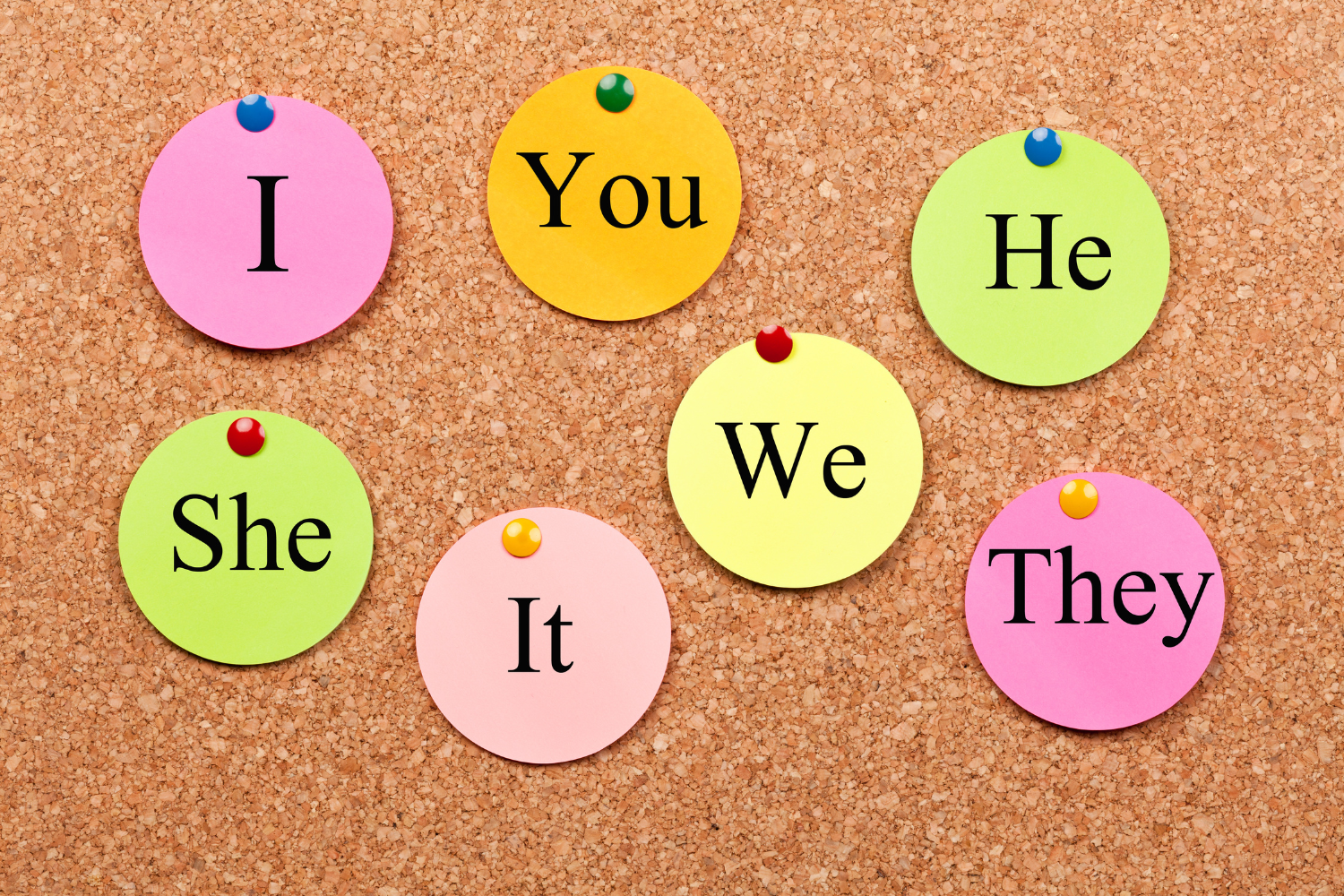
So I was not a little taken aback the other day when a friend told me that I should replace the pronoun "he" with "they" in my writing.
His concern was that people would think I was literally writing about boys rather than understanding "he" is a centuries-old pronoun that stands in place of an antecedent noun that could be of either sex.
Let’s take this sentence as an example: “If we teach a child to read too early, he may struggle to read well later.”
“He” stands in the place of “child,” who could be either a boy or a girl.
Surprised by my friend’s reasoning, I asked a couple of my grammarian friends if they had encountered this same concern. Maybe their being British had some bearing on my findings, but each emphatically said, "No!"
If you read Mr. Gwynne's Grammar, a best seller in England, you will find a section on the use of the pronoun "he." Mr. Gwynne makes a point of differentiating between “sex” and “gender,” the word “sex being a purely biological term and the word “gender” being a purely grammatical term.
“The word to indicate whether someone is male or female is ‘sex,’ not ‘gender,’ which is purely a grammatical term.”
Basic Grammar
Assigning gender to a noun is woven into the structure of many languages, including the Romance languages. The gender of a noun will determine which form of an adjective or pronoun should accompany it.
For example, in Latin, “mensa” is a feminine noun that means "table.” To say " the beautiful table," we use the adjective’s feminine form of “beautiful” to agree with the feminine gender of “table,” hence, “mensa pulchra.”
French, Italian, Spanish, Portuguese and Romanian follow a similar structure.
As you can see, gender in language has nothing to do with an individual's biological or wishful sex regardless of claims to the contrary, although there is of course some overlap when human beings and animals of the female sex are being referred to.
As reason would have it, therefore, the correct use of the pronoun "he," to stand in place of a noun that could be of either sex, is not sexist but is grammatically correct.
“I’ve studied authoritarianism for a very long time - for 40 years - and they’re started by people’s attempts to control the ideological and linguistic territory”
Language Does Matter
Using language correctly does matter.
Our language is the means through which we understand ourselves and the world in which we live. When we start meddling with one of its basic units, we do so with potentially disastrous results, such as being confused about the biological difference of a man or a woman.

There's a sort of madness at play here.
My point is that if you are a homeschooling parent teaching your child English grammar, please teach him that "he" is a centuries-old pronoun and cannot be replaced with “they".
Instead, teach your child that “he” replaces the antecedent noun when the noun could be of either sex, and we cannot afford to lose him!
☞ Disclaimer: This is not a politically-correct blog.
Don’t miss our free download, Ten Books Every Well-Educated Child Should Read.
When you join the Smart Homeschooler Academy online course for parents of school-age children, we guide you in homeschooling with the classics to raise more intelligent children of a better character.
Enroll using the link below and feel confident knowing you have the guidance and support you need to homeschool successfully.
For parents of children under age seven who would like to prepare their child for social and academic success, please begin with our online course, Raise Your Child to Thrive in Life and Excel in Learning.
Elizabeth Y. Hanson is an Educator, Homeschool Emerita, Writer, and a Love and Leadership Certified Parenting Coach with 20+ years of experience working in children’s education.
Utilizing her unusual skill set, Elizabeth has developed a comprehensive understanding of how to raise and educate a child. She devotes her time to helping parents to get it right.
She is available for one-on-one consultations as needed.
“Elizabeth has given us counseling and guidance to help us succeed with our home school planning. When I feel overwhelmed, scared, or lose my confidence, she offers words of wisdom and support.”
— Sherry B., Pittsburg, PA
How Homeschooling Taught Me to Love Grammar
/
An inspiring look into a homeschooler’s journey about successfully teaching a subject she had never learned properly during her own school days.
Read MoreWhy Comparison Is a Homeschooler's Worst Enemy
/
My kids are behind!” Tell me honestly, as a homeschooler, have you not had the same thought at least once?!
Read MoreSix Hidden Facts of Schooling Every Parent Should Know→
/
What follows is an edited transcription of key selections from John’s talk, The Underground History of American Education. As fantastic as it may seem, his findings are based on verified fact, not crazy conspiracy theories.
Read MoreHow to End the Homeschooling Year Feeling Great→
/
Now that the homeschool year is winding down, are you worried your children didn't finish everything you had mapped out for them? Are you feeling a little despair?
Read MorePhonics App vs. Phonics Book: Which Will Produce a Better Reader?→
/
Should you buy a phonics book and teach your child to read, or should you hand the task over to your computer?
Read MoreHomeschool Your Child to Think Like a Leader→
/
There are many advantages to homeschooling, and one of them is leadership.
When done right, homeschooling your kids should lead them to a state of personal sovereignty, a word John Taylor Gatto used often. In other words, raise your kids to march to their own beat, or, as John liked to advise us, to be the writer of their own script.
“You either learn your way towards writing your own script in life, or you unwittingly become an actor in someone else’s script.”
There are a few strategies to know if you want to reach this goal which I’ll share with you. These strategies will assist you in giving your child a serious education, not a public-school education
#1 Know your objective
Assuming your long-term objective is to provide your child with an excellent education and the tools to think independently, you want to be clear about his educational goals.
For each school year, you will need to know what you want your child to accomplish for that year. For each subject, you will need to decide what your child should learn about that subject.

Don’t cut any corners here as planning is everything.
A lot of thought should go into you homeschool plan. If we are going to reach any goals in life, we must be intentional and have a map of how we will get there. Intentional homeschoolers plan out the school year and know their end-year objectives.
#2. Be Flexible
Your child will become interested in subjects you may not have anticipated. Even though you have prepared a homeschool plan, you've got to be flexible enough to shift when the winds change direction.
Any time your child becomes interested in something, that's when you want to teach it. We learn best when we are motivated to learn. A desire to know something motivates us.
There are things your child must know, such as how to read. There is no way around it, but there are things you will not have on the schedule that he may show an interest in. Usually you can be more flexible with subjects, such as science, history, and literature.
Adjust your schedule to your child’s interests when it makes sense to do so. This should not interfere with your goals, but enhance them.
#3 Have High Expectations
Don't expect mediocrity from your child. Let me tell you a story to illustrate this: I met two brothers in a hotel in Gocek, Turkey; a yachting town on the Mediterranean. They were from Israel, and they were somewhere in their 70's.

Gocek, Turkey, 2020
I was having breakfast when they sat down at the table next to me. We got to chatting about how the Jewish people are known for being very intelligent. They said it was because they had superior genes! I asked them to tell me about their childhoods.
I explained that I worked in children's education and, contrary to what they thought, I didn’t believe that they possessed superior genes! Jewish children must be raised in a way that nurtured their intelligence.
Both of their faces lit up, and they said passionately, "Our mothers drill it into us from an early age that we are going to grow up to be an engineer or a doctor or something of importance. We are raised to understand that anything short of this isn’t an option!"
They were laughing as they said it, but it was obviously an impressionable part of their childhood. They were raised to reach the top. Mediocre expectations were not a part of their upbringing.
With all due respect to natural ability, people who excel often do so because it was expected of them or someone inspired them to excel when they were young.
“I’ve come to believe that genius is an exceedingly common human quality, probably natural to most of us. ”
#4 Know what to teach
Most of us went through the public school system. Consequently, our standards for an education are naturally low. Without knowing what a serious education looks like, it's natural to adopt a public-school-at-home model of homeschooling.

Warning: you do not want to recreate public school at home!
“That seemed crazy on the face of it, but slowly I began to realize that the bells and the confinement, the crazy sequences, the age-segregation, the lack of privacy, the constant surveillance, and all the rest of the national curriculum of schooling were designed exactly as if someone had set out to prevent children from learning how to think and act, to coax them into addiction and dependent behavior.”
You want to understand the subjects a child should learn and the books a child should learn from. This is a whole other topic, but let me say that a thorough knowledge of grammar would be a good place to start, something that is no longer taught in public school.
Which means that if you want to give your child an excellent education at home, you have to opt-out of any public-school-related programs and do it yourself.
#5 Enjoy homeschooling
As the teacher to your child, you want to enjoy teaching your child. If you don't, your child will sense this, and it will put a damper on his experience of learning. You want to nurture your child's love of learning instead by being passionate about learning yourself.
If you aren't enjoying teaching your child, it's probably because you haven't found the sweet-spot in homeschooling. It's there, you just need to discover it.
“The art of teaching is the art of assisting discovery.”
Start by recognizing the magnitude of what you are doing: you are educating your child. What more noble task is there?
Acknowledge your courage and your dedication to your family. Focus on the positive aspects of homeschooling and avoid harboring thoughts of all that you have to do today. Our “to-do” lists are always too long. Set realistic daily goals and check them off as you complete them for a quick boost of happiness.
Keep in mind that even if you weren't homeschooling, you'd still have a lot to do. You may have more free time when you kids are in school, but you'd quickly fill it up with other things.
When you’re homeschooling, you’re filling your time up with a service that will pay you back 100-fold for the rest of your life.
#6. Be content
Homeschooling is a service we provide to our children. It takes up our time and it takes up our energy. It's important to structure our days and weeks so we don't get burned out and lose our motivation.
It's important to build some fun time into your life that does't involve your children. What is it that you enjoyed doing before you had children? What is is that relaxes you and boosts your mood?
Whatever it is, make sure you schedule it into your week.
There is nothing worse than a cranky homeschooler, and you'll become cranky if you don't fill your own reserves at least once, if not twice a week.
A friend once said to me, "Life is difficult, but it should be enjoyed." There will be difficult days when you homeschool.
There are always difficult days no matter what we do.
But overall, you want to enjoy it. If you enjoy homeschooling, your children will enjoy it, too.
And they will learn to write their own script in life.
Don’t miss our free download, Ten Books Every Well-Educated Child Should Read.
Become a Smart Homeschooler to raise smart, ethical, and critically-thinking children. Join the Smart Homeschooler Academy online course and feel secure knowing that you have what you need to homeschool successfully.
For parents of children under age seven who would like to prepare their child for social and academic success, please begin with our online course, Raise Your Child Well to Thrive in Life and Excel in Learning.
Elizabeth Y. Hanson is an Educator, Homeschool Emerita, Writer, and a Love and Leadership Certified Parenting Coach with 20+ years of experience working in children’s education.
Utilizing her unusual skill set, coupled with her unique combination of mentors, Elizabeth has developed a comprehensive understanding of how to raise and educate a child. She devotes her time to helping parents get it right.
☞ Disclaimer: This is not a politically-correct blog.
Why Grading Your Kids Causes More Harm than Good→
/
While grading students on a bell curve may make some sense in a college setting, it's a harmful system for measuring the comprehension and knowledge of younger students. The Bell curve was designed to determine where each student ranked in relation to the rest of the group, but each child has a unique mind that is developing at its own rate and understands things in its own time, and, therefore, to compare a child's ability to those of his peers defies common sense.
Read MoreAre Critical Thinking Lessons in Elementary Schools Necessary?
/
Do workbooks and critical thinking classes teach children to think critically?
Read More


