3 Questions to Answer Before You Begin to Homeschool

Many parents are choosing to homeschool today because of the inappropriate content being taught in public schools. They are also frustrated with the substandard education children have been receiving for too long. 

However, while it’s critical to keep your children out of an institution notorious for the poor character and education standards it maintains, there are a few questions to ask yourself before you begin to homeschool.

  1. Know Your Why

If we don’t fully understand why we are doing something, our chances of following through in the most effective way are compromised. 

For example,  if you tell someone not to eat extra protein while he is trying to build muscle but you don't explain why, he'll be less likely to follow through. He also needs to know what foods contain the highest amounts of protein, so he can reach his goal. 

Home education is no different. 

You want to know why public school has failed as well as what kind of an education model does work. If you can answer the question to both of these accurately, then you will be 100% committed and able to give your child a stellar education at home. 

John Taylor Gatto’s best selling book, Dumbing Us Down, is the best place to begin. It will expose the fundamental problems with school making an alternative option the obvious solution.

My Why

My biggest "why" for homeschooling was that I wanted my children to have integrity, and I recognized that this was something we lost in a system that teaches us conformity. After integrity, I wanted my kids to develop their minds to the fullest. 

I knew enough of the history behind public school to be 100% determined to homeschool, rain or shine. Nothing would have induced me to put my kids into a system that I knew would fail them, as it had failed me. 

If we don’t have a firm commitment to homeschooling, it’s very easy to fall back on public or even private schools during difficult times. 

While fear is the best motivator, fear is not the best reason to homeschool. We want to resist falling prey to a fearful mindset and adopt a proactive mindset moving forward. 

We want to become someone who is determined to give their child a better education at home no matter what difficulties we might encounter.

Which begs the question, what kind of an education is the best?

2. What Education Model Should You Choose?

You will come across a lot of different homeschooling models, and it will be difficult to know which is best. Unfortunately, we now face the problem of too many blind leading the blind in the homeschooling community, so deciding who to take advice from may be a challenge.

But since you're here, I’m going to encourage you to follow a traditional approach to education because we know it works. Our safest bet is to choose that which is know to train the mind most effectively and this leads us directly to the classics.

In America, the liberal arts education, which is often referred to as a classical education, is what our children were taught when our literacy rates peaked during the 19th century. 

Today, we have reached such a low point in our academic history with 54% of Americans reading above a fifth grade level. An educated guess is that a fifth grade level today was probably the equivalent of a second grade level in 1900. 

For example, a third grade test in the 19th Century included questions, such as: 

  1. Name the parts of speech and define those that have no modifications.

  2. Find the interest of $512.60 for 8 months and 18 days at 7 percent.

  3. Name events connected with the following dates: 1607, 1620, 1800, 1849, 1865.

  4. Define the following prefixes and use in connection with a word: bi, dis, mis, pre, semi, post, non, inter, mono, super.

  5. Describe the process by which the water of the ocean returns to the sources of rivers.

The Classics

The classics have produced some of the greatest minds in Western history including Cicero, who was considered one of Rome’s greatest rhetoricians; and Thomas  Aquinas, who debated with the Catholic Church for ten years, finally convincing it that the study of Aristotelean logic was not a threat to the religion.

A room without books is like a body without a soul.
— Cicero

Let’s not forget the words of Martin Luther King, who said that we should judge a man by the content of his character, not the color of his skin. 

If you are going to put your time and energy into homeschooling, why not give your children the best possible training of the mind?

If you are worried that your own mind is not well-trained, don't be. You will learn alongside your children and do the best job you can. If you dedicate yourself to the task, you are capable of giving your children anr education superior to that of any public school and most private schools. 

Seneca the Younger said that “By teaching, we learn.” This is the attitude to adopt when you reach for the homeschooling stars!

3. How Do I Help My Child Develop Good Character?

Raising a child with good character has always been considered the most important component of raising a child. “Education" goes under the rubric of “raising a child,” it does not stand above it. 

You will find a lot of workbooks with exercises regarding character, or you will be advised to teach your children about their “feelings,” or you will come across books that teach lessons about good character, but this is not the way to raise a child up in the ways of good character.

Developing good character requires action, the right sort of action. Reading moral stories will supplement what children are learning in real life, but they cannot replace the action required to develop good character.

The truth is that most of us aren't taught how character develops anymore, so we can be confused on this point, yet it is the most fundamental aspect of raising a child.
The Ancients taught that a life well-lived was a moral life, and modern research has proven this is true, which is one of the reasons I don’t wait for the research. We spend billions of dollars trying to understand how to live well, when all we need is to go back to the classics. 

Do you think after so many thousands of years, we have not yet figured these things out! 

Homeschooling Is a Job

Homeschooling is not a job we take lightly. It is the education of our children. While I know any committed and willing parent can do a better job teaching their child at home, the tide in the homeschooling community is shifting.  

A friend of mine, who worked in a co-op  school, told me that the "homeschooled" kids they have been accepting lately we're all behind.

I attribute this to parents not taking the time to understand the very things I just pointed out as well as not adopting a proactive mindset towards homeschooling.

Too many of us keep our kids out of school for fear of negative influences without understanding the deeper problems with modern education; too many of us are using government and virtual programs without realizing that we're turning to the beast for help, and too many of us have no idea how to intentionally raise a child with good character.

We don't have to be an expert in each subject we teach, but we have to understand why we are homeschooling; what constitutes a good education, how character develops, and how to provide these things for our children.

Don’t miss our free downloadTen Books Every Well-Educated Child Should Read.

Teach your child to read before sending him to school! Learn more about Elizabeth's unique course, How to Teach Your Child to Read and Raise a Child Who Loves to Read.

For parents of children under age seven who would like to prepare their child for social and academic success, please begin with Elizabeth’s singular online course, Raise Your Child to Thrive in Life and Excel in Learning.

When you join the Smart Homeschooler Academy online course for parents, Elizabeth will make homeschooling manageable for you. She’ll guide you in helping your kids reach their intellectual potential and developing good character.

As a homeschooler, you will feel confident, calm, and motivated knowing you have the tools and support you need to homeschool successfully.

Elizabeth Y. Hanson is a homeschooling thought-leader and the founder of Smart Homeschooler.

As an Educator, Homeschool Emerita, Writer, and Love and Leadership Certified Parenting Coach, Elizabeth has 21+ years of experience working in education.

Developing a comprehensive understanding of how to raise and educate a child, she devotes her time to helping parents get it right.

Elizabeth is available for one-on-one consultations as needed.

"I know Elizabeth Y. Hanson as a remarkably intelligent, highly sensitive woman with a moral nature and deep insight into differences between schooling and education. Elizabeth's mastery of current educational difficulties is a testimony to her comprehensive understanding of the competing worlds of schooling and education. She has a good heart and a good head. What more can I say?”

John Taylor Gatto Distinguished educator, public speaker, and best-selling author of Dumbing Us Down: The Hidden Curriculum of Compulsory Schooling

3 Ways Homeschooled Kids Get Behind

An idea that gets thrown around in the homeschooling community is that wherever your kids are is "exactly where they are meant to be". 

However, unless we are speaking philosophically about the nature of being, it isn't exactly true.

It's a useful concept to remember in moments when, for example, we just missed a plane to China, lost a lot of money in the stock market, or our two-year old destroyed our living room, but not when it comes to our children's education.

When it comes to our children's education, we need to be on top of our game, so we can help them get the most out of their prime learning years. 

Optimal Learning Windows

Children have windows of optimal learning, and when we miss these windows, we fail to optimize our child's learning potential.

For example, grammar is not a subject that we should teach a child who is 5 or 6, but if a child does not know his 8 parts of speech by the time he's 9 or 10, well, in my book, that's a little behind.

If your child is 10 years old and can't read, that's a little behind. 

This idea that we are "never behind" is empty rhetoric, and we should reject it. 

We can get our kids behind what they are capable of learning when we are not diligent homeschoolers. 

Here are 3 ways we hinder our children from reaching their full learning potential:

1. Using substandard Programs

If we are doing public-school-at-home or using a virtual, state-approved homeschool program, our children are not going to get the same quality of education they might get if we followed a more serious education model.

Why go to all the trouble of homeschooling and then teach our kids exactly what the state is teaching in school?

2. Failing to Plan

I'm not a natural planner, but I have learned over the years that having a solid plan in place increases our chances of reaching our goals, including our homeschooling goals. 

While planning is an essential part of reaching goals, the way we get there never precisely matches the way we planned to get there, but we still need to do our planning. If not, we could end up anywhere.

Aren't you more focused when you have a deadline to meet? What about when you have limited time to complete something? Think about how quickly you clean your house after hearing that an unexpected guest is coming!

A plan allows us to put the structure in place and create deadlines, so we have a greater chance of reaching our goals. If I only have from 9 - 1 to work with my kids, I’m going to stay a lot more focused than when I have no start or ending time.

Action without planning is the cause of all failure. Action with planning is the cause of all success.
— Brian Tracy

When we don't add structure our homeschooling days any little thing that comes up can distract us. And each distraction is one more thing that gets in the way of our kids moving ahead. 

3. A Misguided Attitude

I am guilty of calling homeschooling a lifestyle as much as the next person, but is it? A lifestyle is the style in which we live in the same way that we have a style in which we dress. Some people dress in expensive designer clothes, and others dress in second-hand clothes. Some people dress casually; others dress formally.

So yes, we have different homeschooling lifestyles, but regardless, we want to remember that first and foremost, homeschooling is a job.

While we aren’t heading off to the local school every morning as an employed teach might, we have chosen the path of being a self-employed teacher to our children.

You can’t go back and change the beginning, but you can start where you are and change the ending.
— C. S. Lewis

Of course, things will happen and throw us off schedule, but they should be the exception, not the norm.

Also, the "behind" we refer to is in relation to the public school objectives. But we want our goals for our kids to be higher; we want to help them maximize their best learning and work hard to give them the education they deserve.

Conclusion

When all is said and done, as long as you are using a sound curriculum, you understand what kids need to learn and how to teach them, your kids are listening to you and doing their work, and you are doing your very best, your kids will probably be ahead—not behind—and exactly where they should be!

Don’t miss our free downloadTen Books Every Well-Educated Child Should Read.

Teach your child to read before sending him to school! Learn more about Elizabeth's unique course, How to Teach Your Child to Read and Raise a Child Who Loves to Read.

For parents of children under age seven who would like to prepare their child for social and academic success, please begin with Elizabeth’s singular online course, Raise Your Child to Thrive in Life and Excel in Learning.

When you join the Smart Homeschooler Academy online course for parents, Elizabeth will make homeschooling manageable for you. She’ll guide you in helping your kids reach their intellectual potential and developing good character.

As a homeschooler, you will feel confident, calm, and motivated knowing you have the tools and support you need to homeschool successfully.

Elizabeth Y. Hanson is a homeschooling thought-leader and the founder of Smart Homeschooler.

As an Educator, Homeschool Emerita, Writer, and Love and Leadership Certified Parenting Coach, Elizabeth has 21+ years of experience working in education.

Developing a comprehensive understanding of how to raise and educate a child, she devotes her time to helping parents get it right.

Elizabeth is available for one-on-one consultations as needed.

"I know Elizabeth Y. Hanson as a remarkably intelligent, highly sensitive woman with a moral nature and deep insight into differences between schooling and education. Elizabeth's mastery of current educational difficulties is a testimony to her comprehensive understanding of the competing worlds of schooling and education. She has a good heart and a good head. What more can I say?”

John Taylor Gatto Distinguished educator, public speaker, and best-selling author of Dumbing Us Down: The Hidden Curriculum of Compulsory Schooling

4 Strategies to Raise Low-Tech Kids Who Excel Academically and Socially

We are now raising kids in a cultural environment that is not conducive to developing good social skills or well-trained minds.

Your biggest obstacle to raising solid kids today is technology. You will first need to understand just a little about how technology affects the growing brain, and then I’ll share my 3 strategies for raising kids who excel socially and academically.

Your Child’s Precious Brain Cells

Did you know your child is born with about 100 billion brain cells and that these cells make trillions of connections with one another during his first three years of life?

And did you know that those very connections form the foundation of his intelligence?

Yet, because of the overuse of technology, too many children are not receiving adequate stimulation during the pre-adolescent years which inhibits the formation of new neural pathways.

On top of that, if they don’t sufficiently use the pathways they have formed; the unused pathways will be sloughed off at adolescence.

Technology: ‘the knack of so arranging the world that we don’t have to experience it.
— Max Frisch, c.1960s

Simply put, despite the generous pediatric recommendations, if your child is in the habit of using technology, chances are there may be some delays and possible disruption to his developmental processes. 

I am going to be blunt with you: if your child is using technology, he may not become as intelligent as a child who has a tech-free childhood. It is the obvious conclusion when you understand how technology affects the growing brain. 

What Can A Parent Do?

With our children being targeted by educational software companies, and with the gaming industry's enormously powerful lobby, navigating a world with less technology does require some effort. 

It is possible and you can do it, however, you must be intentional if you want to raise an intelligent, ethical, critically-thinking child.

There are 4 things you can do which will protect your child mind, and by default, make your life easier. .

Strategy #1: Out of Sight, Out of Mind

The first action you can take is to remember that your children will not ask for technology if they don't see you using it or see it in the home.

Therefore, out of sight, out of mind

Host your television and computer in your bedroom and / or office, and, for the most part, keep yourself unplugged during the time that you spend with your children. 

As far as your home is concerned, it's really that simple.

I find television very educating. Every time somebody turns on the set, I go into the other room and read a book.
— Groucho Marx

Strategy #2: Going Against the Grain

When you visit friends, don't be shy to let them know that you are raising your children in a low-tech zone and that you prefer your children play with their kids rather than plugin together. 

After all, that’s why you brought them over—to play together.

When it comes to our children's well-being, we have to stand up for what is best for them, even if we get slack from others.

We have to remind ourselves that our child’s well-being is more important to us than what others think about our choices.

Fortunately, most intelligent and reasonable parents will respect your request. (If they don't, you may want to question the value of their friendship.)

Strategy #3: The Forbidden Apple Syndrome

Here is the crux of the matter, though: You absolutely must find like-minded family and friends to raise your children with.

You cannot be the only parent to say "no" to technology; otherwise, technology is exactly what your child will seek out the minute he leaves home. We call it the Forbidden Apple syndrome.

If you don’t find like-minded friends, your children will see you as the odd parent who doesn’t like technology.

If it keeps up, man will atrophy all his limbs but the push-button finger.
— Frank Lloyd Wright

Underneath this new attitude towards you will be one of disrespect. It's the curse of raising kids in the West where mainstream practices are not often what’s best for our children.

What if you can’t find like-minded friends? The sad answer is that you will probably have to compromise a little to avoid the Forbidden Apple syndrome.

#4 Homeschool Your Kids

When you homeschool your children, it is much easier to keep them off screens. As a homeschooler, you will hopefully raise strong readers, and strong readers excel academically.

Instead of giving your kids screens, you will give them real books.

Your child will develop better social skills by being homeschooled, too. He will not be exposed to the negative social environment so prevalent in schools today. Instead, you will raise him to have good manners and teach him how to get along with other people.

Good social skills are much easier to develop if a child is being homeschooled. It has been studied and proven to be true.

Therefore, keep your kids off of screens!

It must follow, as the night, the day,* they will do better academically and socially.


A line from Hamlet by William Shakespeare

Don’t miss our free downloadTen Books Every Well-Educated Child Should Read.

Teach your child to read before sending him to school! Learn more about Elizabeth's unique course, How to Teach Your Child to Read and Raise a Child Who Loves to Read.

For parents of children under age seven who would like to prepare their child for social and academic success, please begin with Elizabeth’s singular online course, Raise Your Child to Thrive in Life and Excel in Learning.

When you join the Smart Homeschooler Academy online course for parents, Elizabeth will make homeschooling manageable for you. She’ll guide you in helping your kids reach their intellectual potential and developing good character.

As a homeschooler, you will feel confident, calm, and motivated knowing you have the tools and support you need to homeschool successfully.

Elizabeth Y. Hanson is a homeschooling thought-leader and the founder of Smart Homeschooler.

As an Educator, Homeschool Emerita, Writer, and Love and Leadership Certified Parenting Coach, Elizabeth has 21+ years of experience working in education.

Developing a comprehensive understanding of how to raise and educate a child, she devotes her time to helping parents get it right.

Elizabeth is available for one-on-one consultations as needed.

"I know Elizabeth Y. Hanson as a remarkably intelligent, highly sensitive woman with a moral nature and deep insight into differences between schooling and education. Elizabeth's mastery of current educational difficulties is a testimony to her comprehensive understanding of the competing worlds of schooling and education. She has a good heart and a good head. What more can I say?”

John Taylor Gatto Distinguished educator, public speaker, and best-selling author of Dumbing Us Down: The Hidden Curriculum of Compulsory Schooling

5 Strategies to Nurture Your Child’s Curiosity

baby in box.png

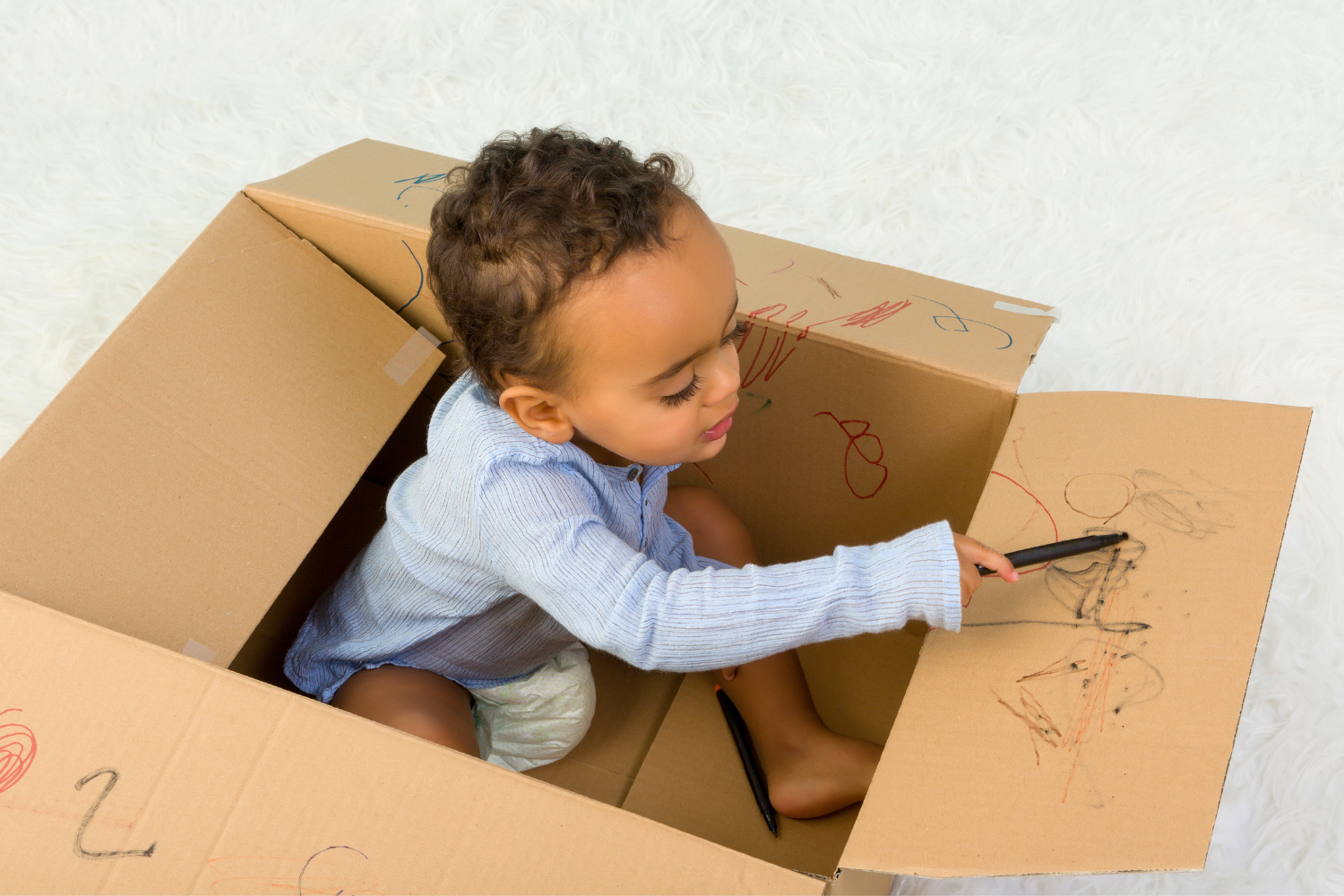
A friend showed me a clip of her nine-month-old baby.

I looked into the baby's eyes as I watched the video. The intense alertness that I witnessed, the acute observation of each facial move she saw in her mother's face, was fascinating.

The baby wanted to know how to make the same expressions her mother was making.

It's the intense desire to know that all healthy children possess, yet what happens to their curiosity as they grow a little older?

Why do so many children forsake that infinite sense of wonder that’s so innate to each of us? 

No thief, however skillful, can rob one of knowledge, and that is why knowledge is the best and safest treasure to acquire.
— L. Frank Baum

One of the reasons for this is because too many children start school at young ages. By the time they reach kindergarten or first grade, the light of curiosity begins to dim.

kid with books mad.png

Think about it. If your child has a small shovel in his hand, but every time he tries to shovel something his teacher tells him to stop, he will eventually stop picking the shovel up.

When a child cannot follow the lead of his curiosity, or is not in an environment where he can exercise his desire to know, he will put his curiosity on the shelf.

Yet, the level of his curiosity is related to his intelligence. The more curious he is, the more he will exercise his mind to discover or learn something. To lose his curiosity would be a tragedy because it means he would never fully develop into all that he can be.

We cannot let this happen! Therefore, if you want to encourage your child’s natural curiosity, whether it has been dimmed or not, here are five things you can do:

  1. If you have to put your child into an outside program, look for a daycare or preschool that is play-based and ideally held in the outdoors, such as a Forest School. Make sure they are operated by people who understand what children need at these tender ages.

  2. Do not entertain your child! It is not that you don't ever play with your child, but only that you do not become his full-time playmate. Allow him to follow the dictates of his curiosity and figure things out for himself, so he develops his mind. Children are little scientists by nature. In the right environment, they will learn how to entertain themselves. 

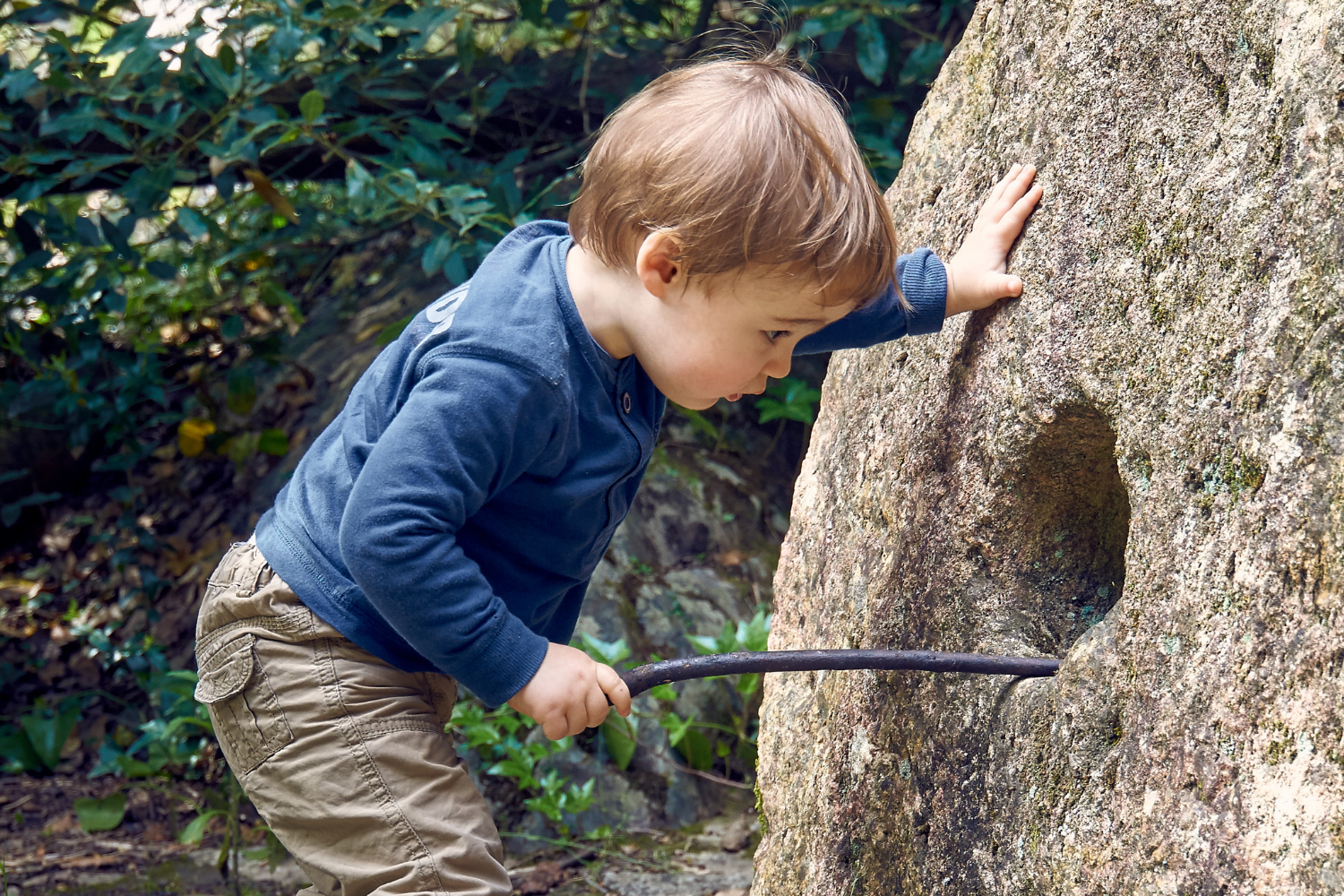
  3. Be curious yourself. Take your child into the outdoors and explore with him. Let him walk barefoot on fallen leaves and dip his feet into spring water to awaken his senses. Bring his attention to the songs of birds and the rustling of the trees as the wind blows through them. Collect a bug or two and read about them when you get home.

  4. Immediately remove all screens from your child's life both inside and outside the home. Under no circumstances should you hand him your cell phone to quiet him because you are busy. Screens are a cause of a dimming curiosity; not only that but they will thwart your child's brain development

  5. Lastly, if you can, don't put your child into any school programs until he is at least ten years old. Until then, teach him yourself because so many learning problems take root during those early years. The first few grades of elementary school are easy to teach when you know what you are doing

kid exploring.png

Here’s a thought: our ability to excel, to become the best version of ourselves, begins with our desire to know.

An investment in knowledge always pays the best interest.
— Benjamin Franklin

Let’s work to keep our children’s curiosity alive—even if that means teaching them ourselves— so they can become all that they can be.

☞ Disclaimer: This is not a politically-correct blog.

Don’t miss our free download, Ten Books Every Well-Educated Child Should Read.

When you join the Smart Homeschooler Academy online course for parents, Elizabeth will guide you in homeschooling with the classics to raise brighter and more creative children.

Enroll using the link below and feel confident knowing you have the guidance and support you need to homeschool successfully.

For parents of children under age seven who would like to prepare their child for social and academic success, please begin with Elizabeth’s original online course, Raise Your Child to Thrive in Life and Excel in Learning.

Elizabeth Y. Hanson is a homeschooling thought-leader and the founder of Smart Homeschooler.

As an Educator, Homeschool Emerita, Writer, and Love and Leadership Certified Parenting Coach, Elizabeth has 21+ years of experience working in education.

She has developed a comprehensive understanding of how to raise and educate a child, and she devotes her time to helping parents to get it right.

Elizabeth is available for one-on-one consultations as needed.

*****

“Elizabeth has given us counseling and guidance to help us succeed with our home school planning. When I feel overwhelmed, scared, or lose my confidence, she offers words of wisdom and support.”

— Sherry B., Pittsburg, PA

The Six Purposes of Schooling by John Taylor Gatto

School bus.png

When people ask me why I homeschooled, I tell them I had no choice. If they knew what I know about public education, they would homeschool too.

John Taylor Gatto was the man who opened my eyes to the nefarious agenda behind institutionalized schooling. What follows is a transcription of the key section from John’s classic speech and opus, The Underground History of American Education.

John was a brilliant and well-researched man. I have read what is below in Ingles’ book myself; it is all true.   

Transcription of John’s Talk

“I have something here.  I have the six purposes of schooling [from the book Principles of Secondary Education by Alexander James Inglis] as laid down in 1917 by the man whom Harvard named their Honor Lecture in Education for. 

So far from being a fringe individual, this guy is the reason the Harvard Honor Lecture in Education is named as it is:  The Inglis Lecture.  I would like to read you the six purposes of schooling.  I moved heaven and earth as it took years to find this book [Principles of Secondary Education]--just like trying to find in past years a copy of the Carol Quigley [book] Tragedy and Hope.  

I learned about Inglis from a twenty year President of Harvard [1933-1953], James Bryant Conant, who was a poison gas specialist in World War I--and was in the very inner circle of the Atomic Bomb Project in World War II--was High Commissioner of Occupied Germany after the War. 

So he [James Bryant Conant] wrote--there must be 20 books about the institution of schooling--of which he was completely a proponent.  And he is a very, very bad writer.  I forced myself to read most of these books, and one of them he says that if you really want to know what school is about, you need to pick up the book that I’m referring to Principles of Secondary Education

Two years it took me to find a copy of the book [Principles of Secondary Education by Alexander James Inglis]--750 pages, tiny print and as dull as your imagination can be.  And furthermore, it is not till you get to the very middle of the book--in an unlabelled section--that he spills the beans.  Let me spill them for you.  

 There are six purposes, or functions, as he calls them.  The first he [Alexander Inglis] calls the Adjustive Function: Schools are to establish fixed habits of reaction to authority.  That’s their main purpose--habits and reactions to authority. 

That is why school authorities don’t tear their hair out when somebody exposes that the Atomic Bomb wasn’t dropped on Korea, as a history book in the 1990s printed by Scott Foresman [did], and why each of these books has hundreds of substantive errors.  Learning isn’t the reason the texts are distributed.  

The Adjustive Function

So, first is the Adjustive Function--fixed habits.  Now here comes the wonderful insight that being able to analyze the detail will give you.  How can you establish whether someone has successfully developed this Automatic Reaction because people have a proclivity when they are given sensible orders to follow. 

That is not what they want to teach.  The only way you can measure this is to give stupid orders and people automatically follow those.  Now you have achieved Function #1.  

The Integrating Function

Have you ever ever wondered why some of the foolish things that schools do or allow to continue?  [Function] #2, he [Inglis] calls it the Integrating Function, but it is easier to understand if you call it the Conformity Function. 

It’s to make children alike as possible--the gifted children and the stupid--alike as possible because market research uses statistical sampling, and it only works if people react generally the same way.  

The Directive Function

The Third Function he calls the Directive Function: School is to diagnose your proper social role and then log the evidence that here is where you are on the Great Pyramid, so that future people won’t allow you to escape that compartment.  

The Differentiating Function

 The Fourth Function is the Differentiating Function.  Because once you have diagnosed the kids in this layer, you do not want them to learn anything that the higher layers are learning.  So you teach just as far as the requirement of that layer.  

The Selective Function

 Number five and six are the creepiest of all!  Number 5 is the Selective Function.  What that means is what Darwin meant by natural selection: You are assessing the breeding quality of each individual kid.  You’re doing it structurally because school teachers don’t know this is happening. 

And you’re trying to use ways to prevent the poor stuff from breeding.  And those ways are hanging labels--humiliating labels--around their neck, encouraging the shallowness of thinking.

 I often wondered, because I came from a very very strict Scotish-Irish culture that never allowed you to leer at a girl.  But when I got to NYC, the boys were pawing the girls openly and there was no redress for the girls at all, except not showing up in the classroom--high absentee rates. 

Well, you are supposed to teach structurally that sexual pleasure is what you withdraw from a relationship and everything else is a waste of time and expensive.  

 So, the Selective Function is what Darwin meant by the favored races.  The idea is to consciously improve the breeding stock.  Schools are meant to tag the unfit with their inferiority by poor grades, remedial placement, and humiliation, so that their peers will accept them as inferior.  And the good breeding stock among the females will reject them as possible partners.  

The Propaedeutic Function

 And the Sixth is the creepiest of all! And I think it is partly what Tragedy and Hope is about--a fancy Roman name, the Propaedeutic Function.  Because as early as Roman bigtime thinkers, it was understood that to continue a social form required that some people be trained that they were the custodians of this.  So, some small fraction of the kids are being ready to take over the project. 

That’s the guy--the honor lecturer [Inglis], and it will not surprise you that his ancestors include the major-general of the siege of the Luknow of India--famous for tying the mutineers’ on the muzzle of the cannons and blowing them apart, or somebody who was forced to flee NYC, a churchman at the beginning of the American Revolution, because he wrote a refutation of Thomas Paine’s Common Sense. 

They were going to tar and feather him.  He fled and was rewarded by the British by making him the Bishop of Nova Scotia.  Those are Inglis’ ancestors!  

 So, Al Inglis is certainly--when I learned of this and wrote to Harvard, asking for access to the Inglis Lecture.  Strike me dead, Lord, if I’m exaggerating at all.  I was told “We have no Inglis Lecture--hasn’t been for years, and we have no records. 

It was the same that happened when I discovered that Elwood B. Cubberly, the most influential schoolman of the 20th century and the bionomics genius had been the elementary school editor of Houghton Mifflin, and I wrote Houghton Mifflin--Is there any record? And they said, “We have no record of anyone named Elwood P. Cubberly. 

harvard.png

Now Harvard is telling me, “There is no Inglis Lecture.  A week passed and I got a call from Harvard, from some obscure office at Harvard, saying “What is your interest in the Ingles Lecture?”  I knew that I was on thin ice. 

And I said, “Well, James Conant referred me in his books to the man the Inglis Lecture is named after, and I was just wondering if I could get some background on this fellow, and a list of the lectures.  

 And in due time, I got a list of the lectures and instructions [on] how to access the texts, but not easily. Enough hoops that someone who has to mow the lawn and burp the baby wouldn’t jump through those hoops.  I was able to prove Harper’s [magazine] wouldn’t publish [it in] the cover essay I wrote, which Lew Laflin [?] named Against School, but I had called The Artificial Extension of Childhood because I think that is the key mechanism at work here.  

 So, they wouldn’t print the information about Cubberley because Houghton Mifflin denied it.  It was only months after that I looked through my extensive library of incredibly dull books about schooling, and I opened [one]--and on the facing page said Elwood B. Cubberly, Editor and Chief of Elementary School, publishing arm of Houghton Mifflin. 

By the way, the secondary Editor and Chief was Alexander Ingles.  So you see how this cousinage works.” 

*****

Download your free copy of 10 Surprising Facts About Homeschooled Kids.

*Video transcribed by Roger Copple. To watch the full 12-minute video: The Six Purposes of Schooling [Video]

☞ Disclaimer: This is not a politically-correct blog.

Don’t miss our free download, Ten Books Every Well-Educated Child Should Read.

When you join the Smart Homeschooler Academy online course for parents, Elizabeth will guide you in homeschooling with the classics to raise brighter and more creative children.

Enroll using the link below and feel confident knowing you have the guidance and support you need to homeschool successfully.

For parents of children under age seven who would like to prepare their child for social and academic success, please begin with Elizabeth’s original online course, Raise Your Child to Thrive in Life and Excel in Learning.

Elizabeth Y. Hanson is a homeschooling thought-leader and the founder of Smart Homeschooler.

As an Educator, Homeschool Emerita, Writer, and Love and Leadership Certified Parenting Coach, Elizabeth has 21+ years of experience working in education.

She has developed a comprehensive understanding of how to raise and educate a child, and she devotes her time to helping parents to get it right.

Elizabeth is available for one-on-one consultations as needed.

*****

“Elizabeth has given us counseling and guidance to help us succeed with our home school planning. When I feel overwhelmed, scared, or lose my confidence, she offers words of wisdom and support.”

— Sherry B., Pittsburg, PA

Why I never Reached My Potential and How to Spare Your Kids the Same Fate

John Taylor Gatto, a renowned educator and best-selling author, said that "schools were dangerous places for children." 

Having been educated through the public school system, I can say with certainty, as I’m sure you can too, that my best years of learning were wasted.

Not only were they wasted, but as a public-school student, I was exposed to all sorts of immoral behaviors and mediocre influences in my life.

It wasn't a great beginning. 

My Twelve-Year Jail Sentence

In my "twelve-year jail sentence," as Gatto likes to call it, I certainly never learned that a "preposition is a word which governs a noun or pronoun and connects it to anything else in the sentence or clause" (definition according to Mr. Gwynne, author of Gwynne's Grammar).

I memorized not a single piece of poetry, nor did I ever learn my own country’s history with any coherency, let alone other histories of the world.

(I did read a lot of classic books, but not in school. My father supplied me with those, and they were my saving grace.)

It would have been helpful to have learned the above subjects during those 12 wasted years and learned other subjects too, which are essential to living a good life.

For example, learning Aristotelean logic when I was young would have given me the ability to see through the kind of propaganda that flies in our faces every day and deceives us to believe in and do things we would not otherwise believe in or do.

Modern propaganda is a consistent, enduring effort to create or shape events to influence the relations of the public to an enterprise, idea or group.
— Edward Bernays (founder of modern propaganda and nephew of Sigmund Freud)

Having a better understanding of world history would have taught me that history repeats itself. I would have known back then to look to the past to understand where we have been, where we were then, and where we were headed.

The Six Purposes of Schooling

Fast forward many years later to my discovery of the six purposes of government schooling that John Taylor Gatto uncovers for us and guess who was livid?

I wasn’t alone.

Like many of us, I realized that I had been cheated of a real education, and there is nothing more infuriating than discovering that you have lost the best years for training your mind to a dumbed-down, nefarious government school program. 

I should also tell you of something else that happened to me when I was in public school which has been an impediment throughout my life. As a young kindergarten enrollee, I had developed a false belief that I was not very smart!

This may sound strange, but it happens to be fairly common for children who are almost a year younger than the oldest child in the classroom but expected to do the same level of work.

Unfortunately, beliefs we form from childhood experiences become like deep grooves in our minds, and it can take a lifetime to polish them out, which is why we need to consider carefully the way we are raising our children.

School is a twelve-year jail sentence where bad habits are the only curriculum truly learned. I teach school and win awards doing it. I should know.
— John Taylor Gatto

5 Reasons for Homeschooling

In this brief summary of my unfortunate government school years, did you notice that I just gave you five reasons why concerned parents elect to homeschool their children? If not, let me summarize them for you as it’s important to reflect on them:

  1. Concerned parents want to give their children a real education where their children learn, at the very least, how to read well, write well, and speak well.

  2. They want to give their children proper training in morality and what it means to be an ethical and civilized human being.

  3. They want their children to understand that mediocrity is not good enough; they must learn to strive for excellence.

  4. They don't want their children exposed to early sexual influences, drugs, and perverse ideologies.

  5. They want their children to have self-confidence and as much self-knowledge as they can acquire during a well-spent youth.
These are the five most common reasons for homeschooling, but there are two more that are gaining momentum. Crime is a big problem in schools today, and many parents are not putting their kids into public school or are taking their children out of public school because of safety issues.

I mentioned this to a group of parents about 15 years ago, and one parent thought I was being extreme. But I wasn't. I was just on top of the statistics earlier than they were; now, I believe it is common knowledge that schools are not safe places for kids. 

We also have health concerns with the government schools now mandating a new drug for children that many parents feel is unsafe, despite the propaganda, because the ten or twelve years it takes to safely test a new drug is still in the future.

We have many new homeschoolers now because of the mandates which I find interesting.

Now I’ve given you seven reasons why concerned parents choose to homeschool. Here’s one more that seldom gets mentioned, but that I believe is the most important because it encompasses all the rest:

Your children were born with a God-given potential that they will realize throughout the course of their lives if, and only if, they’re given a fair chance.

If you want your children to reach their potentials, the best chance you have to help them is to intelligently homeschool your kids. Don’t let them waste their best years of learning in public school.

Educate your children well by doing it yourself or hiring competent tutors to teach your kids. One-on-one instruction is superior to class instruction which is why the aristocracy were always tutored.

What’s vital to remember is that an education tailored to one is the education of people who lead themselves, and may even lead others, as opposed to being led.

Let me conclude by saying this: living in a dumbed-down world is frightening. Dumbed-down people are easy to manipulate, and Americans may be the most manipulated people on this planet today.

Keep your kids out of public school and homeschool them so they can grow up to be leaders who are intelligent, ethical, critically thinking people.

Mediocrity will not do.

*****

To learn about John Taylor Gatto’s Six Purposes of Government Schooling, use this link.

Don’t miss our free download, Ten Books Every Well-Educated Child Should Read.

For parents of children under age seven who would like to prepare their child for social and academic success, please begin with our online course, Raise Your Child Well to Live a Triumphant Life.

Become a Smart Homeschooler and give your child a first-rate, screen-free education at home using the Smart Homeschooler Academy Curriculum and teaching methods taught in the program. Join the Smart Homeschooler Academy online course and feel secure knowing that you have what you need to homeschool successfully as well as live ongoing support from Elizabeth.

Elizabeth Y. Hanson is an Educator, Homeschool Emerita, Writer, and a Love and Leadership Certified Parenting Coach with 20 years of experience working in children’s education.

Utilizing her unusual skill set, coupled with her unique combination of mentors, Elizabeth has developed her own comprehensive understanding of how to raise and educate a child. She devotes her time to helping parents get it right.

☞ Disclaimer: This is not a politically-correct blog.