
How Do You Teach Your Children to Love Learning?
/
You don’t, nor do you need to.
The reason you don’t need to teach your children to love learning is because they come into the world with an innate love of learning just like they come in with a heart in their chest.
The question you want to ask then is not how can you teach your child to love learning, but how can you avoid making decisions that will diminish his love of learning?
Children are looking for truth; the truth of how things are and what they are. They are born insanely curious and curious people seek to know.
What follows are 5 things to consider in order to protect your children’s love of learning:
The Joy of Learning
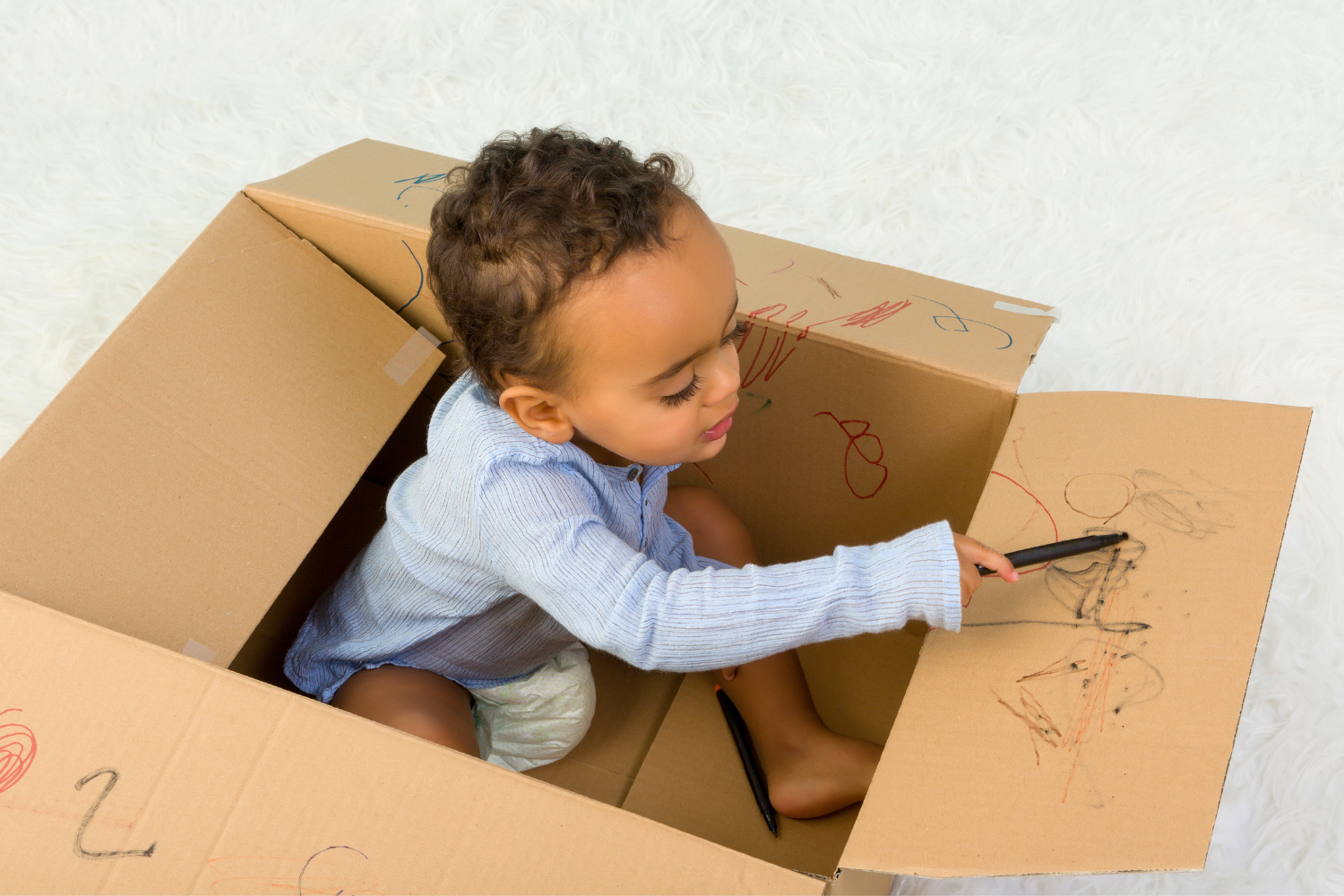
Often times, parents act as their child’s playmate, and think they need to occupy their child’s attention, but this can inadvertently interfere with a child’s learning process. It doesn’t mean you can’t play with your child, but you do want to give him plenty of space to play alone.
If your child is trying to stack blocks, for example, but the blocks keep falling down because the bottom block is too tiny to carry the weight and size of the upper blocks, let your children figure out the problem.

You don’t need to come to the rescue; there is no impending danger.
Sure, he may cry, he may get frustrated, but eventually he’ll work it out and when he does; he’ll be overjoyed as in over-the-moon happy.
Have you ever tried to figure out how to do something? You try, and you try, and you try and finally understanding kicks in. Oh, the joy that follows!
The joy is lovely, its exhilarating, its ecstatic but it’s not the point to learning; it’s the perk that comes with struggling long enough to figure something out by yourself. It’s a built-in reward system that makes learning enjoyable and rewarding.
Other than to correct uncivil behavior such as loud crying and throwing tantrums when things aren’t going his way, you don’t want to interfere with the task he has set before himself.
A Time for Mentoring
There are things we can’t always figure out though and at those times we need mentors and teachers otherwise we’ll waste time and create unnecessary problems for ourselves. Nor can children figure everything out for themselves which is why they have us.
We’re here to teach them how to develop the skills to survive in the world just like all mammals teach their young.
For example. learning how to be civilized is something it’s our duty to teach our children; they are too young to figure this out on their own. We also have to teach them about the danger of a hot stove and how fire may burn them.
We teach them their A B C’s too.
Vital Skills Which Develop by Learning
Learning as much as they can about how the physical world works, on their own, not only nurtures their innate love of learning, but it’s vital to developing many skills that they’ll need to lead successful lives.
When they conquer a difficult task, they develop confidence in their ability to master things.
When they don’t give up trying, they learn perseverance which leads to success.
When they don’t quit, they learn resilience which teaches them to bounce back when they fail.
(With suicide amongst children on the rise, resiience is a vital skill)
When they don’t give up, they learn to think strategically, analytically, and comprehensively
They learn to see things from different angles and in different ways; this fosters their creativity and problem solving skills.
Who does not need problem solving skills in life?
And all of the above foster independence. You do not want to be taking care of your children forever, do you?!
Let them struggle; it’ll only do them good.
“Don’t handicap your children by making their lives easy. ”
Need I mention public school? It’s general knowledge now that children enter school with immense curiosity and depart after 18 years with a piece of paper that in-between the lines says: “They knocked the love of learning out of me!”
Try to avoid it if you can.
“Curiosity has no important place in my work, only conformity.”
There is something else most parents do today which is a concern like no other.
You know what I’m going to say, don’t you?
Learning’s Enemy
Screen time is the enemy of learning. Putting your children in front of screens qualifies for what Heinlein calls “making their lives easy.” The only thing they have to do is lay back and watch a screen. They barely even need to move their eyes.

If you’re serious about raising lifelong learners, and I believe you are or you wouldn’t have read this far, then turn the screens off and get them out of sight of your children. You need to create an environment of learning in your home and technology will undermine this.
Screens entertain children, so children don’t learn how to entertain themselves. They lose their sense of curiosity and their love of knowing from passively zoning into a screen. Once this is lost, they begin to slowly drive you nuts. You then develop the delusion that you need the screen for them so you can stay sane. You don’t; you never did.
Screens are like bandaids in that they cover up the problem, but they are unlike bandaids because they make the wound worse.
If your children are bothering you, tell them to put their shoes on, grab their coats, and send your children outdoors to explore, create, and discover. Don’t fret if they cry and get angry in the beginning; they’ll get used to it and they’ll be better off when they do.
“He that cockers his child provides for his enemy.”
In the meantime, you can get back to whatever it is you were trying to do. When you’ve finished, invite your children back in, if you want to, or let them play outside until dinnertime.
It’s a win-win for everyone.
Children do not need screens, nor do you need to rely upon them as babysitters. They’re a costly crutch that will create much bigger problems for you and your children later.
Children who are curious and who love learning for learning’s sake will naturally entertain themselves.
Any healthy child will tell you that the world is far too fascinating a place to ever be bored.
Grab a copy of the essential homeschooler’s book: Education’s Not the Point: How Schools Fail to Train Children’s Minds and Nurture Their Characters with gripping essays by John Taylor Gatto and Dorothy Sayers?
ACADEMY ENROLLMENT NOW OPEN THROUGH JUNE 4, 2026 with Amazing bonuses!
Join the Smart Homeschooler Academy online course for parents, Liz will share her 6-step framework to raise children of higher intelligence, critical thinking, and of better character.
As a homeschooler, you will never have to worry about failing your children, because working with Liz, you will feel confident, calm, and motivated. She also provides you with the tools and support you need to homeschool successfully.
Teach your child to read before sending him to school! Learn more about Elizabeth's unique course, How to Teach Your Child to Read and Raise a Child Who Loves to Read.
For parents of children under age seven who would like to prepare their child for social and academic success, please begin with Elizabeth’s singular online course, Raise Your Child to Thrive in Life and Excel in Learning.
Elizabeth Y. Hanson is a homeschooling thought-leader and the founder of Smart Homeschooler.
As an Educator, Homeschool Emerita, Writer, and Love and Leadership Certified Parenting Coach, she has 21+ years of experience working in education.
Developing a comprehensive understanding of how to raise and educate a child, based on tradition and modern research, and she devotes her time to helping parents to get it right.
Elizabeth is available for one-on-one consultations as needed.
"I know Elizabeth Y. Hanson as a remarkably intelligent, highly sensitive woman with a moral nature and deep insight into differences between schooling and education. Elizabeth's mastery of current educational difficulties is a testimony to her comprehensive understanding of the competing worlds of schooling and education. She has a good heart and a good head. What more can I say?”
—John Taylor Gatto Distinguished educator, public speaker, and best-selling author of Dumbing Us Down: The Hidden Curriculum of Compulsory Schooling