What follows is an edited transcription of key selections from John’s talk, The Underground History of American Education. As fantastic as it may seem, his findings are based on verified fact, not crazy conspiracy theories.
Read MoreIs Listening to an Audiobook Reading?
/
Are you impressed with adults who read 100 books or more per year? I was once, too, until one day, someone mentioned it was audiobooks that they were reading.
What?! Since when does listening to a book qualify for reading a book? There can be dangerous consequences to misusing language like this.
THE PROBLEM
Let's examine the problem. We'll start by defining what we mean by "reading a book."
Reading, as in what we teach children when they first go to school, is a skill that involves the eyes and both sides of the brain. Using our eyes, we look at the printed words on a page and decipher their meaning to understand what the writer is communicating.
"I read" is an action verb that says I am in the active state of reading a book using my sense of sight.
We have other grammatical uses for the word, such as in the gerund "a poetry reading." We also have the infinitive: "I went home to read." We can use the word metphorically as in “I read the writing on the wall.”
But to say that you read a book, as in the verb, “I read,” when you listened to the book is to use the word ambiguously. Using words ambiguously confuses the meaning, so we understand something to be what it is not or something to not be what it is.
Manipulating the use of language is the art and science of propaganda. Propagandists get people to believe things that are untrue by twisting and reframing language in a way that deceives us.
Not that there is an intent to deceive people about how many books someone read last year, but it is deceptive. Why do we have a separate term for blind people who read with their hands if it weren't?
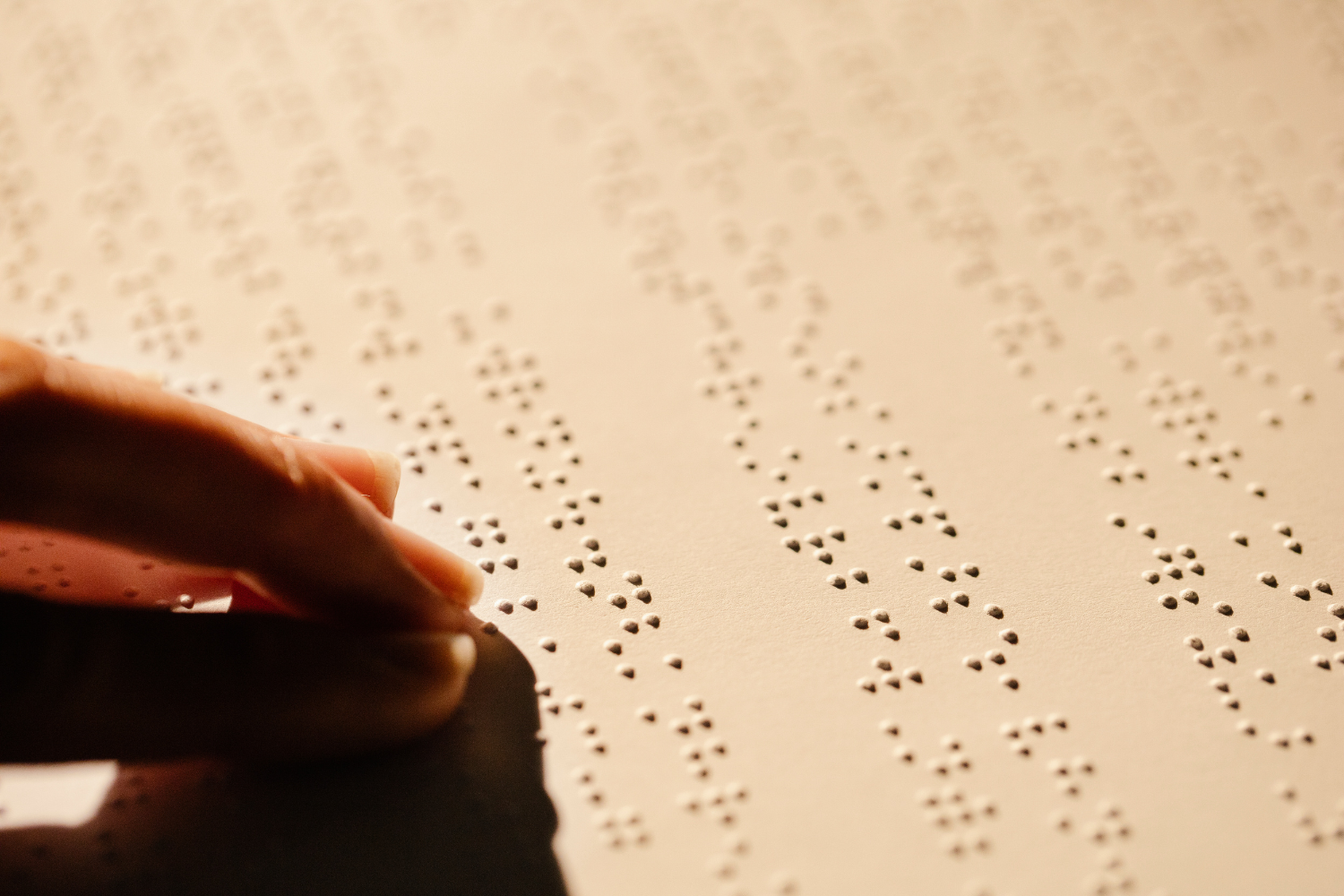
When blind people read with their hands, we call it Braille, so we don't confuse it with reading using our eyes.
THE SOLUTION
If people want to "read" with their ears, it needs its own term to avoid confusion.
It would mislead people to say that our three-year-old read Peter Rabbit when we read the book to our child. When we watch a film based on a novel, we don't say we read the book. Before television, when people listened to books read over the radio, they didn't say they read the book. We would never listen to a podcast and say we read the podcast.
None of this would make sense if we did.
Why then is it suddenly okay to say something like, "I read The Power of Regret," when the truth is that I listened to Daniel Pink read it on Audible books? (It was a good listen!)
And then there’s the argument that some people are auditory learners and some people are visual learners. Yet, the Multiple Learning Styles has never been proven, and educated people have always read books. Skills are something we develop. Listening is a skill and so is reading.
“Always read something that will make you look good if you die in the middle of it.”
Here's the problem with replacing listening with reading: when half of the country's adult population cannot read at a sixth-grade level, stretching the concept of reading to include audiobooks will not help things.
When we believe listening to an audiobook is reading, we can deny having a literacy problem. You might ask, "What does it matter if we read with our eyes or listen with our ears? We are getting the same information."
It matters for a few reasons.
Language Matters
We have words with precise definitions to facilitate our communication with one another. If you use a word one way, and I am using it another, neither of us understands the other.
While you might argue that language naturally changes over time, it does, but not in ways that don't make sense.

I'd also love to boast reading 100 books a year, but it takes time to read a serious book. I could listen to 150 books in a year while cooking, cleaning, and driving, but reading Tacitus, that's another story.
Reading Matters
Some words come into vogue and go out of vogue, but the altering of reality concerns me. Saying we are reading when in fact, we are listening has its repercussions.
Regardless of how many people listen to audiobooks, Americans read less than the global average.
Our children need to learn how to read challenging books, and so do we. Competent reading is a skill we develop to gain access to the world of literature, both ancient and modern.
Skilled reading allows us to read original sources and conduct research, so we can think for ourselves rather than let others think for us. Reading fires up our brains much more than listening, so reading helps to keep our minds strong. Reading is a pleasant way to spend one’s leisure time. Reading makes us smarter by improving our minds. And what about the smell of a book, the feel of a book, the look of a book?

We have a lot of debate about language these days, but when we examine the cause for the disputes, it's because we ignore common sense.
If reading involves the eyes and listening involves the ears, then when we listen to a book being read by someone else, it is safe to say we are not reading it.
If listening is listening, then it can't be reading. If our Americans (and Brits) read below the global average, correcting the problem by listening to audiobooks will not fix it.
Free Download: Ten Books Every Well-Educated Child Should Read.
When you join the Smart Homeschooler Academy online course for parents, I guide you in homeschooling with the classics to raise intelligent children of good character. You can enroll using the link below and be confident knowing you can and will homeschool successfully.
For parents of children under age seven who would like to prepare their child for social and academic success, please begin with our online course, Raise Your Child Well to Thrive in Life and Excel in Learning.
Elizabeth Y. Hanson is an Educator, Homeschool Emerita, Writer, and a Love and Leadership Certified Parenting Coach with 20+ years of experience working in children’s education.

Utilizing her unusual skill set, Elizabeth has developed a comprehensive understanding of how to raise and educate a child. She devotes her time to helping parents get it right.
She is available for one-on-one consultations as needed.
☞ Disclaimer: This is not a politically-correct blog.
10 Inexpensive but Fun Summertime Activities for Kids
/
Summer is a great time for entertaining, exploration, and play, which all kids need plenty of (and so do we!).
I put together a list of ten inexpensive things (some are free) and easy for you to help your kids do, or at least help them get set up to do. If your kids are old enough, you can leave them to the "doing" part for some of these activities while you enjoy a good book, a short snooze, or catch up on folding laundry.
1. Neighborhood Recital
One thing we used to do and that our neighbors loved was to put on a piano recital. My kids and I would make high tea goodies such as little sandwiches and cakes, and we'd invite some of our neighbors for high tea and a concert.
They loved it! If your kids don't play a musical instrument, then a poetry recital is fun too. For the recital, you want them to memorize the piece, practice introducing them, teach them how to stand before the audience and make eye contact before they sit down to play or begin reciting, and then stand before the audience at the end before they leave the stage.
If you do a poetry recital, each child can recite a poem of their choice, and then you can invite the audience to share a poem. If you decide to open the stage for everyone, let your neighbors know ahead that they should come prepared to recite one of their favorite poems.
2. Make a Kite and Fly It

I used to buy somewhat expensive kites at our annual kite festival for my kids, but the best kites were the ones we had when I was young. They were simple to assemble and oh so easy to fly. You can help your kids make one from scratch (plenty of Youtube videos on this subject), or you can buy a kit from Amazon.
Assuming you have the kite parts, assemble the kite, use old sheets to make the tails, and head for a tall hill, without trees, on a windy day. Bring a picnic lunch as kite flying will keep your kids occupied for hours. In my town, we had a kite festival every year, and we used to have so much fun, which lasted the entire day.
3. Water Balloon Fights
Water balloon fights are the way to go during the summer. We used to have plenty of these too! All you have to do is buy the balloons, show your kids how to fill them, and let the fun begin.
4. Draw a Map on Your Driveway
Buy big colored chalk from your local art store, and let your kids draw a map of your country, the States, or the world, depending upon their age. You can also get a head start on their geography lessons for the next year!
5. Plant a Vegetable Garden

Even if you live in an apartment with only a tiny deck, get used to planting vegetables with your kids each year. If you have a little section of the yard, you can spare, that's even better. It's an incredible thrill for kids to grow their food and eat it; plus, it tastes so much better.
6. Start a Car Wash Service
Advertise car washes at a discount price in your neighborhood. Before you let your kids do this, teach them the etiquette of handling other people's cars. I once let a friend's older kids detail my car, only to find later that they had jumped on it and dented the hood.
One last thing, whatever supplies your kids will need, buy them new, give your kids the receipt, and make sure your kids pay you back from the money they earn. Having them pay for their supplies is a good lesson in business that you don't want them to miss.
7. Put on a Play
Have your kids practice and stage a play for family, friends, or neighbors on a warm summer night, outside if possible. They can make their costumes and any back drops they need for the staging part. Getting ready to stage and perform a play should keep them busy for weeks.
8. Collect and Paint Rocks

Rock painting is another great activity for kids. Take them on a hike in nature, and let them collect rocks. Buy paints specific for rock painting, and let your kids get to it. Painted rocks are great to use for paper weights or holding doors open, so let your kids devise creative ways to use them. Sometimes they just want to admire their work, and that's fine too.
9. Go Nature Hunting
Take your kids in the backyard or out in nature and help them identify trees on one day and birds on another. They can take leaves home and do an art/science project where they draw the leaves with colored pencils and title them according to the tree they belong to.
For the birds, they can do the same thing and learn to imitate the bird's song as well.
10. Roll Down Hills
We used to love this activity. We spent hours rolling down hills when we were young or even down my grandfather's lawn (he had a huge lawn on a downward slope). Rolling down hills is something all kids should be doing and that kids naturally love to do. If you can't model it for them, set it up like a competition where they see who can get to the bottom first.
Now, these hills should not be too high as you only want it to take about 30 seconds if I remember correctly.
But, it has been a long, long time since I rolled down hills!
Don’t miss our free download, Ten Books Every Well-Educated Child Should Read.
When you join the Smart Homeschooler Academy online course for parents, I guide you in homeschooling with the classics to raise intelligent children of good character. You can enroll using the link below and be confident knowing you can and will homeschool successfully.
For parents of children under age seven who would like to prepare their child for social and academic success, please begin with our online course, Raise Your Child Well to Thrive in Life and Excel in Learning.
Elizabeth Y. Hanson is an Educator, Homeschool Emerita, Writer, and a Love and Leadership Certified Parenting Coach with 20+ years of experience working in children’s education.
Utilizing her unusual skill set, Elizabeth has developed a comprehensive understanding of how to raise and educate a child. She devotes her time to helping parents get it right.
She is available for one-on-one consultations as needed.
☞ Disclaimer: This is not a politically-correct blog.
3 Strategies for More Effective Homeschooling→
/
Are you getting the most our of your homeschooling day? If not, here are three strategies you can adopt to feel satisfied that you accomplished your goals.
Read MoreShould We Teach Sex Education in Schools?
/
Are four-year-old children developmentally ready to learn about sex? Are children of any age ready for this kind of education?
No, they are NOT!
Ironically, we teach children to believe in Santa Claus, but, in the same vein, we have sex education classes for preschoolers. Freud would have fun untangling this web of inconsistencies.
One of the problems is that rather than deter children from an interest in sex, sex-education classes have the opposite effect.
A Not-So-Good Idea, Possibly?
According to Dr. Melvin Anchell, who wrote the book What's Wrong With Sex Education, teaching sex education in the classroom has led to significant increases in teenage pregnancy, sexually transmitted diseases, promiscuity, teenage abortions, and, not surprisingly, depression and suicide.
While the reasons for this are more than we can tackle here, let's look at a few of them to get a sense of what is taking place in the classroom.

For starters, when we introduce children to the concept of sex at an early age and do it in mixed classrooms, we remove that natural barrier of modesty which children have, especially the modesty between girls and boys.
We then reduce sex education to the mechanics of a physical act and ignore its purpose, which is procreation and a physical expression of an emotional state called love.
The earlier children begin to think about the mechanics of sex; however, the more desensitized they become to a physical act that was once held sacred.
Having removed the barrier of modesty, the more curious young people become about sex and the less forbidden it begins to seem.
Dr. Anchell's findings make perfect sense in a world where elementary sex education has been normalized for the masses of children attending public schools.
The New “Lifestyle Choice”
If things weren't bad enough, in the 21st century, we have begun to teach children that sex between two women and two men is a "lifestyle" choice.
A lifestyle choice according to whom?

The idea of teaching four-year-olds that two fathers make a family and two mothers make a family is bizarre. Children do not think in these constructs until they are older.
Children do not judge the various types of "families" in the world. Children take life as it comes without preconceived notions. Whatever world they grow up in will seem normal to them until they are old enough to evaluate it objectively.
Furthermore, what happened to schools teaching subjects such as grammar, Latin, poetry, and Ancient history? Why do we no longer teach these subjects, subjects that children do need to learn if we want them to acquire an education?
After all, isn't that why they are in school?
Benefit vs. Harm?
And, if teaching sex education to children leads to significant increases in teenage pregnancy, sexually transmitted diseases, promiscuity, teenage abortions, depression, and suicide, as Dr. Anchell reports, then doesn't this tell us that sex education in the classroom is potentially harmful to our children?
If this is true, it would be prudent to understand what your children are being taught in the name of education.
“If no set of moral ideas were truer or better than any other, there would be no sense in preferring civilized morality to savage morality.”
Planned Parenthood has many videos on Youtube produced for children ranging from learning to name their genitalia to knowing about gender identity. As you watch the videos, pay close attention to the language that is being used and the assumptions being made.
This is the same language and the same assumptions your children are being exposed to in public school.
The videos would be laughable if they weren’t so disturbing.
The Sex Education Standards
You can easily check out the National Sexuality Education Standards to learn about the K-12 sexual education objectives as taught in public school today. The information is online and available to anyone who chooses to investigate the matter further.
To give you an idea of what you'll find in the Standards, for example, kindergartners are now taught anatomy. There is nothing wrong with teaching anatomy, but, curiously, no other body parts are mentioned except for the proper names of the male and female genitalia.
A Novel Idea
Have you ever heard a child refer to their private parts by their proper names? On the contrary, as already stated, children have a natural modesty about these things. Why take that away from them?
Furthermore, most adults cannot identify the location of their liver or pancreas, but somehow, a kindergartner should know the proper names of their genitalia?
It would be more fitting to teach students where their organs were located, but maybe not when they are five-years-old.

Feeling Feelings
Consider this standard: "Identify healthy ways for friends to express feelings to each other." Take note that this need to "express feelings to each" is a part of sex-education courses, not a course in communication.
What do they mean by healthy ways that young children express their feelings to one another? Can you imagine an eight-year-old boy going up to his eight-year-old friend, also a boy, and saying, "I'd like to express my feelings to you by telling you that I really like you."
This is not the kind of conversation boys and girls engage in. Maybe they will say something such as, "I like you" or "let's be best friends," as I remember saying to my childhood best friend, but that is the extent of it.
Children are not thinking about their "feelings" for one another because they don't understand the abstract concept of "feelings."
Attempting to teach children about their feelings within the context of sex education, and then teaching them sexual practices, some of which have always been considered deviant, will naturally get them wondering, which may explain why another sexual practice is also on the rise…
Yes, these are things our schooled children are thinking about today whether we like it or not.
“How can one be well...when one suffers morally”
Won’t Boys Be Boys?
Here's another of the Standard's objectives: "Provide examples of how friends, family, media, society and culture influence ways in which boys and girls think they should act."
Shouldn't a healthy society teach girls to behave like girls and boys to behave like boys? Evidently not. Instead, we teach them that they can choose their pronouns as easily as they can choose the color of their water bottle.
Which begs only one question, have we gone totally insane?
In public school, children are expected to ponder the societal influences on their behavior, based on their gender type, yet, Western psychology understands that children are too young to ruminate over these concepts. So...who is fooling whom?
“The goal of a boy should be to become a man, and that of a girl to become a woman.”
Gender type, that's another good one.

Between the third and the fifth grade, a child should: "Define sexual orientation as the romantic attraction of an individual to someone of the same gender or a different gender."
No comment.
Between sixth and eighth grades, your child should be able to: "Differentiate between gender identity, gender expression, and sexual orientation."
No comment.
There are many reasons to keep your children out of public school, but protecting them from inappropriate exposure to sexual material and subsequent non-sensical value judgments should be at the top of any diligent parent's list.
The environment your children grow up in will help to shape who they become. Research shows that 75% of children will adopt the beliefs they are taught in school.
Childhoods for Children
Children cannot have a wholesome childhood without keeping their innocence intact. Part of their "coming of age" includes being introduced to matters reserved for the adult world when it is appropriate to be introduced to them.
WHEN IT IS APPROPRIATE TO BE INTRODUCED TO THEM.
The Perpetrator
There are developmental stages in which this happens. But when the stages are interrupted and sped up to meet a perverse agenda largely pushed by taxpayer-funded Planned Parenthood, one has to wonder what is going on?
Did you know that between 2013 and 2015, taxpayers funded Planned Parenthood to the tune of 1.5 billion dollars? This is an organization that earns a lot of money itself, not only by performing abortions but by selling the aborted fetal cells and body parts to research companies including the vaccine industry which uses fetal cells to grow its viruses.
“Planned Parenthood lied to the public and to Congress, but now there is no longer any reasonable doubt that Planned Parenthood sold fetal body parts, commodifying living children in the womb and treating pregnant women like a cash crop. The U.S. Department of Justice must escalate the enforcement of laws against fetal trafficking to the highest level of priority.”
Thanks to Planned Parenthood, since the 1960s, we have children who are being deprived of a normal childhood in the name of "social change" and the sundry societal ramifications that come with it.
Parents as Protectors
Therefore, each parent should do everything in their power to oppose Planned Parenthood’s influence on our children by providing a wholesome childhood for the precious being they brought into this world.
Protecting your children has to begin with keeping them out of any school, public or private, that does not protect their innocence.
Sex education is something children should learn about in the home, from their parents (In modest cultures, it isn’t even a topic that’s discussed between parent and child). It is a parent's right to decide if and when to approach the subject; it should never be a decision for public or private schools to make.
As we raise our children, we must remember that we are our children's guardians, and we must guard our children well.
Don’t miss our free download, Ten Books Every Well-Educated Child Should Read.
When you join the Smart Homeschooler Academy online course for parents, I train you to homeschool your kids with a focus on critical thinking, good character, and the classics. You can enroll using the link below and be confident knowing you can and will homeschool successfully.
For parents of children under age seven who would like to prepare their child for social and academic success, please begin with our online course, Raise Your Child Well to Thrive in Life and Excel in Learning.

Elizabeth Y. Hanson is an Educator, Homeschool Emerita, Writer, and a Love and Leadership Certified Parenting Coach with 20+ years of experience working in children’s education.
Utilizing her unusual skill set, Elizabeth has developed a comprehensive understanding of how to raise and educate a child. She devotes her time to helping parents get it right.
☞ Disclaimer: This is not a politically-correct blog.
Teach Your Daughter to Determine a Man's Worth by Reading the Classics
/
Teach Your Daughter to Determine a Man's Worth by Reading the Classics
There are good men in the world, and there are bad men in the world where women are concerned. And yes, it is that black and white; at least it is in a classic novel.
The good men you will find between the covers of these books can love deeply, honor, cherish, and value a woman, while the bad men can not.
Read MoreWhy Grading Your Kids Causes More Harm than Good→
/
While grading students on a bell curve may make some sense in a college setting, it's a harmful system for measuring the comprehension and knowledge of younger students. The Bell curve was designed to determine where each student ranked in relation to the rest of the group, but each child has a unique mind that is developing at its own rate and understands things in its own time, and, therefore, to compare a child's ability to those of his peers defies common sense.
Read MoreSend Your Kids Outside and Lock the Doors!
/
Children staying indoors and not knowing what to do with themselves is a new phenomenon. It's new because parents no longer establish expectations of their children based on what children and adults need.
What do adults need? They need peace and quiet and time away from their children, so they can get their daily tasks done and take a break now and then.
It's a perfectly reasonable need.
What do children need? Children need to learn how to entertain themselves outdoors, rain or shine, without adult supervision. They need fresh air and sunshine too.
“Why do so many Americans say they want their children to watch less TV, yet continue to expand the opportunities for them to watch it? ”
If your children are inside giving you a hard time, why don't you send them outside? They'll survive. Tell them to get dressed and go outside until you call them back indoors.
If they insist on coming back in without permission, then lock the doors so they can't return until you say they can.
The first week will be hellish. Your children may whine, cry, wail, and God knows what else. But soon they'll start to play. They'll invent games on their own, they'll climb trees, they'll make mud pies, and they'll do all sorts of things they wouldn't do if you let them stay indoors.

You'll call them in at the regular hour, and they'll want to continue playing.
It sounds divine, doesn't it?
It's called having a normal childhood. Living outdoors in their free time is what children have always done. The indoor obsession with technology and the lazy behavior that follows is unhealthy and abnormal.
It's against everything that childhood stands for: adventure, joy, laughter, exploration, fun, learning, socializing, and so forth.

As your children use their imaginations to figure out what to do with their time, they're learning how to become resourceful too.
One of my favorite things is to go into my kitchen, find absolutely nothing to cook and invent a new meal that I've never made before. It's not my favorite thing to do, really. But I do love it when my children think they will have nothing good to eat for dinner, and then they come to the table with disbelief.
"Where did you get this?" said they.
"In the cupboard, said I."
"But there was nothing to eat," said they.
"You didn't look hard enough, said I."

I learned how to be a resourceful cook when I was a young woman, because there was a time whenI was living overseas and money wasn't plentiful. The cupboards often seemed bare, so I had to learn how to make something out of nothing.
Your children need to learn how to be resourceful because there will be times in life when all the doors shut for them. It happens to all of us and some of us more than others.
If they don't know how to figure a way out of a difficult situation, they'll be lost and do less well in life than your children would had they known how.
Learning to become resourceful happens when you have nothing, or you think you have nothing. You have to wrack your brains to figure out how to make something out of nothing.
“There’s nothing to do; I’m so bored.”
Like when you put your children outdoors with nothing but some water and a snack. At first, they won't know what to do with themselves. That's when the moaning and groaning will set in. They'll call you a mean mother and all sorts of awful things.
You'll be inside warm and cozy, and you'll feel guilty as can be. But don't. What you're doing for them is in their best interest.

Once they realize you mean business, they'll begin to find things to do outdoors. And this is one way they will learn how to become resourceful and to engage in life.
Another option would be to set a kitchen timer outdoors. You can give your children a trial run by setting the timer for 20 minutes. When it goes off, they can come inside. You will slowly work your way up to two hours per day.
At some point, you won't even need it anymore because they'll be having so much fun.
This plan of ours will work much better if you get rid of the technology in the home. By the way, it's a given they are not allowed to take any technology outdoors, right?!
“The woods were my Ritalin. Nature calmed me, focused me, and yet excited my senses.”
Unplug them inside, and they'll play a lot better outside. Keep them plugged in, and you'll have whiney kids forever. Technology interferes with your child's ability to learn how to entertain himself, which is why you want to get it out of your children's sight.
Again, the first two weeks will be difficult for everyone. The children are going to be angry and fed-up. You have to maintain your cool. Act like you don't notice.
Don't engage in conversations about it, or you'll end up arguing with them. It undermines your authority when you engage in arguments with your children; you don't want to go there.
Lastly, once you get past the two-week point, you should find life has suddenly become very blissful. Your children will know how to occupy themselves indoors and outdoors, and you'll have some peace and quiet in your home.
Grab a cup of tea and enjoy it. No guilt allowed.
Don’t miss our free download, Ten Books Every Well-Educated Child Should Read.
Become a Smart Homeschooler to raise smart, ethical, and critically-thinking children. Join the Smart Homeschooler Academy online course and feel secure knowing that you have what you need to homeschool successfully as well as live ongoing support from Elizabeth.
For parents of children under age seven who would like to prepare their child for social and academic success, please begin with our online course, Raise Your Child Well to Thrive in Life and Excel in Learning.

Elizabeth Y. Hanson is an Educator, Homeschool Emerita, Writer, and a Love and Leadership Certified Parenting Coach with 20 years of experience working in children’s education.
Utilizing her unusual skill set, coupled with her unique combination of mentors, Elizabeth has developed a comprehensive understanding of how to raise and educate a child. She devotes her time to helping parents get it right.
☞ Disclaimer: This is not a politically-correct blog.
5 Reasons Why You Should Seriously Consider Homeschooling
/
For many of us, taking on the job of homeschooling requires a lot of sacrifice. Some of us give up jobs and careers we love, and all of us give up much of our free time.
However, if we realized the impact of homeschooling on our family, our society, and potentially the world, would it seem like a sacrifice?
Not at all.
What might seem like a sacrifice at first will become the door to a better, happier life for your family and will ultimately impact society and the world for all the reasons that parents choose to homeschool.
Let’s consider five of these reasons:
Quality of Education
Homeschoolers are usually in agreement that we want our children to have an excellent education, and we know it's not going to happen in public school.
Not the kind of education we envision anyhow.
Reading competently, writing skillfully, and speaking eloquently are skills competent homeschoolers want to make sure their children develop because these skills are the cornerstone of a sound education.
With them, the child will grow up to have powerful a voice in a world where few read, few write, and few speak eloquently.
“Who can take the measure of a child? The Genie of the Arabian tale is nothing to him. He, too, may be let out of his bottle and fill the world. But woe to us if we keep him corked up.”
Enjoy Reading
We want our children to not only read well, but to enjoy reading. To choose a book to read over a movie to watch is our ideal. Not that our children never watch movies, but lying in bed with a good book is something they look forward to.
We want our children to be well read and to read books that are worth reading. In 21st century schools, children are required to read books that kids should not have to read such as the Andy Griffith series and books with immoral themes; books that 60 years ago no publisher in their right mind would have ever published.
Curious Until the End
That our children remain curious and become life-long learners in pursuit of knowledge is a concern most homeschoolers share. With studies showing that by first grade a child's innate thirst for knowledge of his world begins to wane, homeschoolers want to fiercely protect their child's curiosity.
Curiosity is inherent to man. Babies come into the world curious but we need environments for our children that nurture their curiosity. Homeschooling provides this environment; public and most private schools do not.
Not a single famous writer, inventor, philosopher, mathematician, scientist, or historian would have become famous had they not been curious. Curiosity is what propels us to keep learning and discovering which makes our lives exciting and colorful and challenging.
A curiosity without which true greatness is difficult to achieve.
Homeschoolers want their children to enjoy learning for the sake of learning, not for rewards or test scores.
The Sorting Factor
Homeschoolers don't want their children subjected to arbitrary tests that serve to sort and rank them amongst their peers.
“The lesson of report cards, grades and tests is that children should not trust themselves or their parents but should instead rely on the evaluation of certified officials. People need to be told what they are worth.”
Instead, they want their children to know that with hard work and perseverance most things are possible, and that test scores are no indication of a person's ultimate worth.
Integrity Means “Whole”
With the loss of a good environment and character training in schools, homeschoolers want to protect the integrity of their children. We want to raise them in an environment that elevates our children to be their best version of themselves, not an environment that chips away at their dignity.
When I was in school, the negative influences were outside the classroom, but that's not true anymore. Children are being taught some grossly inappropriate things inside those four walls that make up the school classroom.
It's time.
“It is time we squarely face the fact that institutionalized schoolteaching is destructive to children. ”
Family Loyalty
Another thing you'll find is that homeschooling preserves the natural loyalty of a family and homeschooling families tend to be more closely-knit. On the contrary, in public school, children learn to be loyal to their peers, not their family, and certainly not their parents.
Once you develop the loyalty to your peers that public school is notorious for fostering, it's hard to undo. Most of us aren't even aware it's there. It wasn’t until my parents passed away that I realized how deep the parent / child bond was and how dishonored the family bond is in Western society.
Our bond with our parents is the next strongest bond we have in life. The only bond that is stronger than the parent / child bond it is the bond we have with our Creator. The family bond is a powerful bond that’s worth protecting.
“The curriculum of “family” is at the heart of any good life. We’ve gotten away from that curriculum – it’s time to return to it.”
We don't need studies to tell us why homeschooled families are closer-knit. We become close to the people we have shared positive experiences with, and homeschooled families spend a lot of time together, and they have a lot of great experiences together.
In contrast, public-schooled children spend time with peers, and they go home where they have to do hours of homework. There isn't much time left for family bonding.
With the family back at the center of a child’s life, and with family as the basis for a wholesome society, by the mere fact of homeschooling, we will change the world.
Don’t miss our free download, Ten Books Every Well-Educated Child Should Read.
Become a Smart Homeschooler to raise smart, ethical, and critically-thinking children. Join the Smart Homeschooler Academy online course and feel secure knowing that you have what you need to homeschool successfully as well as live ongoing support from Elizabeth.
For parents of children under age seven who would like to prepare their child for social and academic success, please begin with our online course, Raise Your Child Well to Thrive in Life and Excel in Learning.

Elizabeth Y. Hanson is an Educator, Homeschool Emerita, Writer, and a Love and Leadership Certified Parenting Coach with 20 years of experience working in children’s education.
Utilizing her unusual skill set, coupled with her unique combination of mentors, Elizabeth has developed a comprehensive understanding of how to raise and educate a child. She devotes her time to helping parents get it right.
☞ Disclaimer: This is not a politically-correct blog.
3 Criteria for Choosing a Good Children’s Book→
/
Our great books for children have been replaced by silly books or books that give children the wrong ideas about what it means to be a civilized human being.
For example, there is a children’s book titled My Dad is a B***head that sells pretty well on Amazon.
While it's important that you read often to your child when he's young, it’s also important to know what kind of books to choose for your children.
3 Criteria for Choosing a Good Book
Below are three criteria for discriminating between a good children’s book and one that should be relegated to the junk pile.

Elevate His Mind
Literature should elevate a child's mind, not debase it. He should encounter heroes and heroines that are worthy of emulation.
The characters should be kind-hearted, ethical, and well-mannered. Think of Pollyanna, Anne of Green Gables, and Little Lord Fauntleroy.
Teach Language Skills
Literature should teach children excellent language skills and help to develop your child’s vocabulary.
As he grows older and comes across words such as philanthropist, humiliation, valiant, nautical, or grave, he'll already be familiar with them.
Test your ten-year-old now. Is your child familiar with these words? If not, you may want to reevaluate the kind of literature you're exposing him to.
Respect
The attitude the characters have towards parents, adults, and authority should be one of reverence, respect, and obedience.

Any child's book that features ill-mannered, vulgar children as the hero or heroine should not be allowed.
THE UNDERLYING CONCERN
The bigger problem with the B***head story is that it was written by a father, to his son.
“To raise respectful children, you must be a good leader.”
This is the plight many parents find themselves in today; they fail to be effective leaders and role models to their children.
We need to understand what makes a decent person, what makes a happy person, what makes a successful person, and then we need to do our best to provide a suitable environment for our child to become this person.
Supplying children with quality literature is one place to start.
Don’t miss our free download, Ten Books Every Well-Educated Child Should Read.
When you join the Smart Homeschooler Academy online course for parents, Liz will share her 6-step framework to raise children of higher intelligence, critical thinking, and of better character.
As a homeschooler, you will never have to worry about failing your children, because working with Liz, you will feel confident, calm, and motivated. She also provides you with the tools and support you need to homeschool successfully.
Teach your child to read before sending him to school! Learn more about Elizabeth's unique course, How to Teach Your Child to Read and Raise a Child Who Loves to Read.
For parents of children under age seven who would like to prepare their child for social and academic success, please begin with Elizabeth’s singular online course, Raise Your Child to Thrive in Life and Excel in Learning.

Elizabeth Y. Hanson is a homeschooling thought-leader and the founder of Smart Homeschooler.
As an Educator, Homeschool Emerita, Writer, and Love and Leadership Certified Parenting Coach, she has 21+ years of experience working in education.
Developing a comprehensive understanding of how to raise and educate a child, based on tradition and modern research, and she devotes her time to helping parents to get it right.
Elizabeth is available for one-on-one consultations as needed.
"I know Elizabeth Y. Hanson as a remarkably intelligent, highly sensitive woman with a moral nature and deep insight into differences between schooling and education. Elizabeth's mastery of current educational difficulties is a testimony to her comprehensive understanding of the competing worlds of schooling and education. She has a good heart and a good head. What more can I say?”
—John Taylor Gatto Distinguished educator, public speaker, and best-selling author of Dumbing Us Down: The Hidden Curriculum of Compulsory Schooling
4 Strategies to Raise Children of Good Character→
/
Societal influences can make it easier or more difficult to raise a decent child who is well-mannered, respectful, and obedient.
In today’s social and political climate it’s not always that easy, but there are some things you can do to ensure a better outcome for your family.
When our children are young, we want to train them to do the right thing, so they develop the right habits in childhood and learn to make the right choices.
“Always do what is right. It will gratify half of mankind and astound the other.”
It begins with little things such as learning to pick up after themselves, doing chores before they play, being considerate of other people's needs, and having good manners.
Role Models
Good role models in a child’s life are essential. If the parents treat each other courteously, if they are respectful to their family and friends, if they are honest and helpful with others, their children are more likely to follow suit.

Discipline
There is also a training through discipline that has to occur, too, as no child is born perfect no matter how good his or her role models may be.
Good parents can produce bad children; there are no guarantees that children turn out well.
You have a higher chance of having them grow up to be good people, however, if you understand how to train them in the ways of respect and obedience.
Public School
Public school can undo your hard work, though, because rudeness and crudeness are now the norms, and the teachers have very little authority when it comes to correcting a child's behavior.
Children sent to school for eight hours a day where the teachers are not allowed to discipline them are at a disadvantage.
On the contrary, children who spend their days in a homeschooled environment are with adults who are able to put the time and effort into guiding the kids in the right ways.
In a home or private schools, adults have authority over the children and can discipline them as needed. The right training in childhood is essential to raising a well-mannered, happy child.
Spare the rod, spoil the child, was an old adage that adults used to repeat before the 60's cultural revolution when sound parenting principles were abandoned in favor of unproven, untested theories about how to raise a kid.
Modern Inconveniences
Today, we can add to the problem modern inconveniences such as vulgar films, ribald music, video games, social media, and inappropriate television programs.
Negative influences will unravel any good work you've done to raise your children well, which is why we need to be diligent with the environments we let influence our children.

The Ancient Greeks knew that negative influences in a child's life would help mold their character, and any educator since who has studied the classics or has an ounce of common sense will understand this too.
The rest of society has forgotten it, though, making us negligent in our duty to raise our children according to time-tested principles that work.
A Dishonest Trend
Ninety-seven percent of schoolchildren are dishonest according to statistics gathered by Vickie Abeles, who produced the documentary, Race to Nowhere.
Even without the statistics, it doesn't take a brain surgeon to figure out that we are no longer an honest society.
My son took a statistics exam online only to receive an email from the teacher the following day, announcing that some of the students had cheated on the exam.
My son said the exam was easy, too, making it an even more pathetic situation. College students cheating on an easy exam?
“I’m not upset that you lied to me, I’m upset that from now on I can’t believe you.”
What happened to the concept of hard work and honesty?
Cheating is a habit for many children today.
When the lines between honesty and dishonesty become so blurred that cheating on exams becomes all too common, we have a serious problem. Cheaters are cheaters. Liars are liars. School doesn't end and real life begin to find these students suddenly turn honest again.
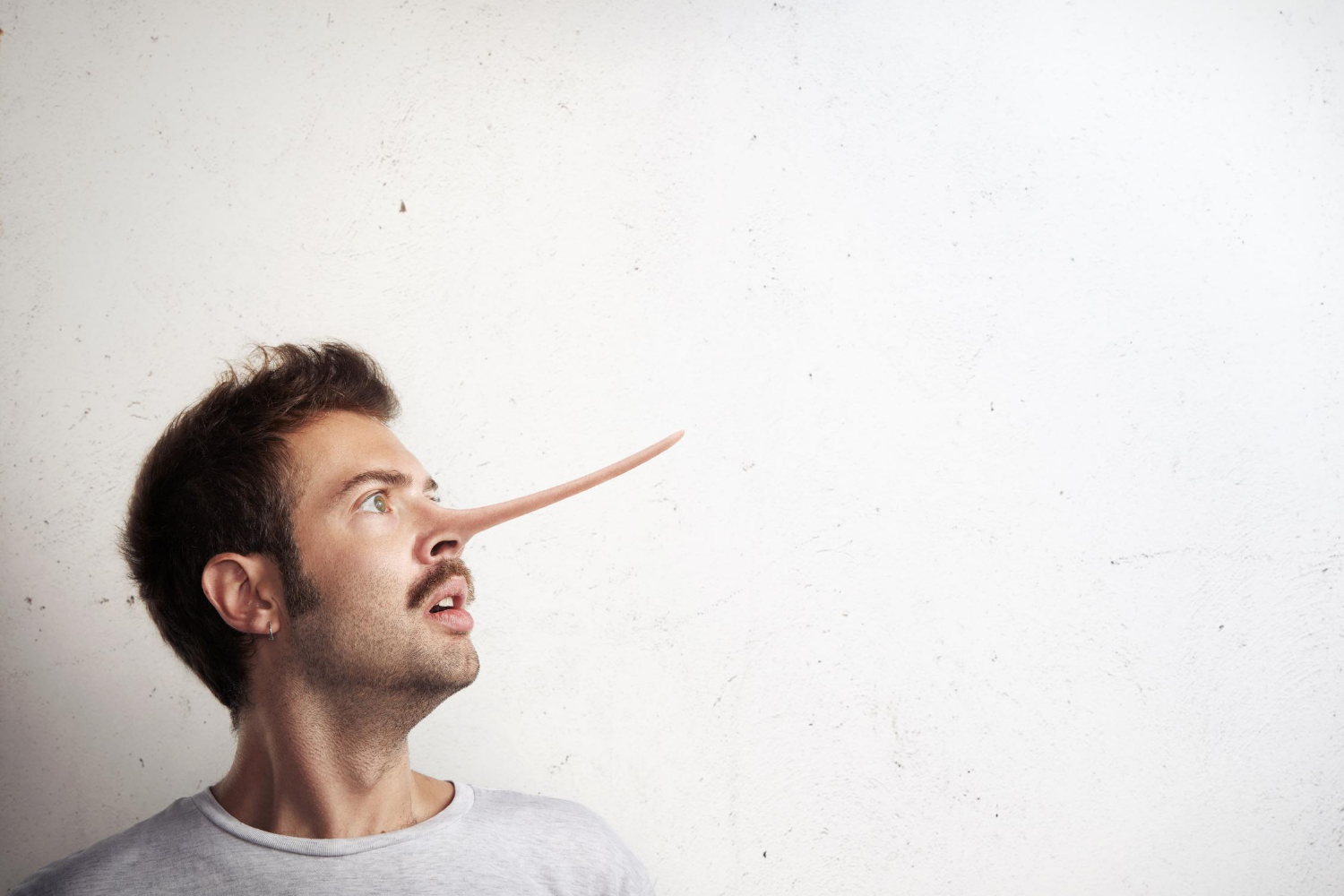
They have become dishonest people. Their characters have formed this way because they are raised in a system that doesn't uphold the values of truth, goodness, and beauty; once so honored in the West.
In a Nutshell
Raise your children well, keep them out of public school, screen multi-media use when they are young (or eliminate it!), avoid inappropriate music, and surround them with natural beauty and good people.
If you do, you'll have accomplished something that is becoming more and more uncommon today; you’ll have raised a decent child.
A child who grows up with the ability to discern truth from falsehood, beauty from ugliness, and good from bad is a child you can be proud to call your own.
Don’t miss our free download, Ten Books Every Well-Educated Child Should Read.
Become a Smart Homeschooler to raise smart, ethical, and critically-thinking children. Join the Smart Homeschooler Academy online course and feel secure knowing that you have what you need to homeschool successfully as well as live ongoing support from Elizabeth.
For parents of children under age seven who would like to prepare their child for social and academic success, please begin with our online course, Raise Your Child Well to Thrive in Life and Excel in Learning.

Elizabeth Y. Hanson is an Educator, Homeschool Emerita, Writer, and a Love and Leadership Certified Parenting Coach with 20 years of experience working in children’s education.
Utilizing her unusual skill set, coupled with her unique combination of mentors, Elizabeth has developed a comprehensive understanding of how to raise and educate a child. She devotes her time to helping parents get it right.
☞ Disclaimer: This is not a politically-correct blog.
7 Things Every Successful Homeschooler Understands→
/
Here are a few maxims that you need to understand to homeschool successfully.
Read MoreHow to Choose a Good Teacher for a Schoolhouse or Homeschool→
/
What is a parent to do who is unable to homeschool their children? My suggestion is to start a small school, as many people are now, but establish them on sound principles, which many people are not doing.
Read MoreCan You Raise Kids Without Technology in 2022?→
/
Do you think it’s possible to raise a 2022 child without technology? Let's look at a few facts…
Read MoreGratitude Is an Attitude Any Child Can Learn→
/
If you want to create an attitude of gratitude in your home, here's three things you can do to foster feelings of gratitude in your children:
Read MoreA “Head-Start” in Early Education May Do More Harm Than Good→
/
Is expecting our children to leave home at earlier and earlier ages, so they can get a head start with reading, writing, and arithmetic, actually giving them a head start?
Read MoreWhy I never Reached My Potential and How to Spare Your Kids the Same Fate→
/
John Taylor Gatto, a renowned educator and best-selling author, said that "schools were dangerous places for children."
Having been educated through the public school system, I can say with certainty, as I’m sure you can too, that my best years of learning were wasted.
Not only were they wasted, but as a public-school student, I was exposed to all sorts of immoral behaviors and mediocre influences in my life.
It wasn't a great beginning.
My Twelve-Year Jail Sentence
In my "twelve-year jail sentence," as Gatto likes to call it, I certainly never learned that a "preposition is a word which governs a noun or pronoun and connects it to anything else in the sentence or clause" (definition according to Mr. Gwynne, author of Gwynne's Grammar).
I memorized not a single piece of poetry, nor did I ever learn my own country’s history with any coherency, let alone other histories of the world.
(I did read a lot of classic books, but not in school. My father supplied me with those, and they were my saving grace.)
It would have been helpful to have learned the above subjects during those 12 wasted years and learned other subjects too, which are essential to living a good life.
For example, learning Aristotelean logic when I was young would have given me the ability to see through the kind of propaganda that flies in our faces every day and deceives us to believe in and do things we would not otherwise believe in or do.
“Modern propaganda is a consistent, enduring effort to create or shape events to influence the relations of the public to an enterprise, idea or group.”

Having a better understanding of world history would have taught me that history repeats itself. I would have known back then to look to the past to understand where we have been, where we were then, and where we were headed.
The Six Purposes of Schooling
Fast forward many years later to my discovery of the six purposes of government schooling that John Taylor Gatto uncovers for us and guess who was livid?
I wasn’t alone.
Like many of us, I realized that I had been cheated of a real education, and there is nothing more infuriating than discovering that you have lost the best years for training your mind to a dumbed-down, nefarious government school program.
I should also tell you of something else that happened to me when I was in public school which has been an impediment throughout my life. As a young kindergarten enrollee, I had developed a false belief that I was not very smart!
This may sound strange, but it happens to be fairly common for children who are almost a year younger than the oldest child in the classroom but expected to do the same level of work.

Unfortunately, beliefs we form from childhood experiences become like deep grooves in our minds, and it can take a lifetime to polish them out, which is why we need to consider carefully the way we are raising our children.
“School is a twelve-year jail sentence where bad habits are the only curriculum truly learned. I teach school and win awards doing it. I should know.”
5 Reasons for Homeschooling
In this brief summary of my unfortunate government school years, did you notice that I just gave you five reasons why concerned parents elect to homeschool their children? If not, let me summarize them for you as it’s important to reflect on them:
Concerned parents want to give their children a real education where their children learn, at the very least, how to read well, write well, and speak well.
They want to give their children proper training in morality and what it means to be an ethical and civilized human being.
They want their children to understand that mediocrity is not good enough; they must learn to strive for excellence.
They don't want their children exposed to early sexual influences, drugs, and perverse ideologies.
They want their children to have self-confidence and as much self-knowledge as they can acquire during a well-spent youth.
These are the five most common reasons for homeschooling, but there are two more that are gaining momentum. Crime is a big problem in schools today, and many parents are not putting their kids into public school or are taking their children out of public school because of safety issues.
I mentioned this to a group of parents about 15 years ago, and one parent thought I was being extreme. But I wasn't. I was just on top of the statistics earlier than they were; now, I believe it is common knowledge that schools are not safe places for kids.

We also have health concerns with the government schools now mandating a new drug for children that many parents feel is unsafe, despite the propaganda, because the ten or twelve years it takes to safely test a new drug is still in the future.
We have many new homeschoolers now because of the mandates which I find interesting.
Now I’ve given you seven reasons why concerned parents choose to homeschool. Here’s one more that seldom gets mentioned, but that I believe is the most important because it encompasses all the rest:
Your children were born with a God-given potential that they will realize throughout the course of their lives if, and only if, they’re given a fair chance.
If you want your children to reach their potentials, the best chance you have to help them is to intelligently homeschool your kids. Don’t let them waste their best years of learning in public school.
Educate your children well by doing it yourself or hiring competent tutors to teach your kids. One-on-one instruction is superior to class instruction which is why the aristocracy were always tutored.
What’s vital to remember is that an education tailored to one is the education of people who lead themselves, and may even lead others, as opposed to being led.
Let me conclude by saying this: living in a dumbed-down world is frightening. Dumbed-down people are easy to manipulate, and Americans may be the most manipulated people on this planet today.
Keep your kids out of public school and homeschool them so they can grow up to be leaders who are intelligent, ethical, critically thinking people.
Mediocrity will not do.
*****
To learn about John Taylor Gatto’s Six Purposes of Government Schooling, use this link.
Don’t miss our free download, Ten Books Every Well-Educated Child Should Read.
For parents of children under age seven who would like to prepare their child for social and academic success, please begin with our online course, Raise Your Child Well to Live a Triumphant Life.
Become a Smart Homeschooler and give your child a first-rate, screen-free education at home using the Smart Homeschooler Academy Curriculum and teaching methods taught in the program. Join the Smart Homeschooler Academy online course and feel secure knowing that you have what you need to homeschool successfully as well as live ongoing support from Elizabeth.

Elizabeth Y. Hanson is an Educator, Homeschool Emerita, Writer, and a Love and Leadership Certified Parenting Coach with 20 years of experience working in children’s education.
Utilizing her unusual skill set, coupled with her unique combination of mentors, Elizabeth has developed her own comprehensive understanding of how to raise and educate a child. She devotes her time to helping parents get it right.
☞ Disclaimer: This is not a politically-correct blog.
Why Homeschooling Is Easier If You Get the Early Years Right→
/
Get the early years of raising your children right, and homeschooling will be much easier.
Read More5 Reasons Your Family’s Dinnertime Meal Is a Serious Matter→
/
All happy families share one thing in common: dinnertime is prime time for the family.
They come together to share a meal, but the food is not what's most important; it’s what happens before, during, and after the meal that matters a lot. In fact, the family dinner meal is a serious matter, not to be taken lightly.
As dinnertime is when many things that are key to your family's overall happiness occur, here are five reasons you never want to miss having a dinnertime meal for your family:
“The dinner table is the center for the teaching and practicing not just of table manners but of conversation, consideration, tolerance, family feeling, and just about all the other accomplishments of polite society except the minuet.”
1) Family Togetherness Makes Kids Feel Secure
Dinnertime is usually the only meal that dad is present for during the week making it a special event, especially for the children. Dads are gone all day, presumably at work, and when they come home, it is a big excitement for the children.
When everyone is seated at the table, the children feel a sense of security having both parents present and knowing that their family is together. With so much divorce present in our culture, this is even more important now that children feel a strong sense of togetherness in the family, and the dinnertime ritual will provide this.
2) A Time for Sharing
Dinnertime is a time when each family member can share their joys and sorrows of the day and feel the comfort in knowing that there are people who care about how their day went and can share in their day's experiences. It’s a time for pleasant conversation and an important time for children to develop their social skills.
“The dinner hour is a sacred, happy time when everyone should be together and relaxed.”
3) Practice in Good Manners
Dinnertime is prime time for teaching children table manners. We forget the importance of table manners because good manners are disappearing from our increasingly uncivil society, but good manners are what hold the glue of a family together.
Without practicing common courtesy towards one another, disrespect reigns, and all hell breaks loose. If you want to avoid family quarrels and division, teach your children good manners and practice them yourself. Let them see you and your spouse treat each other courteously, and they will follow in-suit. You never want to tolerate bad manners, ever.

4) Balanced Meals Lead to Good Health
Dinnertime is an essential meal for ensuring your children get proper nourishment which implies that you teach them to eat what you serve them. Well-mannered children do not get special meals because they are "picky" eaters or have an "aversion" to certain kinds of foods.
Unless a child has a legitimate food allergy, teach them to eat what is on their plate without complaint. As long as the child has molars and is old enough to sit at the dinner table, there is no such thing as "baby" food. There is food, full stop.
5) Cooperation and Responsibility
Dinnertime is a time for children to learn cooperation and responsibility. Each child should have chores they perform at mealtimes. Depending upon their age, they can help prepare the food, set the table, serve the food, clear the table, wash the dishes, and clean the kitchen, including emptying the garbage at the end of the day.
Chores teach children responsibility, and they also teach them to cooperate with others in making a helpful contribution towards the care of the family.
“After a good dinner one can forgive anybody, even one’s own relations.”
If getting meals on the table each day and on time is a struggle for you, then you want to take some time to get better organized and disciplined about the planning, shopping, and preparation of your meals.

Decide on your menu a week in advance, do your shopping in advance, and pick a time for dinner that lets you work backward, so you know at precisely what time you have to start preparing dinner.
Stick to this time, no matter what else happens that day. If an emergency should arise, always have a quick backup meal available, so you don't miss the dinnertime ritual. If you do miss it once, don't miss it twice.
The more days in a row that you miss, the more likely you will be to fall into old patterns of erratic mealtimes, which translate into missed opportunities for your family to flourish and grow.
A Time Saver for You
If you need a helping hand, I've prepared a free download for you. It's a shopping check-off list that my friend Jason created. His wife Maureen never misses a family meal, and I believe that Jason's ingenious list has a lot to do with it.
Don’t miss our free download, Ten Books Every Well-Educated Child Should Read.
For parents of children under age seven who would like to prepare their child for social and academic success, please begin with our online course, Raise Your Child Well to Live a Triumphant Life.
Become a Smart Homeschooler and give your child a first-rate, screen-free education at home using the Smart Homeschooler Academy Curriculum and teaching methods taught in the program. Join the Smart Homeschooler Academy online course and feel secure knowing that you have what you need to homeschool successfully as well as live ongoing support from Elizabeth.

Elizabeth Y. Hanson is an Educator, Homeschool Emerita, Writer, and a Love and Leadership Certified Parenting Coach with 20 years of experience working in children’s education.
Utilizing her unusual skill set, coupled with her unique combination of mentors, Elizabeth has developed her own comprehensive understanding of how to raise and educate a child. She devotes her time to helping parents get it right.
☞ Disclaimer: This is not a politically-correct blog.
Are You Raising Ethical Children?→
/
You may be, it can be difficult to tell. Sometimes it requires an honest look into our own behavior. How ethical of a person are we?
“Ethics, also called moral philosophy, the discipline concerned with what is morally good and bad and morally right and wrong.”
And sometimes, it requires an honest look at how we are raising our children. Are we holding them accountable for their actions?
Regardless, each of us has an innate moral nature. At very early ages, children will begin to make judgment calls about what is right and what is wrong. Consider how young a child is when he begins to say things like, "But that's not fair!"
As children mature, we want to teach them how to govern their emotions and act with the intention to do the right thing. Conducting ourselves with integrity is a choice.
“Integrity, from the Latin word: integritas meaning purity; morally, uprightness”
Yet, given the state of affairs today, there appears to be a grave breakdown in our sense of right and wrong, making it challenging to model ethical behavior for our children.
Learning how to determine ethical boundaries begins in the home, but learned behaviors in school also play a role. As Vicky Abeles points out in her iconic film, The Race to Nowhere, 97% of high school students lie and cheat on exams throughout their high school years to be able to graduate at the end of their four-year term.

Now, upon first hearing this, you might think this kind of behavior is restricted to high school, but this isn't the case.
Children who learn to make exceptions for ethical behavior when the exceptions lead to acquiring something important, such as a high school diploma, are at risk of adopting habits contrary to good character.
“It is well said, then, that it is by doing just acts that the just man is produced, and by doing temperate acts the temperate man; without doing these no one would have even a prospect of becoming good.”
We can all sympathize with their plight as the demands made on schoolchildren are impossible, but something is wrong when they are part of an educational system that they cannot succeed at unless they lie and cheat. And we have to ask ourselves, "Do we really want to enroll them in such a system?"
Regardless, once bad habits such as these are established, it is unlikely they will be limited to the classroom. On the contrary, a habit is a habit, and to correct a bad one requires an intention to break the habit. But first, a person needs to see that there is a problem.
It's difficult, however, to see that you have a problem when your problem has become the norm. Between the school environment plus the unclear boundaries in the home, one can expect that the child's ability to accurately distinguish between right and wrong will be blurry, at best.
And this is what we are dealing with today. Lying and cheating are the norms to such a degree that even people who think they are ethical are not.
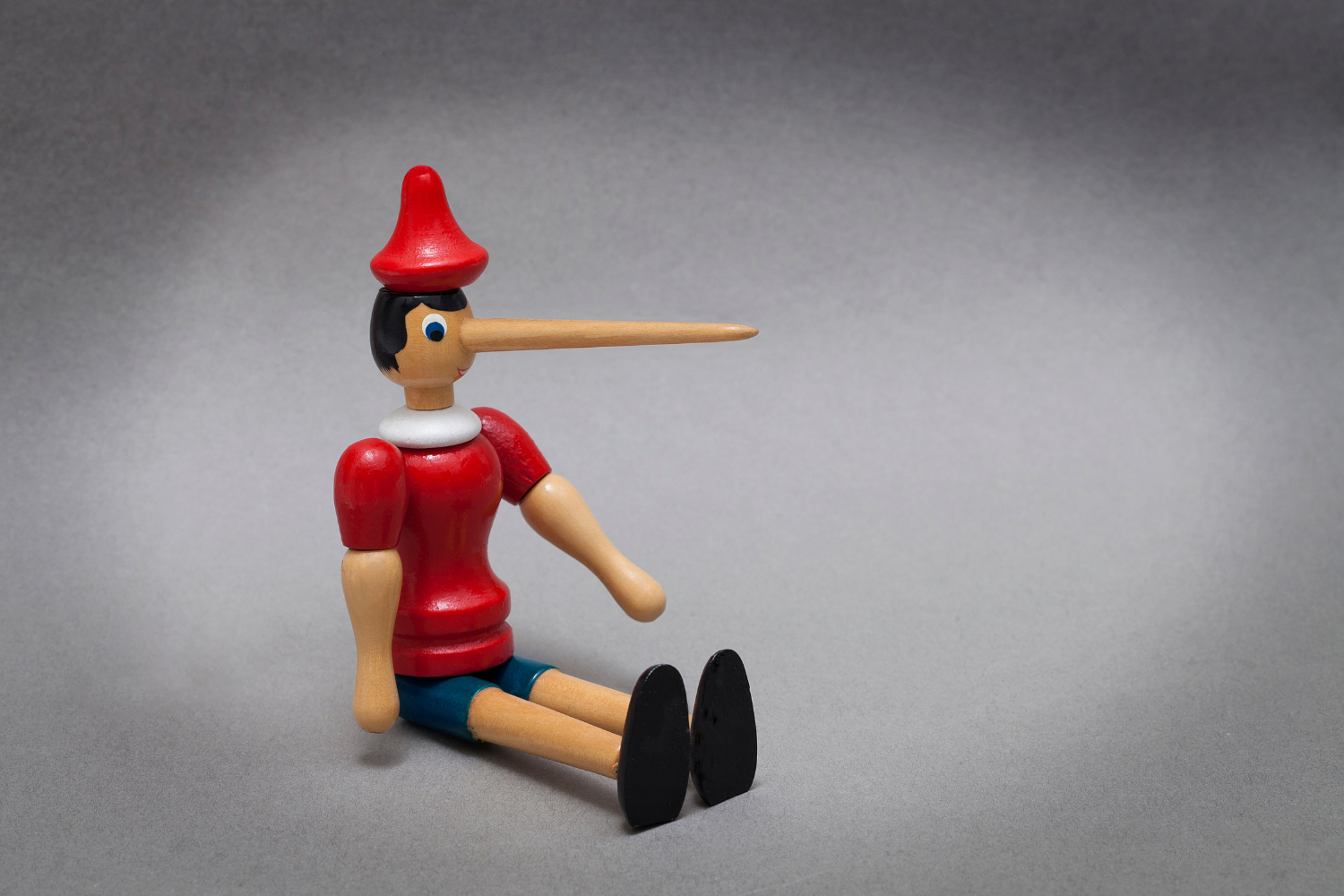
However, each individual is responsible for his own actions. We cannot shift the responsibility of our behavior to anyone or anything else. Science is good at blaming our behavior on mythical chemical imbalances or brain configurations that deviate from the norm.
We are very good at blaming our parents or anything we can reasonably point our fingers at, but the reality is that the only direction we can honestly point our fingers is at ourselves.
We all have the ability to choose and evading responsibility for our choices will get us nowhere. While the blame game may make us feel better momentarily, it will not make us a better person, and it will not help us raise better children.
Before we can assume responsibility for our actions, we have first to understand what is right behavior and what is wrong behavior. Once we can make this distinction, we must choose to correct our less-than-admirable behavior, so we act in harmony with our values.
It is of paramount importance that we teach this kind of mindfulness to our children. We must avoid putting them in situations that will undermine this teaching, and we must set a good example for them with our own behavior.
The latter means that we have to be honest with ourselves about the state of our characters. We learn to understand our character by diligently questioning our intentions and actions and correcting them when we find them not aligning with our values.

We all have a conscience and know in our heart of hearts when we are doing something wrong. As my father once said, "The road to Hell is a long series of negotiations with the devil." In other words, it isn't one big thing we do that determines who we are, but the little things we do over and over again that will eventually decide the state of our characters.
The majority of us often compromise our integrity in mindless ways. Sometimes we compromise it in simple acts like withholding information from a friend to produce an outcome that benefits us or maybe the grocery checker forgot to check something in our basket and we walked off without telling her.
But sometimes, we compromise our integrity in more significant ways.
“Virtue lies in our power, and similarly so does vice; because where it is in our power to act, it is also in our power not to act...”
We might do egregious things like damage someone's bumper and drive off without leaving a note. Maybe we plant the seeds of doubt about another person's character to mutual friends because we are envious of them? Maybe we charge for a high-quality service that we aren't competent to provide.
To correct these kind of behaviors, we have to stop and ask ourselves this question: for how much am I willing to compromise my integrity?
Will I compromise it for the 50 cents I didn't have to pay because the teller missed the apple in my cart? Will I compromise it for the 100 dollars I saved because I didn't fix the bumper that I damaged? Will I compromise it for the benefit I received for withholding information from my friend or lessening people's opinion of someone? Will I compromise my integrity for the extra money I earned for fraudulently advertising something I couldn't fully provide?

When we reflect on especially the minor injustices we commit, we realize for how little we will compromise our own integrity.
If you can understand that the little things add up to the big things, and the big things make up your character, somehow saving the cost of an apple or a bumper repair hardly seem worth it.
“What a piece of work is a man! How Noble in reason! How infinite in faculty! In form and moving how express and admirable! In Action, how like an Angel in apprehension, how like a God!
The beauty of the world, the paragon of animals—”
Don’t miss our free download, Ten Books Every Well-Educated Child Should Read.
For parents of children under age seven who would like to prepare their child for social and academic success, please begin with our online course, Raise Your Child Well to Live a Triumphant Life.
Become a Smart Homeschooler, literally, and give your child a first-rate, screen-free education at home and enjoy doing it. Join the Smart Homeschooler Academy online course.
Elizabeth Y. Hanson is an Educator, Homeschool Emerita, Writer, and a Love and Leadership Certified Parenting Coach with 20 years of experience working in children’s education.
Utilizing her unusual skill set, coupled with her unique combination of mentors, Elizabeth has developed her own comprehensive understanding of how to raise and educate a child. She devotes her time to helping parents get it right.
☞ Disclaimer: This is not a politically-correct blog.